We’re still in the foothills of the Southbank Centre’s year-long The Rest is Noise festival, but already the harmonic ground is becoming unsteady underfoot. Last weekend saw the gemütlichkeit of Johann Strauss give way to the brutality of Richard Strauss, exposed us to the moistly chromatic flesh of Salome that lies behind the seven veils, and showed just a hint of Schoenbergian ankle. So surely this weekend’s return to 1900 and Elgar’s choral-society-stalwart The Dream of Gerontius is something of a retreat?
Not exactly. Although latterly exorcised of its dangerous Catholic subversion and colonised by choral middle-England, there is much in this astonishing oratorio to thrill. Framing it in the context of Strauss (who, incidentally, hailed Elgar as “the first English progressivist” after hearing the Gerontius) allows the work’s Wagnerian structural conception and harmonic richness to emerge, rather than swaddling its challenges in the cotton-wool of musical Englishness.
Elder’s grasp of the work’s internal geography is absolute
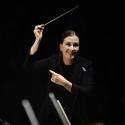
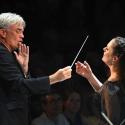
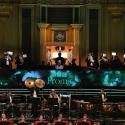
Mark Elder (pictured below) is one of the finest Elgarians, and over the past few years we’ve seen a glorious oratorio-cycle from him. But while The Apostles and The Kingdom have their moments, it is Gerontius that stands alone as a true masterwork. Helping him realise it here were the massed forces of the London Philharmonic Orchestra and Choir, with the Choir of Clare College, Cambridge serving as spiritual semi-chorus. Impeccably drilled, the chorus were admirable in their restraint, allowing themselves little more than a mezzo-piano for much of the evening. If moments of Cardinal Newman’s text were lost as a result, it was all worth it is the sonic payoff of their release (together with the full might of the LPO’s brass and percussion) at climactic moments.
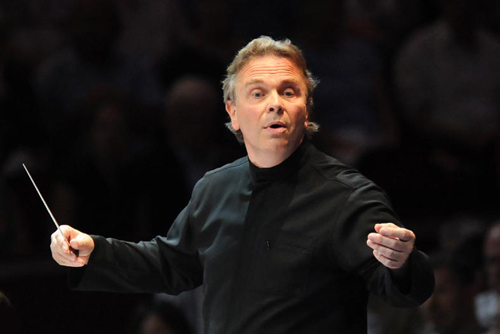 The oratorio’s two movements replace conventional narrative with philosophical dialogue and contemplation, and so rely absolutely on the musical pacing if the Soul’s journey isn’t to lack direction. Elder’s tempos are by no means swift, but his grasp of the work’s internal geography is absolute, allowing things to be spacious without ever feeling stagnant. The hesitant doubt of the work’s opening in wind and low strings returns strangely transmogrified in the high-string melody of Part II – a relationship Elder’s direction renders organic and inevitable.
Only in moments of transition did the LPO falter, hinting perhaps at a lack of rehearsal time with the soloists. Tenor Paul Groves gives such a flexible reading of Gerontius, and it would have been nice to see the orchestra follow him more readily, rather than taking two bars each time to settle into the new tempo.
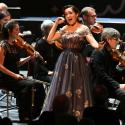
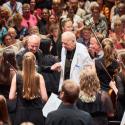
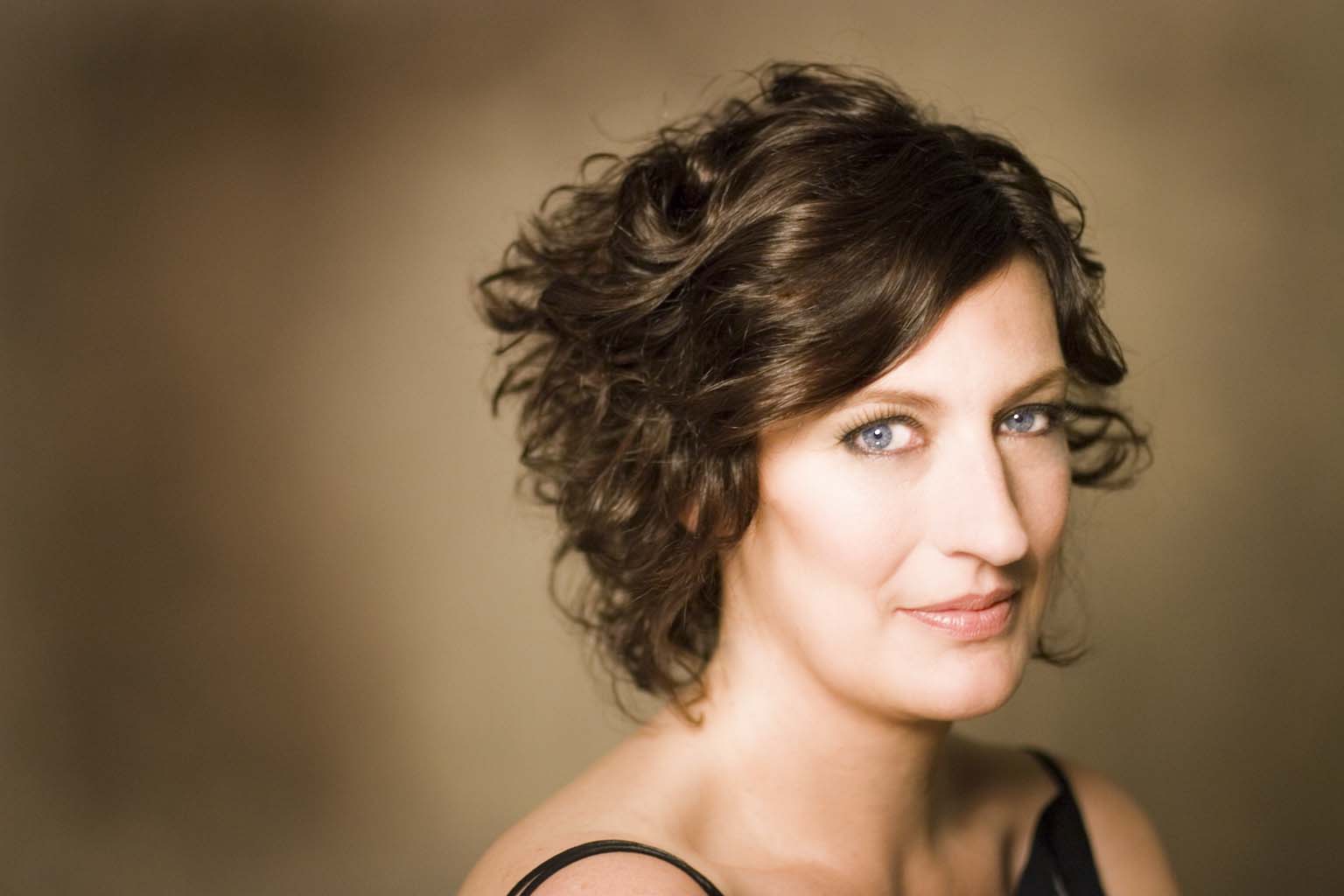 Groves’ operatic, dramatised wanderer sat well against the warm control of Sarah Connolly (pictured left). If there’s a better Angel singing today, I have yet to hear them. Church-pure and Wagner-large by turns, Connolly’s “Alleluia” is a prayer that would move the sternest God, thrumming as the emotional pulse of the performance.
With the advertised Brindley Sherratt ill, James Rutherford stepped in to provide stentorian support as the Priest. He added a darker colour to the gentler shades of Clare Choir and the London Philharmonic Choir, whose tone is never less than lovely, but who never quite seemed to find the darkest shades of Elgar’s demonic writing, the “uncouth dissonance” Newman’s text speaks of so vividly.
Next weekend with see The Rest is Noise delving into musical nationalism, allowing Englishness a more expansive voice. But it feels right, natural that Gerontius should be set apart. It’s a work that sees Elgar not just at his finest but at his most Germanic. It will always be a national treasure, but in the composer’s conception and Elder’s generous interpretation Elgar’s oratorio is surely an international treasure too.