"You know that I am as sincere in my faith, without any messianic screamings, as I am in my Parisian sexuality," declared Francis Poulenc, who died 50 years ago this January at one with his God and his cheerful, not exclusively but mainly gay, promiscuity.
Having proposed some sort of imaginary tussle between God and sex for the soul of our lovable Frenchman, the two went off at a waffly, self-regarding tangent - Atkins failing to let the composer's name even once fall from her lips - and managed to say nothing clear about the bigger theme either. Thank God, then, for the music. I must say I didn't entirely recover until a climactic performance of that exuberant masterpiece, the Gloria of 1960, showering Southwark Cathedral in roses and gold. The programme took time to kindle, though what it did usefully demonstrate was Poulenc’s sailing towards the deeper waters after the senseless, untimely and horrible death of fellow composer and critic Pierre-Octave Ferroud in 1936 and his rediscovery of his Catholic faith.
Not that this was immediately obvious in the wartime ballet for Serge Lifar at the Paris Opera, Les Animaux modèles. Managing a dig at the Germans in the audience for the 1942 premiere by inserting the theme “Non, non, vous n’aurez pas notre Alsace-Lorraine”, the music takes up the apparently satirical theme of La Fontaine’s animal fables.
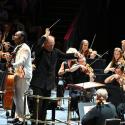
Elizabeth Watts managed to top even the chorus for sheer goosebumpy ecstasyThe score, though, at least in what we heard of it in the orchestral suite, veers more to the serious, with a slow gait predominant. The prelude’s country morning theme starts out as pure Ravel, with the note of Poulenc’s own sensuality postponed until the reign of the brass (here led by peerless trumpeter David Blackadder). The heart and soul of the composer’s later idiom, though, are very much there in the Pas de deux of Death and the Woodcutter. Oboist Philip Harmer ushered in a theme which may not be quite as memorable as the Adagietto of Poulenc's earlier, quick-change ballet Les biches but which has all the glowing gravity of his religious works.
On the fringes of which he located the Concerto for Organ, Timpani and Strings completed two years before the ballet was begun. A cathedral, of course, is a far cry from the salon of that great commissioner the Princesse de Polignac, née Winnaretta Singer, who played the not too complicated organ part chez elle with Nadia Boulanger conducting at the first private audition. Although the CLS strings had no trouble projecting their lines – at least from where I was sitting, which was perhaps a little too close to them – there was the sense here that they were battling furiously to free themselves from the glue of Southwark organist and music director Peter Wright. Blame the acoustics if only his opening and concluding Bach-like summons really made their mark; the organ’s passing attempts to carry a tune were muddied in these strange dialogues.
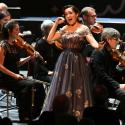
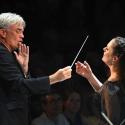
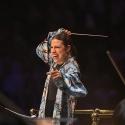
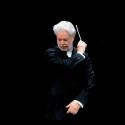
 The Gloria, preceded by a gently glowing performance of master orchestrator Ravel’s Pavane pour une infante défunte which Poulenc virtually quotes, redeemed all. Stephen Layton may not be the most elegant of conductors, but his incisive Holst Singers scampered around brilliantly as football-playing monks and tongue-poking angels (Poulenc’s terms of reference for the more rollicking sequences). Their unisons were magnificent, though the unaccompanied Amens of soloist Elizabeth Watts (pictured left) managed to top them for sheer goosebumpy ecstasy.
How this lyric soprano’s voice has filled out recently: if only she were down to play Blanche, the riven protagonist of Poulenc’s operatic masterpiece Dialogues des Carmélites, at Covent Garden next year (we shall have to put up with Lady Rattle, Magdalena Kožená, instead). Very much the spiritual guide alongside Layton of this great work, Watts led it through the tricky but here perfectly handled ascents of the juicy-mystic “Domine Deus” and on to the final float. May the same team return with Poulenc’s equally elevating Stabat Mater.