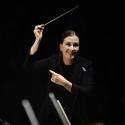
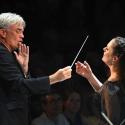
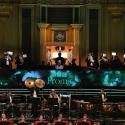
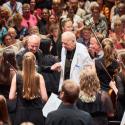
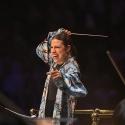
Mirga Gražinytė-Tyla, the City of Birmingham Symphony Orchestra's latest dynamo of a music director and communication incarnate, doesn't believe in taking it easy. Newly returned from maternity leave, she plunged straight back into a big world premiere, Roxana Panufnik's Faithful Journey - A Mass for Poland and a vivacious account of the first act from Tchaikovsky's The Nutcracker on Wednesday, and on Saturday night conducted the combined forces of veteran Latvian violinist Gidon Kremer's string ensemble, the Kremerata Baltica, and the CBSO in a daunting double bill at the heart of a weekend devoted to Warsaw-born Soviet composer Mieczyslaw Weinberg.
It could have been too much of a grey-black thing. Weinberg's last completed symphony, the 21st of 1989-91, is a lament - "Kaddish" was one mooted title - dedicated "to the victims of the Warsaw ghetto", which included his own family, and it tenaciously refuses to sell out to a light-filled optimism for the future. Shostakovich's symphonic swansong, the 15th, composed entirely in July 1971, arrives at the terror of death after its short first movement - surely encapsulating the composer's suggestion of a life-cycle programme for the entire work whizzed through at daunting speed - but finds an enigmatic A major resolution in one of the most extraordinary and idiosyncratic of all symphonic conclusions. That and the opening movement with its deadpan quotations of Rossini's William Tell galop were just enough to hold on to for relief of sorts.
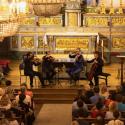
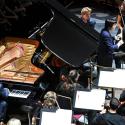
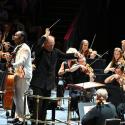
In any case, Mirga gave us and the orchestra very different body languages for these two epics. Weinberg, uneven as in most of his works but with stretches of genius, is at his least convincing in the big tragic thrashes, but these she controlled with scything, energetic movements, forging a path for the gritty material that was especially impressive in the fierce two-part counterpoint mostly shared between upper and lower strings. Shostakovich's journey she treated as poker-faced fate, starting not with a sense of buoyant galop but of inexorable unfolding, culminating in unearthly beauty. 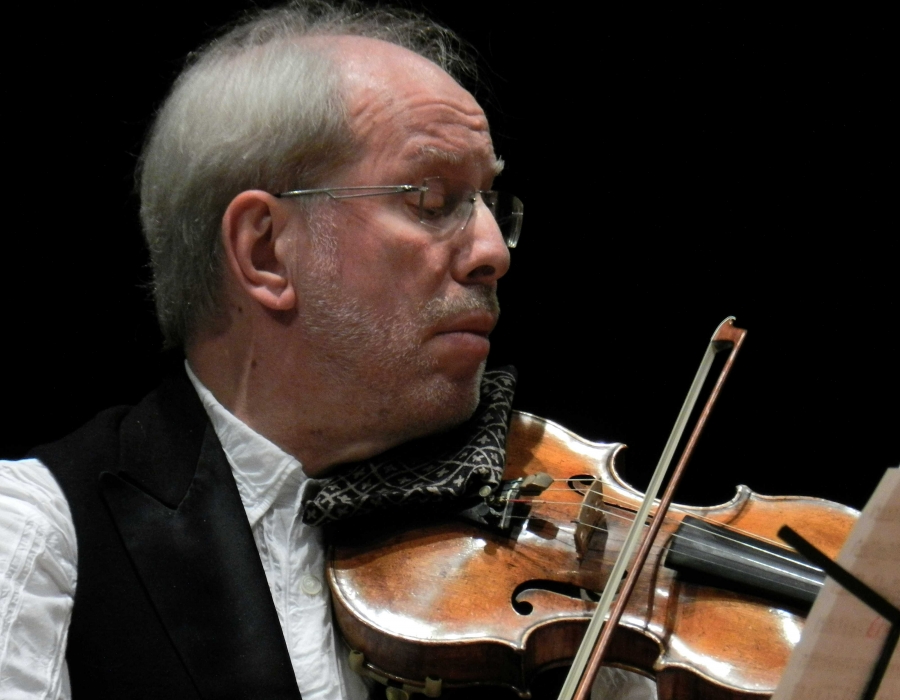 Integrity is common to both composers, even if Shostakovich works at a consistently higher level of inspiration and originality. Weinberg's skill is not so much in providing a sense of structural inevitability - though he mines a concentrated number of ideas - as in shifting the orchestral colourscapes even in the numb opening Largo, with austere violin solos - taken by 71-year-old Kremer himself (pictured above by Horst Helmut Schmeck), up and behind his colleagues - between full string and later brass threnodies. The orchestral pianist tries out Chopin's First Ballade, symbol of Polish melancholy, but falters; later an uncomically clumsy double bass (Kremerata Baltica's Iurii Gavryluk) initiates the most original sequence, leading to klezmer music for clarinet (the CBSO's Oliver Janes, flawless in Weinberg's extreme writing) that gets torched by full-orchestral blasts.
Holocaust once suggested, Weinberg is not about to let go of the infinite pain felt by the survivor. Superb treble Freddie Jemison - presumably amplified, to great effect - and soprano Maria Makeeva shared the final Kaddish sequence, disrupted by orchestral thuddings. Somehow too austere to be moving, the conclusion will stay in the memory.
As will the extraordinary rareified sounds Mirga drew from her combined violins in the endgame of the Shostakovich: this was ineffably great conducting and music-making. Stern and unyielding in the first movement, trusting simply in the sharp-edged parade of bizarre orchestral juxtapositions and Shostakovich's unique engagement of the "tongs and the bones" - virtuoso xylophone playing in both symphonies - she let the numb atmosphere of the spare Adagio tell in perfectly-placed chords from another planet, eloquent chamber-musical solos from Eduardo Vassallo - the lone voice asking not to be buried just yet - and chillingly faceless brass in the central funeral march.
The spareness only made the harsh unleashing of full forces in the climaxes both here and at the height of the finale's central Passacaglia all the more devastating. But the mortally ill Shostakovich's real gift to eternity are those moments where time becomes space - and never more than in the percussion tattoos of the end, a final stroke of glockenspiel, celesta and triangle telling us, as in a Russian liturgy, that the service is ended just as it began . No show, just profound and dedicated musicianship.