I came for the Schubert and it didn’t disappoint. Which was good, as the Mozart and Stravinsky did, a little. I came to know Schubert’s Fifth Symphony only relatively recently, fell in love with it instantly and, with the zeal of a convert, love it immoderately and would never miss any chance to hear it (which leads to the sad reflection that I’ve already heard it live more times than Schubert himself did.)
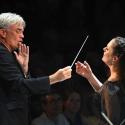
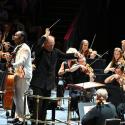
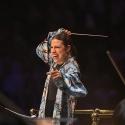
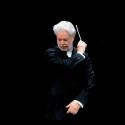
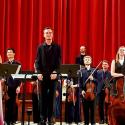
This performance, by the English Chamber Orchestra under Giovanni Guzzo, was pretty much ideal – he had a smile on face through most of it, and so did I. Conducting from memory, Guzzo – who I had not come across before but will now be actively seeking out – found the right level of lightness and wit, picking out the endless subtlety in Schubert’s writing. The conversation between the parts is so clever but the cleverness so lightly worn: the cellos revelled in some of the most interesting lines they will get in a classical symphony, the second violins weaving in and out of the firsts.
The playing was buoyant, with Guzzo the physical embodiment of the music: by turns elegant, energetic, fluid and spiky. The orchestra caught the harmonic surprises, the cute rhythmic tricks. And unlike the problem I have with some Schubert – its very great length – this symphony is so, so tight, without a superfluous note nor the chance passed up to vary something on its repeat. It is an astonishing masterpiece for a 19-year-old composer but, appropriately, was treated by the ECO not with reverence but with an easy familiarity.
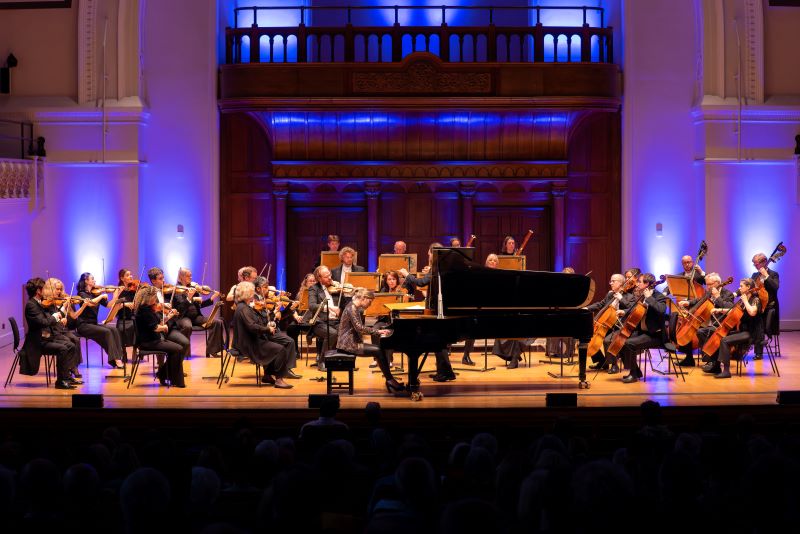 The Mozart piano concertos make up one of the most consistent bodies of work: if you want a good time, pick one at random and it is guaranteed to see you right. The concerto here was K453, in G, and the soloist Beatrice Berrut (pictured above by Colin Sheen). I read in the programme after that she is a Liszt specialist, which surprised me, as I associate Liszt with bold, heroic pianism and that wasn’t what we got here. Berrut’s sound was modest, recessed into the orchestra in quite a pleasing way in the outer movements – but I found her playing of the slow movement theme a touch heavy and prosaic. There was poetry elsewhere, such as in her first movement cadenza with its delightfully tentative return of the orchestra at the end, but I wanted a bit more pizzazz in the playing. Guzzo led with the lightest of touches, using a longer rein than in the Schubert, and the woodwind solos, evoking The Marriage of Figaro, were characterful and delicious.
At the start we had heard Stravinsky’s Concerto in D, which I heard recently played by the Budapest Festival Orchestra. The smaller body of strings here worked better and I heard clearly the pre-echoes of The Rake’s Progress, especially in the second movement. The piece has its charms, such as the quizzical ending to the first movement and the edgy drive of the last movement’s moto perpetuo, but I find it a bit hard to love. How much better the amiable Dumbarton Oaks concerto would have fit within the programme – and all the necessary players were there. A missed opportunity.