

How do you imagine the wind at dawn? Biting, brisk, peremptory – a kind of summons as another day begins?
For Les Tamplin, wife-beater, sheriff, father to three sons, it is a detective, deathly wind, "the wind that cannot be stopped" which stirs with the ghosts of all he’s killed, "come to steal [his] last breath". Since the Civil War, he has murdered compulsively, following "the urgent need to choke" for the relief it brings. The wind stalks him with the threat of retribution. It is lithe and fleshly, and "comes crawling at me on its belly like an infant’s slow slithering". He is certain it will reach him one day, this breath of the dead. Yet despite his apprehension of "that trickle of dark wind", the book is not about Les’s attempt to outrun his ghosts. He looks forward to meeting them, to "the final You that releases me".
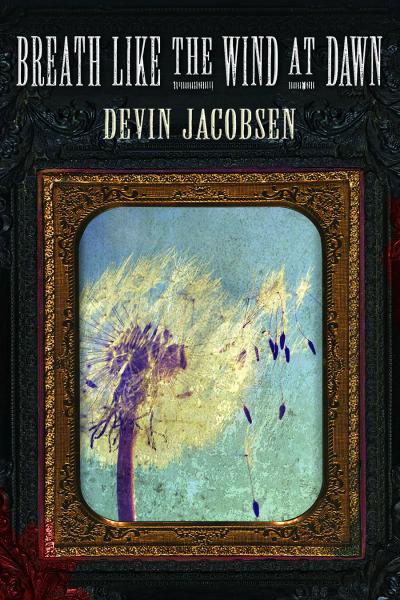
Does this make the book about punishment for dark deeds, or deliverance from them? Neither, it seems. Spanning the beginning of the American Civil War and the decade or so afterwards, Jacobsen’s debut is interested in exploring the imprint of that violent period, the way it disturbed individuals, familial relationships and chains of association, tracing its devastation on the unit of the Tamplin family: the mother Annora, eldest son Edward, twins Irving and Quinn, and father Les. Writing in the tradition of William Faulkner and Cormac McCarthy, Jacobsen’s portrait is unsparing even as it is lyrical, its pages filled with blasted flesh and "ruining face[s]", of bodily harm, rape, and disregard for human life stretched to its furthest limit. Violence here seems learned more than it is inherited, but spreads with vicious ease. The choice to focus on a family, whose members supply the kaleidoscope of narrative perspectives, seems designed to expose the extent of the wreckage. Not even the bonds of kin can hold.
 Misrecognition of family members, which takes place repeatedly, works to underline this. The novel opens with an anecdote about "a drafty door of a fellow" who set out to play a prank on his mother and sister by pretending to be a rich Yankee "about to surprise his own ma and sister when he sees them flush with cash in a few days hence". Before he has the chance to reveal himself and bring the joke to its conclusion, they slit his throat in the dead of night and seize all his cash. What is here orchestrated as intentional disguise gone wrong (a kind of farce), replays itself as tragedy later in the book, though the sense of irony lingers. The twins fail to recognise their elder brother. Les unwittingly shoots his son in the face. Only Edward, the least bloodthirsty, seems able to identify his kin, even when they are badly mutilated – his mother’s body "transformed to a bloody gown". The effect of this is to suggest some kind of parallel between the warping effects of persistent violence and the erasure of the past. Recognition is bound up with acceptance as well as perception. The other Tamplins are not alert to their shared history, instead existing provisionally within the net of suspicion and enmity, bred by the divide between North and South.
The book is slim at 200 pages, but dense despite that, its idiom complex in its recreation of 19th-century language: elaborate syntax, knotted imaginings, shifts in perspective unannounced and pronouns often determinedly vague. Its opening lines, for example: "Yonder they lay: a tangle the like of fleas. They that we had sought since long before sunup this morning hovered a bit and sank from the horizon." Such rich-textured prose rewards re-reading, but in the first chapters, when explanatory cues are particularly important, it can feel slightly impenetrable. Still, the book grows into itself as it continues, and its difficulty is also one of its strengths. Bracketing the novel are two stylistically daring passages that create a dizzying, incantatory blend of first-, second- and third-person (reminiscent of Faulker’s The Sound and the Fury) that bewilder normative grammar and reclaim the sentence as an active, generative form. These chapters are also important for staging the novel’s provocative ambivalence on the subject of evil, Annora responding to devilish "chirps and jitters", to a skittish creature that is like a "first-dayed babe", "skin so frail like a hand-me-down or some bobbin-net too rich for use", "quicked in sucks of blood". Is this an incarnation of her husband, or something more pervasive, more urgent, more strange?
Breath Like the Wind at Dawn is not a perfect novel, but it is an impressive, stretchingly inventive one, whose intensity will linger with you long after its close. Devin Jacobsen is only just beginning to show what he can do. I look forward to what’s next.
- Breath Like the Wind at Dawn by Devin Jacobsen (Sagging Meniscus Press, £18.99)
- More books on theartsdesk










Add comment