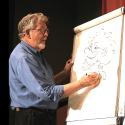
Journalist Daniel Farson’s meteoric rise is neatly outlined on this disc, containing 14 of the short television films he presented for the fledgling ITV channel Associated-Rediffusion between 1957 and 1963. BFI archive curator William Fowler is right to compare Farson to Louis Theroux, and Farson’s ability to remain (mostly) straight-faced and respectful, no matter how outlandish the claims made by his interview subjects, is one of his most endearing qualities. There’s a telling quote from an ITV producer in the booklet accompanying this BFI release, Peter Hunt noting that Farson had “a probing mind and a habit of tilting his head at angle approaching 30 degrees when he spoke.”
Those attributes are a constant in these shorts. Try the two episodes of 1957’s Out of Step (“Daniel Farson looks for people with unconventional opinions”). One has him encountering modern witches, with twinkly Wicca pioneer Gerald Gardner revealing his penchant for nude dancing. Another has Farson speaking to besuited UFO experts, struggling to stifle his giggles during their descriptions of cosmic voices, etheric bodies and sexy Venusian women. The series follow-up, Keeping in Step, sees Farson investigating topics such as contemporary marriage and London's Stock Exchange, its arcane rituals as baffling to him as they are to us.
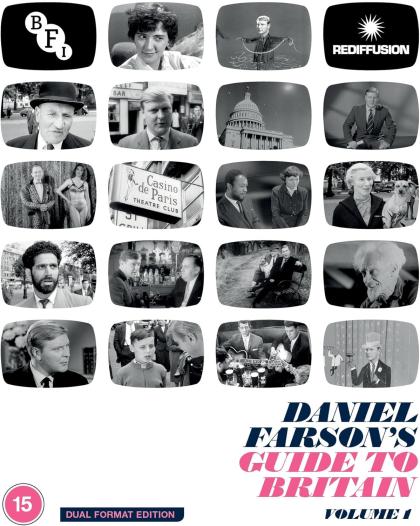
An episode of 1958’s People in Trouble was ground-breaking in showing interracial relationships, Farson introducing the programme by asking: “people say the colour bar is beginning to fade – I wonder if it is?” Sadly, his tolerance is offset by the presence of ghastly bigot James Wentworth Day, whose televised comments still shock 60 years on. A segment from weekly current affairs show This Week sees Farson visiting a Soho strip club, and there are 20 minutes of unedited interview footage with author Robert Graves, meant for This Week but never broadcast. You can see why, Graves coming across as shifty, evasive and distinctly unlikeable. Compare him with young Salford playwright Shelagh Delaney, interviewed just before A Taste of Honey opens in the West End. She’s Graves’s polar opposite – smart, witty and confident, telling Farson that “ordinary people really are extraordinary.”
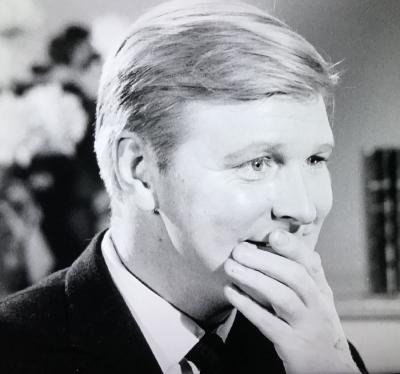
The Delaney interview was featured in Farson’s Success Story series, included alongside a bizarre interview with successful pulp fiction writer Hank Janson. In reality a bloke called Stephen from Stockwell, he hides his true identity behind a homemade face mask and a pair of baggy overcoats. Farson is commendably polite throughout. As he is when encountering clairvoyant-to-the-stars Maurice Woodruff, whose clients included Peter Sellers. Farson chats with Sellers in the opening segment, and it’s striking how little the actor gives away about why he consults a psychic. Woodruff even has a stab at predicting Farson’s future, a surprising amount of what he says actually coming to pass.
Farson chats to a young, plummy-voiced Cliff Richard and visits the island of Lundy in search of peace and quiet. Especially amusing is a look at the British obsession with cats, taking in taxidermists and old ladies feeding strays in the bombed out East End. 1963’s Beat City has Farson venturing to Liverpool for a look at Merseyside’s musical culture. The Beatles weren't available, but we do get Gerry and the Pacemakers and The Spinners, plus a host of acts performing in pubs and cafés. Best stay away from Liverpool’s wine bars, though, shady places serving “a cheap but potent Australian wine known as plonk.” This set is a blast. Selected episodes feature audio commentaries and the BFI’s booklet is an enjoyable read. Bring on Volume 2!