It’s been a turbulent few months for Edinburgh’s Lyceum Theatre, with a substantial cut in funding from Creative Scotland last October, followed by the (unrelated) announcement that Mark Thomson, artistic director since 2003, would step down at the end of the current season. The appointment of Scottish playwright and theatre maker David Greig as his successor from June 2016 has been roundly applauded, and then there’s the small matter of the theatre’s 50th anniversary season, which kicks off this month amid much fanfare with two eminent Scottish actors in what’s probably the 20th century’s most influential text.
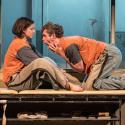
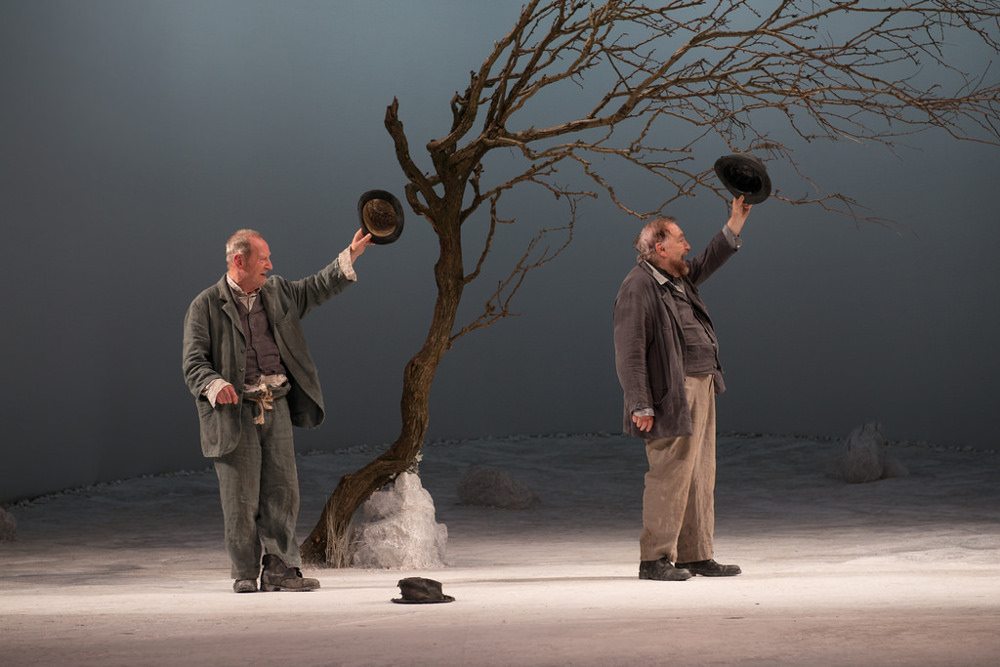
The Lyceum’s Waiting for Godot is a magnificent achievement and sets a high bar for the rest of the theatre’s anniversary season to follow. Bringing together Brian Cox and Bill Paterson as Vladimir and Estragon is a bit of a masterstroke: both etch their characters with enormous care, and play somewhat against type. Cox’s bumptious Vladimir is nervy, needy, bouncing around the stage and eager to find some kind of meaning in their unending predicament, while Paterson’s dour, careworn Estragon seems to see their situation for what it is, obsessing with dark self-awareness over his shoes and lapsing into troubled dreams. It's hard to believe that this is the first time the two men have appeared on stage together, such is their natural rhythm and fizzing interplay.
 It’s not the paciest production of Beckett’s drama, nor the most uproariously humorous. But director Mark Thomson finds a nicely effective balance that points up both the play’s vaudeville elements and the cool, metaphorical abstraction of Beckett’s text. Cox in particular often wrings his lines for all they’re worth – he seems astonished and fascinated that his companion may have ended up in a ditch, of all places – but the two men’s meditation on death in Act 2 is beautifully slow and thoughtful. Even the second half's comical hat-swapping scene seems slow-motion, resigned and cautious, and all the more telling as a result.
It’s an effect reflected in Mark Doubleday’s evocative, almost imperceptibly changing lighting effects, casting marvellous shadows across Michael Taylor’s Zen garden of a set (pictured above), its shoe-scuffed gravel interrupted by rocks and seeming to stretch on forever using the optical trick of an infinity backdrop – yet also imprisoning the characters within its limbo-like blank wall.
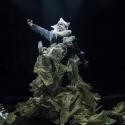
The production’s whole atmosphere changes as soon as John Bett’s imperious Pozzo appears with Benny Young’s gangly Lucky in tow (pictured below). First time around, it’s as if the grown-ups have arrived to inject some seriousness into the children’s games of Vladimir and Estragon, who cower submissively against the barrage of Bett’s clipped demands and haughty sense of entitlement. And Lucky’s nonsense monologue is beautifully musical – it’s almost unintelligible from the start, but Young conveys its cracked sense simply through the rhythm and melody of his delivery.
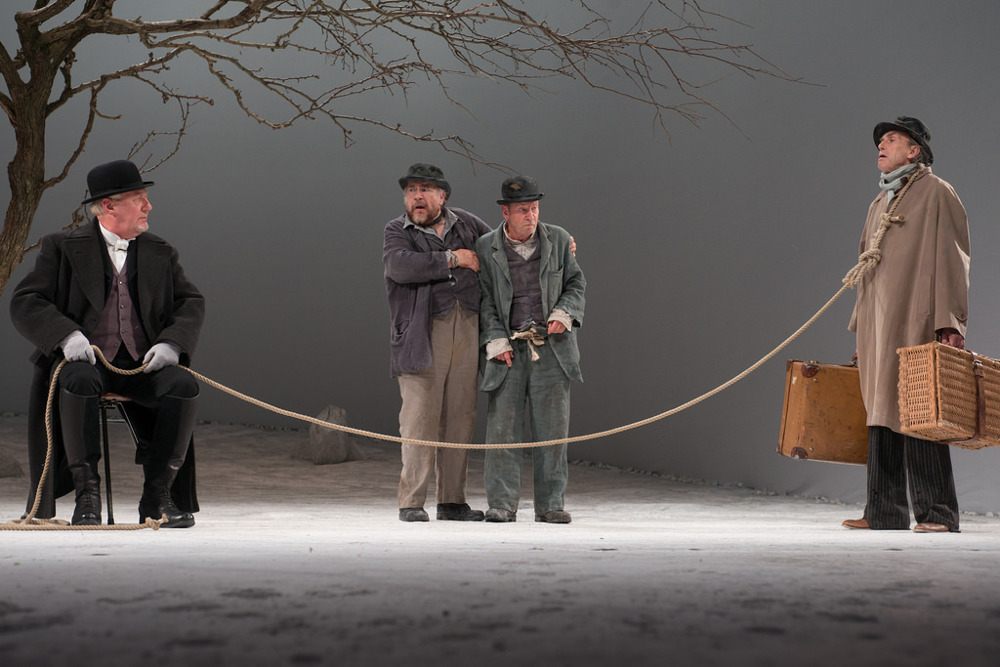 In Act 2, however, it’s Cox and Paterson who have the upper hand over the now blind Pozzo and mute Lucky, strutting as they consider how the visitors might break their tedium. And in the end, as Paterson slips further away into his introspective hopelessness, it’s the growing seriousness and self-absorption of Cox’s Vladimir that marks out Thomson’s production as a journey of discovery – or of futile realisation. It’s a remarkable achievement all round, and bodes very well for the rest of a celebratory Lyceum anniversary season – and for a turning point in the theatre's history.