For those who have spent the past few months nodding along to World War I conversations while desperately trying to remember who killed that archduke and why, Rolf Hochhuth has kindly supplied a solution in the form of a dramatised European history lesson, making its English-language premiere at the Finborough.
But beware: this beneficence requires payment in kind. Controversial German playwright Hochhuth is feverishly devoted to his distorted viewpoint, and he won’t be satisfied until he has ground you into submission. Thus his “documentary theatre” is spiced up with a liberal helping of bias, conjecture and flat-out invention, which makes the project’s lofty aims somewhat dubious, but undoubtedly lends a certain piquancy to his central hypothesis.
 The sprawling epic’s vignettes depict key events in the build-up to war. They all feed into the conclusion that conflict was neither inevitable nor necessary, but cynically engineered by those in authority. Hochhuth, hindsight lending him a cosy smugness, derisively condemns leaders he feels were driven by political or financial gain, saving particular vitriol for that nefarious, moustache-twirling Bond villain Winston Churchill, apparently motivated by weapons manufacturers’ profit margins. It’s riveting polemic, but Hochhuth fails to extend the same empathy to the powerful that he demands for those combatants and civilians who died in their millions.
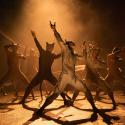
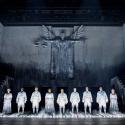
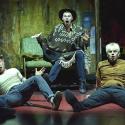
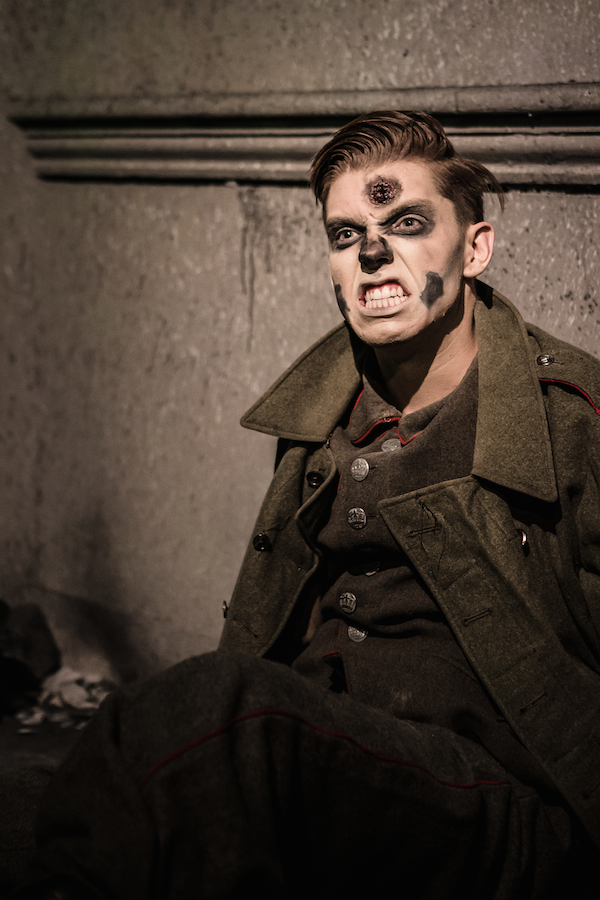
These didactic snapshots are thankfully contained within an effective Danse Macabre framework, with Death acting as our all-singing, all-dancing emcee. Newcomer Dean Bray (pictured right) is one to watch, here a scathing, intense figure railing against “extinction by heavy industry” in two devastating World Wars; surely the next will be total apocalypse, he challenges. It’s a chilling vision given the recent deployment of nuclear bombs and mechanical drones, and injects much-needed topical urgency into scenes that are otherwise dramatically inert. Even if we didn’t know where the action was headed, Hochhuth takes pains to remind us, placing suspiciously spot-on predictions into the mouths of his characters. Subtle it is not.
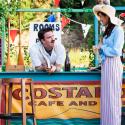
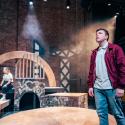
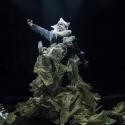
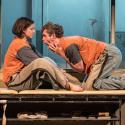
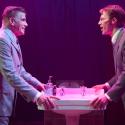
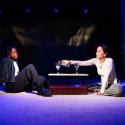
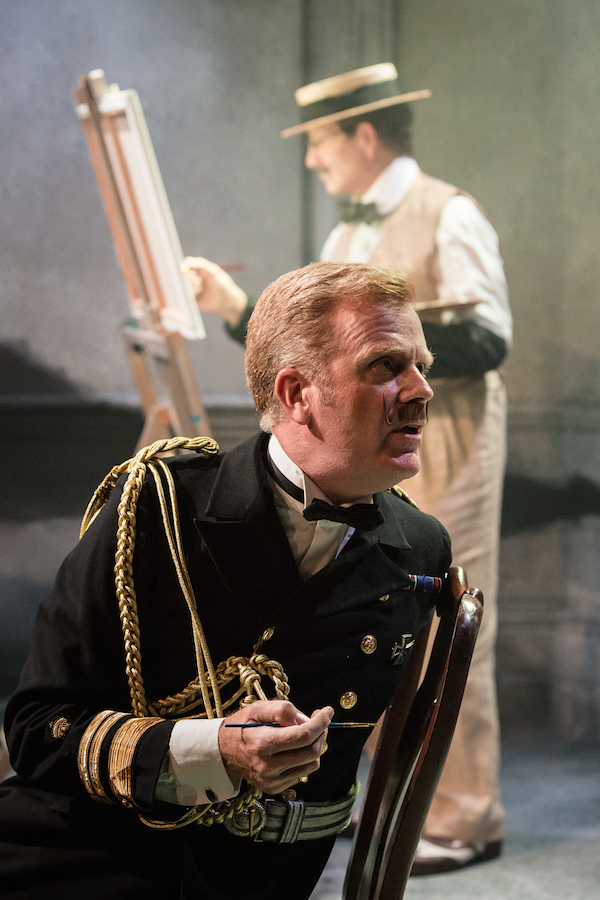 Consequently, several scenes are purely informative, including Emperor Franz Joseph and King Edward VII discussing the danger posed by Kaiser Wilhelm II, German politicians leaking dubious intelligence, and a peacenik French minister's wife murderously confronting an editor. In Gwynne Edwards’ accessible free adaptation, there are a few that offer emotional complexity. Particularly moving are Andrea Hart as a German scientist tormented by the development of chemical warfare, Sarah-Jayne Butler’s Lusitania victim, and Peter Cadden and Henry Proffit’s anxious Serbian conspirators. Nick Danan has fun with Churchill as a young firebrand, as does Hart playing his glamorous American mother, and Tim Faulkner is magnificent as capricious, art-loving zealot Kaiser Wilhelm (pictured left).
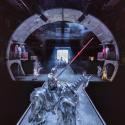
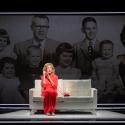
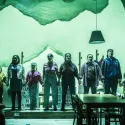
Christopher Loscher, with help from Mike Lees’ versatile design, maintains a brisk pace without sacrificing clarity and makes excellent use of projections, which offer ghostly reminders of the shattering consequences of these encounters. “Everyone fights with the weapons they have,” asserts the editor soon to find himself on the wrong end of a pistol, and Hochhuth has certainly deployed all of his weapons in this combative, fiercely ideological pageant.