If you ever wanted to know what a mash up of Martin McDonagh and Conor McPherson, stirred (and there’s a lot of stirring in this play) with a soupçon of Chekhov, Ibsen and Williams looks like, The Kiln has your answer.
Mark O’Rowe’s feuding family fallouts were a big hit at the Galway International Arts Festival last summer and the play has transferred seamlessly to London, fetching up in a house perfectly suited to its forced intimacy. It’s only after you see scaled up productions lose the run of what sent them on to greater things that you realise how much size matters.
We’re on a windswept island off the west coast of Ireland where, as is the case in Father Ted, ill-matched people are trapped, which is always a good start for a dark comedy. They’re there to remember Sean, the patriarch of the clan, who died some five years ago, in their holiday cottage, a reminder of happier times. His widow, Elaine, greets the arrival of her eldest, Janice, and her sister, Gina, with a tad too much enthusiasm and a little alarm goes off in your head - why haven’t they seen each other for so long? We soon find out.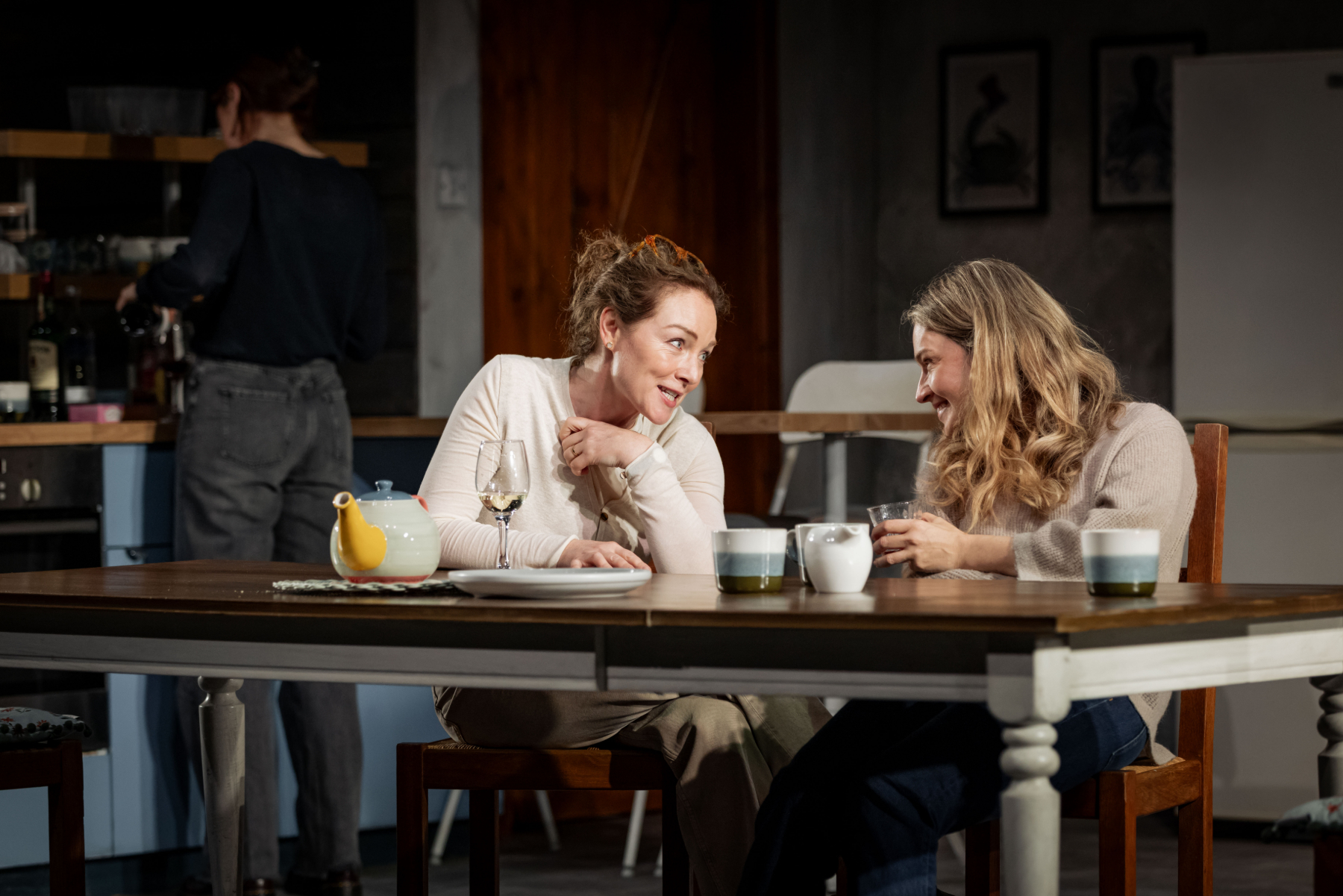 O’Rowe’s writing is sharp, delineating 10 characters with wildly varying personalities, but all, just about, believable, given our privilege of an occasional wedge of backstory and exposition that jars only a little.
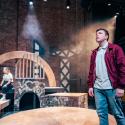
But it’s in his direction that he really shines, getting his cast on and off Francis O’Connor’s well observed set as required, using the kitchen table as a pitch for, well, pitched battles. It’s critical that nobody is off stage for long, that the comedy doesn’t descend into farce-like dashing on and off and that we never forget that, geographically as well as emotionally, leaving is not an option.
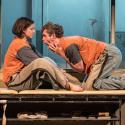
Aislín McGuckin (pictured above with Catherine Walker) vests Elaine with the world-weary patience of a woman who knows that her flawed family is the only one she has and that she long ago played any cards that appealed to their better natures without success. She hasn’t exactly given up, but her pessimism proves well founded. Catherine Walker’s Gina is her counterpoint in many ways, transactional rather than emotional in her relationships and, ultimately, cruel - as transactional people so often are.
We’ve already clocked that the eldest offspring, Janice (a sensationally hideous, narrow-eyed, Venetia Bowe) and the awkward middle one, Marilyn (played damaged but defiant by Kate Gilmore) are at daggers drawn, but it’s the unexpected arrival of Marilyn’s ex, Aonghus, that overturns the already listing apple cart. Ian Lloyd-Anderson has a lot of fun with his self-dramatising poet, and, if it stretches credibility for Elaine to encourage him into her home, then some women always have a weakness for men like him - and he knows it.
Of the other four weak men we meet, Elaine’s favourite, immature Maurice (Peter Corboy) and his disgruntled partner, Holly (Simone Collins) feel somewhat generic and, in a play that runs to more than 100 minutes all-through, I’m not sure we’d lose a lot were their awkward alliance cut. Likewise, suave charmer, Stuart (Stephen Hagan) the unlikely husband of Janice, and quiet Ciaran (Leonard Buckley), the even less likely partner of the firebrand Marilyn, are included as much to facilitate hand grenades to be flung into the narrative as to stand on their own two feet.
Not so Felix, Holly’s spare part of a father, who is closed off after his wife walked out 15 years ago. Stephen Brennan is in showstealing form as he brings plenty of comic cuts and a very much needed poignancy to demonstrate that any choice, including making no choice, has its price when ids run free and superegos fail. We know him much more through the odd shrug and mournful glance than we do the others through their histrionics.
The big reckoning never really comes - life is so often like that I suppose - but it’s merciful to have the threat of melodrama held at arm’s length. That said, I was left, for all the craft in the writing and the super performances, with a vague sense of emptiness. That’s the inevitable result of having been in the company of so many narcissists on stage and, I’ll confess, assailed by too many in public life too. At the curtain, I was glad to leave them to their own devices, let them get on with it and receive a redemptive smile from the front of house staff when I thanked them on the way out. People are generous and good after all.
I wondered why I don’t feel so grateful for that mark of generosity when Vanya and Sonya play out the saddest scene in theatre. Unfair as it may be to compare any playwright with Chekhov and his unparalleled insight into the human soul, but O’Rowe gives us so little to like in all but Elaine and Felix that it weakens our response to what could be a very powerful work. Empathising with characters who feel no empathy themselves, is a big ask of any audience.