The cry "Let's pretend" must have been heard often when J M Barrie played with the Llewelyn Davies boys in Kensington Gardens or at Black Lake Cottage in Surrey. The five sons of Arthur and Sylvia, orphaned as children and adopted by Barrie, almost all had tragic lives: George died in Flanders in 1915, Michael drowned at Oxford, Peter later committed suicide. But during childhood they escaped into piratical adventures and an invented Neverland with "Uncle Jim".
It is inevitable that Barrie's own strange childhood story should be scrutinised alongside his possessive interest in the Llewelyn Davies family. After the death of his adored brother David in a skating accident at the age of 13, Barrie attempted to take his place in his mother's affections, to be David. But David would always be 13 and could not be supplanted. Barrie never grew beyond five feet tall.
The story of Peter Pan, of which there are many versions (including by Barrie himself) can be weighed down with this burden of history, a prey to amateur psychological analysis, or it can be transformed into comforting, prettified myth. Director Sally Cookson succeeds brilliantly (in a co-production with Bristol Old Vic) in avoiding both extremes, referencing the dark side of Barrie's most famous work while at the same time celebrating its childlike joie de vivre. She and the company (with the help of dramaturg Mike Akers and multi-talented musicians led by Benji Bower) make something quite original out of the familiar material. Here is an acknowledgement of the harshness of loss, of the difficulties of growing up, of the nuanced role of motherhood and the value of experience. But it is all delivered with such a light, humorous touch that the result is a very funny, wildly witty celebration of theatre itself, of the power of storytelling and "let's pretend".
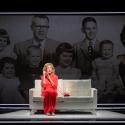
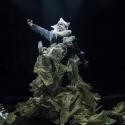
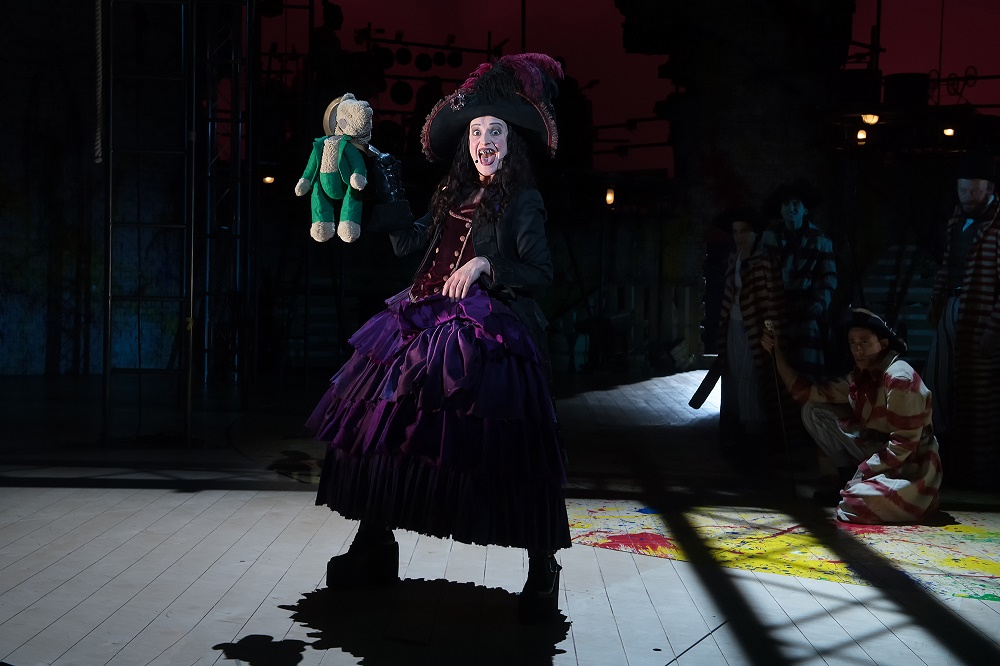 Cookson and her versatile ensemble demonstrate that showing us the harnesses ("fairy strings") which enable Peter and Wendy to fly doesn't detract at all from the magic if the actors seem genuinely thrilled by the experience; it merely adds an extra dimension of fun. Pirates wield cricket bats and lacrosse sticks; Captain Hook - looking vulnerable - is helped by Smee, in full view, into her wig and purple crinoline (pictured above: Anna Francolini as Hook).
For those brought up on Disney or traditional stage versions of Peter Pan, the biggest surprise is that it is the actor playing Mrs Darling who doubles as Captain Hook rather than her hopeless husband. But it turns out that this was Barrie's original intention and he even thought of calling the play, Peter Pan or the Boy Who Hated Mothers.
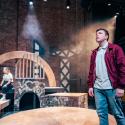
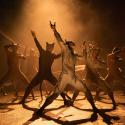
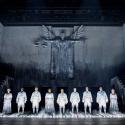
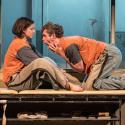
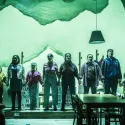
Anna Francolini (who takes over from the injured Sophie Thompson) is splendid in both roles, a sensible, affectionate mother and a swaggering pirate queen. Peter, Wendy and the Lost Boys (pictured below) are all played by adults and if a boy has a beard that's fine, our imagination can cope. Paul Hilton captures both Peter's heartlessness and his childish neediness. Madeleine Worrall (previously the lead in Cookson's inventive Jane Eyre) is Wendy, managing to pull off the difficult task of being an adult playing a child who is more grown-up than the grown-ups. The stereotypical Red Indians are missing, as often in modern productions, although Lois Chimimba makes a spirited Tiger Lily. Saikat Ahamed as a full-size male Tinker Bell utters marvellous gobbledegook in a tutu and a sparkly LED-light headdress. The children were clapping to save him/her before Peter asked them to. Ekow Quartey, muscly and bossy in a frilly uniform, provides a new slant on dog-nurse Nana before becoming Tootles and then a pirate.
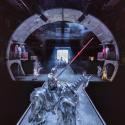
The simple staging on Michael Vale's set gets a touch of spectacle in the last Act when the Olivier’s revolve reveals the pirate ship and Hook disappears into enormous crocodile jaws which might have been fashioned out of beaten buckets and a traffic light.
Emily, my eleven-year-old assistant reviewer, loved the knowing fun and the fact that everything was so visually open. She even loved the doubling, but then she goes to drama club and appreciated the ease with which a lost boy could turn into a pirate, or a dog into a lost boy.