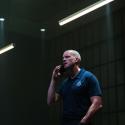
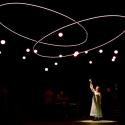
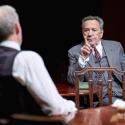
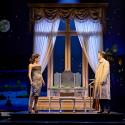
An opening video montage presents us with a rogues' gallery of powerful men who have done bad things. Plenty of the usual suspects appear to stomach-churning effect, but no ex-President Nicolas Sarkozy, sentenced last week to five years in prison by the usually tolerant French. So the problem certainly hasn’t gone away with the Clintons, Weinsteins and their ilk. We all know the “power corrupts…” quote, so perhaps we shouldn’t be surprised and, maybe, we should be a little wary of vesting so much power in such men – that is, most men.
Duke Vincentio, no stranger to sins of the flesh himself, has breezily allowed Vienna to slide into licentiousness and, when threatened with exposure, hightails it out of town to lie low. He’s the kind of man for whom everything is an opportunity, so he places the puritanical Angelo in his chair knowing he will crack the whip and provoke the people into a clamour for their liberal Lord to return sooner rather than later, indiscretions forgotten.
Needing a victim, pour encourager les autres, Angelo revives a long unenforced statute and sentences a kid, Claudio, to death for the crime of fornication. On the very steps of the nunnery, the poor lad’s sister, the virginal Isabella, is persuaded to plead for mercy for her brother. Angelo, the kind of man for whom doe-eyed virginal girls like Isabella are absolute catnip, soon makes her an offer he thinks she can’t refuse.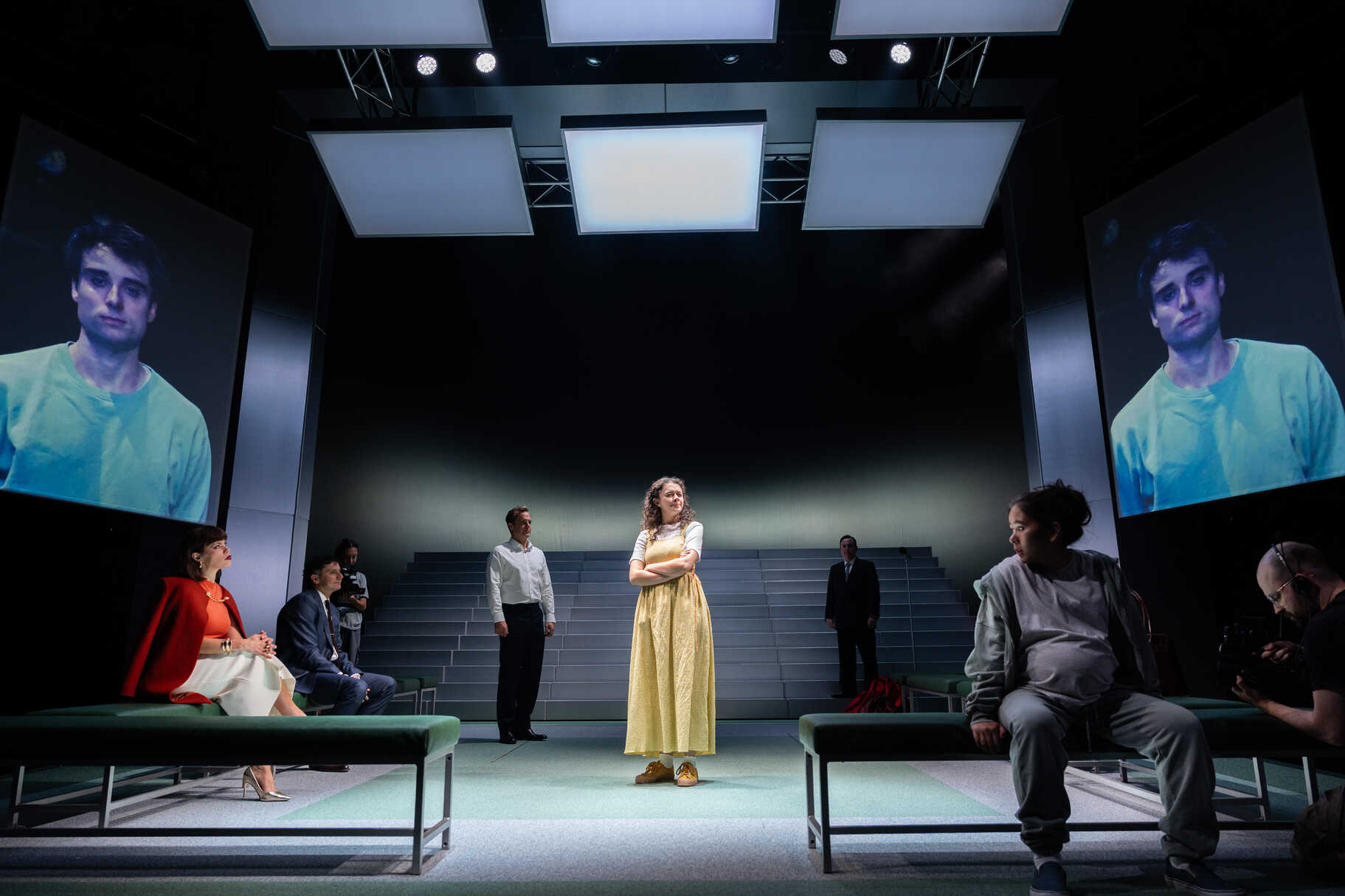 In the programme, there’s a slightly defensive justification for the considerable cuts and additions director, Emily Burns, makes to Shakespeare’s text – well, the text of the scribe who wrote it into the First Folio from the prompt book. No cause for that! Firstly, even Shakespeare isn’t scripture, something with which the actor in him would surely have agreed, and, secondly, Burns has delivered an exceptionally clear version of an often tonally and narratively tricky play. In that, she is helped by actors whose line readings show understanding that the verse and prose needs to be spoken as such and rendered at a pace that allows the (mainly) Elizabethan language to sink in. That really shouldn’t be too remarkable an observation, but, especially away from this venue, it’s rarer than you might think.
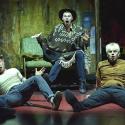
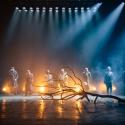
Though there’s a little too much video late on and – not again please! – on-stage microphones to the fore, Frankie Bradshaw’s set and costumes suggest a contemporary corporate state, underlining the kind of projection of power through minimalism that the boys who grew up admiring Steve Jobs’ aesthetic now foist on the rest of us. Not for the first time at a theatre recently, I half-expected Severance’s Mr Milchick to appear making a passive aggressive offer of waffles for all.
Though they have plenty to work with, the actors brilliantly make Shakespeare’s characters appallingly 21st century in their deeds and demeanour. Adam James gives his Vincentio the superficially attractive swagger of a tech bro CEO and the successful politician’s Machiavellian conviction that what he says becomes true by the mere fact of his saying it. Slickly entitled, he toys with the fates of his minions, taking on and taking off disguises (personae really) to serve his own needs and indifferently ruthless in his exercise of arbitrary power. There’s not much point in being a strongman if people aren’t on their knees pleading is there?
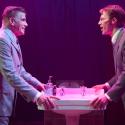
Tom Mothersdale treads a careful line with Angelo. Of course, he’s a monster, a cruel martinet but, with his ever-contorting Mr Beanish face and, creepily, in a soliloquy (one of a number of very good ones), he reveals his awareness of his failings. That confession is no easy route to enhancing the thrill of transgression with a side order of mental flagellation, but a genuine regret at discovering the man he really is. In this version of the play, shorn of the unmissed comic characters and subplot, he also generates plenty of laughs with his hypocrisy and callbacks to the rogues we saw earlier.
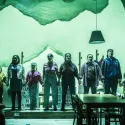
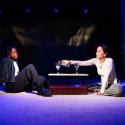
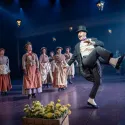
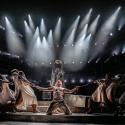
There aren’t many laughs for Isis Hainesworth (pictured above with the cast) and Oli Higginson as the wannabee nun / reluctant whore Isabella and the condemned Claudio to find. Hainesworth is dressed like she’s wandered in from Little House on the Prairie underlining her thoroughgoing rejection of the sex, drugs and rock’n’roll city Vienna has become, making her dilemma all the more heartrending. Higginson can’t quite believe the execution is happening, then that it’s not, then that it is, then… Well, you get the picture - young men always think they’re going to live forever.
There’s a couple of fine turns from Douggie McMeekin as Lucio, who should really have followed Aaron Burr’s warning in Hamilton – “Fools who run their mouths off wind up dead” – and, Emily Benjamin as Mariana, who has plenty of Anna Wintour’s steel behind a pair of Anna Wintour sunglasses.
If poor Isabella’s character arc follows some elements of Puccini’s double-crossed Tosca (there’s plenty of his Baron Scarpia in Angelo too), that might be the inspiration for an ending that comes with an operatic flourish.
It shows too the stakes for the often unseen, often unheard, sometimes even unnamed, women who deal with the backwash of entitled men’s arrogance, nurtured in the hothouse of too much money, too much authority and too little empathy. This is a Shakespeare for our times that shows rather than preaches and brings out the beauty of the poetry alongside the pin-sharp psychology. It’s exactly what this house should be doing.