What must it be like to lose a child to random violence? The great Irish dramatist Frank McGuinness, who has tackled mythic violence on a number of occasions in previous work, has now delivered a devastating portrait of modern-day loss and revenge in a production from the Liverpool Everyman and Playhouse.
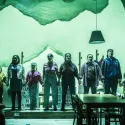
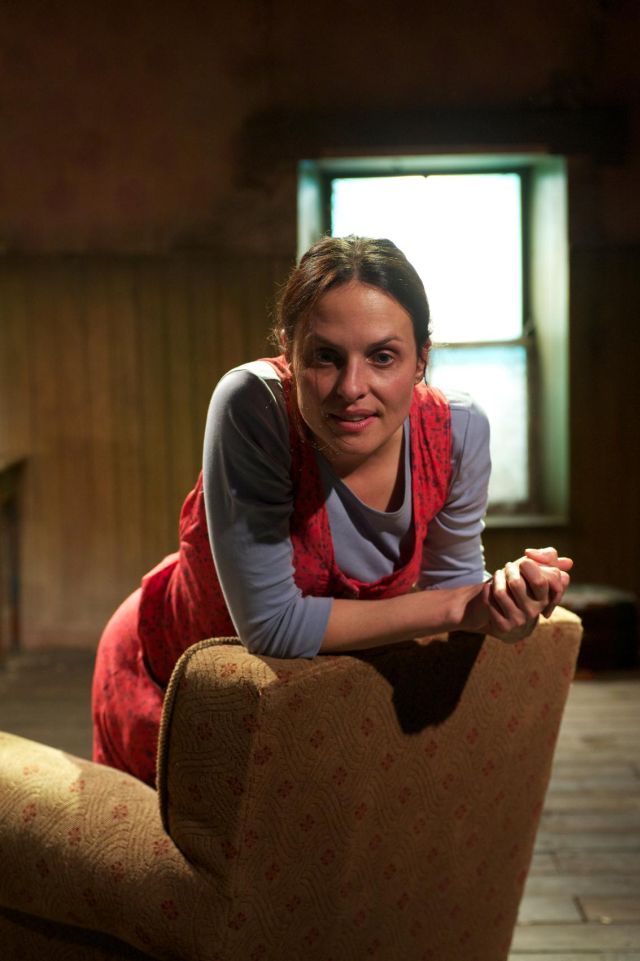 Yet, as directed by the actress Lia Williams and performed remarkably by Leanne Best, nothing is quite as it seems. On a crepuscular set that looks like an overhang from Martin McDonagh or J M Synge (well, the setting is the west coast of Ireland), this young woman, Sal, carries a definite if conspiratorial swagger.
McGuinness lets us in on her traumatic past only bit by bit via the odd reference here to "sympathy" or "I keep myself to myself on that subject". Then, a seeming distraction arrives in the story of a childhood friend, Cara, who believed in fate and disappeared. All the while, Sal is striking matches, playing with fire. They flare for a moment and, like a huge metaphor hanging in the air, she declares: "It glows, it goes out. There is a fixed time for it to flare.... no two matches ever lasted the exact amount of time."
Here is a mother trying to come to terms with a totally unexpected, irrational loss - the shooting of her 12-year-old daughter, Mary - in the only way she knows how. As if a composite of recent news stories where children have become innocent victims caught in gang crossfires, McGuinness's play digs into the flesh and sinew of reaction to such an event, from family, friends, and outsiders and on to Sal herself. His findings are unexpected.
As it happens, this most humane of writers turns that word on its head, presenting Sal, in a memorable press conference statement, as a young mother ready to extend forgiveness to the casual killers - possibly three brothers - while what later transpires suggests something far different.
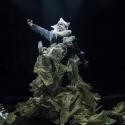
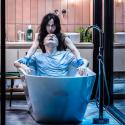
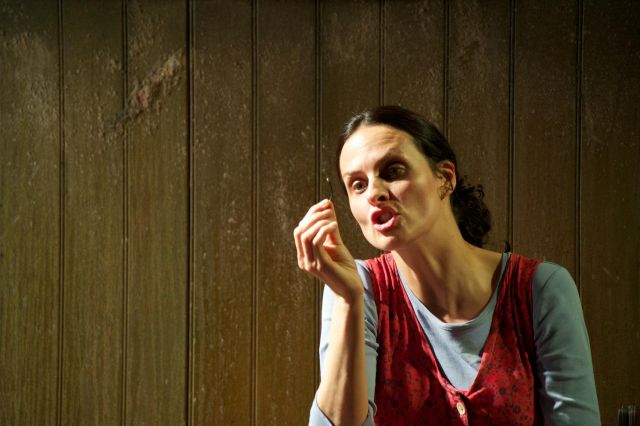 But nothing is certain. Even the climax - shattering in its agony - is ambivalent. Best, after a scream to wrench the stars from their orbits, sits like a Goya painting, hair tangled, a face etched with pain that seems to reach back into eternity and speak for all maternal pain for all time.
It's a harrowing transformation that leaves us no wiser as to Sal's culpability even as it emphasises Bests's extraordinary solo turn, whereby the actress holds us rapt for 100 minutes as an initially defiant young mother who nonetheless every so often casts sideway glances that send shivers down the spine.
By turns intimate and strangely formal in its language, the play confirms McGuinness as an ongoing voice of conscience asking awkward questions about public as well as private reactions to the great abstracts of our time - chief among them, revenge as public construct as well as personal, primeval response. Stunning stuff.