“I’ve got a terrible confession to make”, I said to my long-suffering partner who had been away for the weekend with our young daughter. “Oh yes,” I could see her thinking, “what have you done now?” “Well, I’ve written a play about the Nazi persecution of the disabled,” was my shifty reply. The truth is it’s such a disgusting subject, I was almost ashamed of what I’d done.
All Our Children has its roots in historical fact. I’d been reading Richard Evans’s remarkable three-part history of the Third Reich and was fascinated and moved by his account of the deeply conservative and aristocratic Cardinal Clemens von Galen, whose sermons in 1941 brought to an end the Nazi policy of murdering people with disabilities. Hitler declared they were living “lives unworthy of life”, and approximately 100,000 people of all ages were killed in Germany and the occupied territories. Von Galen had the courage, the commitment and the tenacity to stand up to Hitler in probably the most effective act of internal resistance in the whole sorry history of the Third Reich.
 The story struck me in personal ways too. My mother was a Jewish refugee from Nazi persecution, and I was brought up a Catholic (I’m now an atheist). I’m also the father of a profoundly disabled 20-year-old who would, no doubt, have been murdered under T4, the programme of “mercy killing” that started in September 1939. My Joey has changed my life in all sorts of profound and important ways, and it’s been a terrifying but valuable experience to imagine a world in which his worth would have been denied, and he and so many like him would have been destroyed.
The play is, in many ways, a naturalistic, Ibsenite chamber piece set in a clinic for disabled young people. This is not where the murders take place, but where the “clinical” decisions are made. I decided early on that there should be no disabled children, no scenes of violence, nothing but a remorseless and, I hope, engaging investigation into attitudes towards the profoundly disabled, not just in the hell of Nazi Germany but, by implication, our own century too. I’ve tried to dramatise the everyday life of the clinic, and catch the ordinariness of the staff, as well as speculating on the psychological damage that it causes the perpetrators, and the families of the victims.
 At the heart of the play is a debate between von Galen and a fictional paediatrician. As an atheist and a liberal, I’m fascinated that the religious fundamentalist has the right answer (“thou shalt not kill”), while the atheist scientist has been lulled into carrying out acts that are contrary to everything he is meant to believe in. Such contradictions, it seems, are the stuff of drama - and of life. Certainly, eugenics was commonplace in pre-war Europe and America - even that arch-liberal, Virginia Woolf wrote, when confronted by a group of “imbeciles” in 1915 that “they should certainly be killed”.
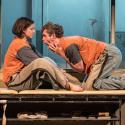
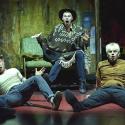
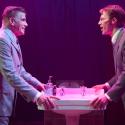
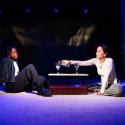
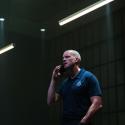
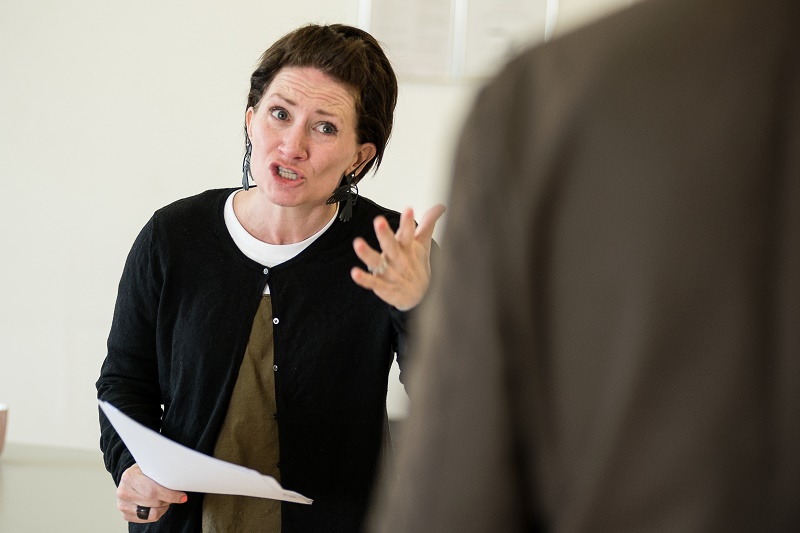
I’ve been working as a theatre and opera director for almost 35 years and have translated a dozen plays (Ibsen, Brecht, Schnitzler etc) and written eight books, but this is my first foray into playwriting. And as for directing my own play, well, time will tell whether it’s an act of dangerous hubris. Luckily, I’m blessed with an extraordinary starry cast - Rebecca Johnson, Lucy Speed (pictured above in rehearsal), Ed Franklin, Colin Tierney and David Yelland. What I do know from my everyday experience, is that the fight for the rights of the disabled - especially those with severe learning disabilities - to enjoy all the things that the rest of us take for granted is a very real one and that the arts, in their own small way, can - and should - make a contribution.
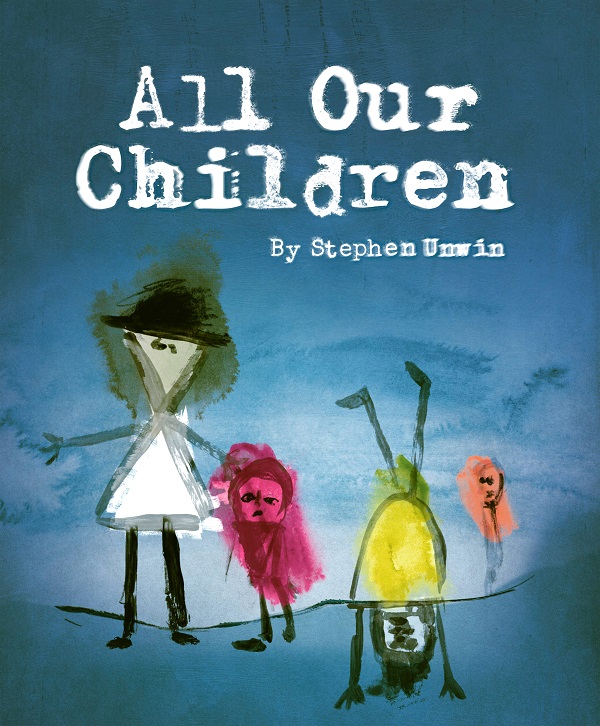
- All Our Children is at Jermyn Street Theatre until 3 June
- Read more First Person articles on theartsdesk