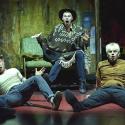
Hedda Gabler is a Hollywood star of The Golden Age – or rather, she was. She walked off the set of two movies into a five-film deal and didn’t come back. Millions watched her, but only a very select few saw her, and that paradox became insupportable.
Those in the know were privy to a secret that would, in 1948 under the USA's racist Hays Code and its British mimicking, ruin her, professionally and personally. She knows that her Sword of Damocles swung closer every day, even behind drawn curtains.
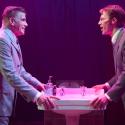
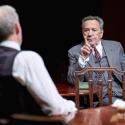
Tanika Gupta’s spectacularly successful reimagining of Ibsen’s classic is more than an "After…" version (as one often gets with Strindberg’s Miss Julie). Ibsen’s architecture is still visible, but it may be best to view this production as pretty much a new play, albeit one with familiar characters and a narrative arc that we’ve seen before, and not just in Ibsen. As such it’s a terrific and terrifying experience, a swirling kaleidoscope of tricks and traps that captures real life relevance in the late 19th century, the mid-20th century and the early 21st century all at once. That plasticity and universality is the hallmark of a classic.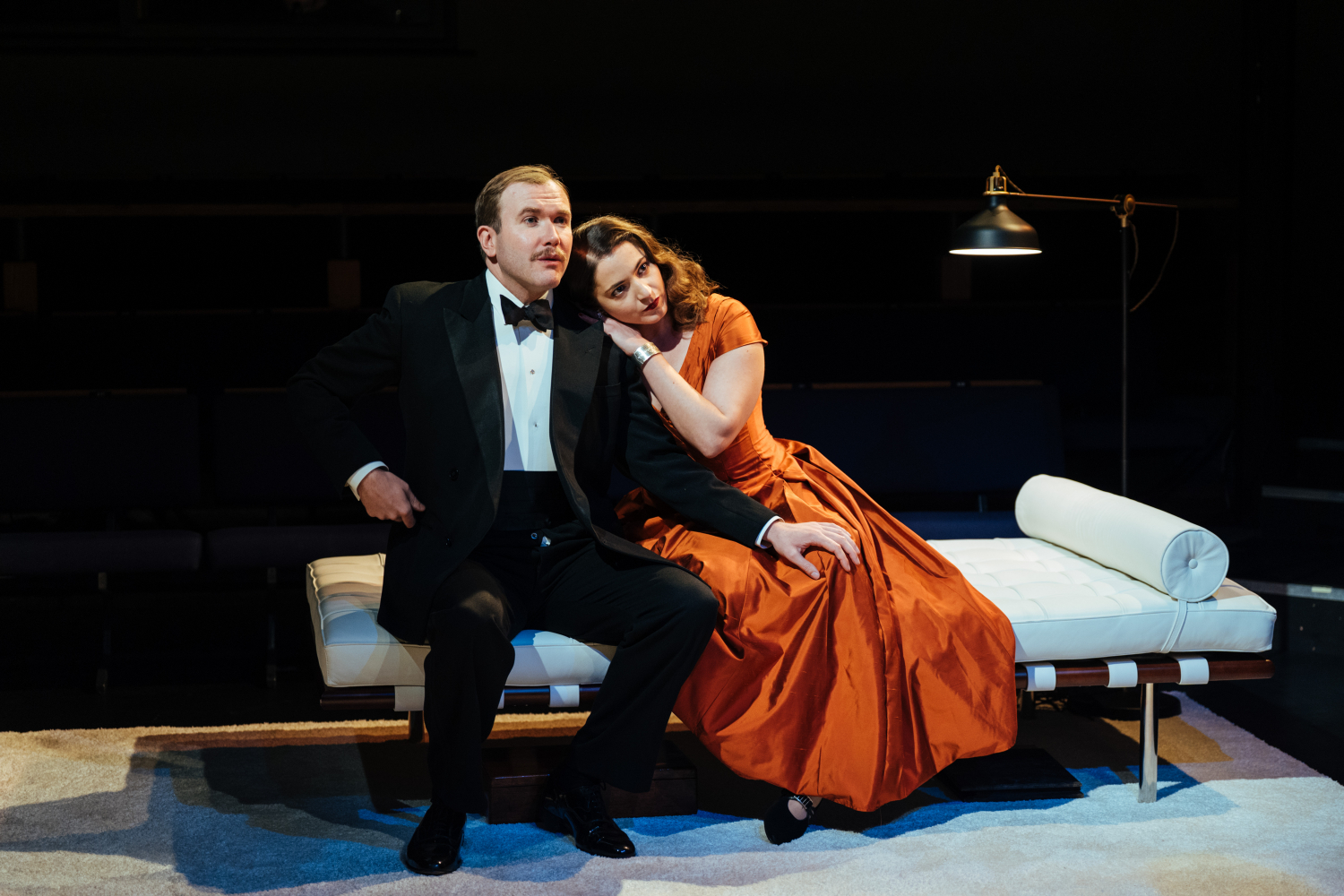 Hedda is sexy and she knows it, from her teen years almost always the smartest person in the room, a product of pulling herself up by the bootstraps, the daughter of a General in the British Raj and a low caste servant girl. Pearl Chanda’s (pictured above with Joe Banister) beautifully judged performance projects a disdain bordering on contempt towards those less streetwise, less beautiful, who surround Hedda in her Chelsea drawing room, a very pale environment (in every sense) compared to the bright lights and bright sun of California. To be fair, she didn’t like that much either. Baubles like servants and pianos may provide a transitory distraction on the King's Road, but how can you feel at home in any space when you’re not at home in your own skin?
Asked why she keeps her ageing, acerbic maid on in the job, she replies “She’s good with my make-up”. It’s a joke on the mugs who surround her, but the whitening puffy that passes her as pure-blood and not, in a phrase that was in common usage as late as when I was growing up, ‘half-caste’ (the phrase detonating in the script), is killing her. Soon, as we know from the moment we see her father’s pistols in a box, there’ll be more literal killing.
Her third (or is it fourth?) husband, George Tesman, is a second rank film director, not quite able to believe his boring, solid reliability proved enough to catch Hedda, but behind his perma-grin (Joe Bannister’s teeth might bag a few Best Supporting Actor nominations) he knows that lightning cannot be caught in a bottle for long. It’s hard to believe a man so bereft of emotional intelligence could be so successful, but that’s partly because even quite bright men transform into idiots around beautiful women and partly because such character flaws as his are no barrier to getting on in life, then and now. We all know a few George Tesmans, it's just them that don't.
Rather more worldly, John Brack, the producer who is less interested in Tesman’s film and more interested in Tesman’s wife, hovers around Hedda with money in one hand and his libido in the other. Milo Twomey nails the oily charm and eye on the main chance such men use to clamber up whichever greasy pole is handy. Hedda’s dealt with dudes like him all her life and knows how to hold them at arm’s length – until she can’t.
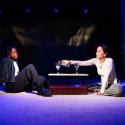
Ennui is slowly eating Hedda away from the inside out, but an immediate existential threat arrives in the shape of the mercurial screenwriter Leonard, a PTSD-suffering, alcoholic flying ace who knows Hedda from the days before her daily applications of powder potions to lighten the skin. There’s plenty still between them – after all, unlike everyone else bar her "maid", Shona (a showstealing Rina Fatania), she is seen by him – but that is also why he cannot exist in the carefully constructed pretend world that imprisons and protects Hedda. Jake Mann has a lot to do in limited stage time, but delivers the crucial role with a perfect mix of tragically crazy-in-love and understandably crazy-in-booze.
In Hettie Macdonald’s intimate production, the Orange Tree Theatre’s scale cranks the intensity up to 11 and keeps it there, the storytelling orthodox, the innovation in the adaptation rather than in the staging and performances, the pace electric throughout a tight runtime. That’s a demonstration of real confidence and fine judgement, since the foundation is so strong and its extension so dazzlingly conceived and executed. Nothing is broken that did not need to be fixed for the adaptation to work.
Satisfyingly, Hedda’s moral is the perfect rebuttal to the leading news item on press night, those dismal equivocations offered as a response to a sitting MP’s whining about black and brown faces on her television. You don’t lessen racism in order to allow admittance to polite society, you destroy it with heart and soul, the pollution addressed at source, because the consequences are disastrous.
This production shows that if you insist on denying a person their selfhood, don’t be surprised when they fight back, nor at the price they ultimately pay.