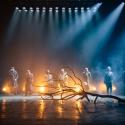
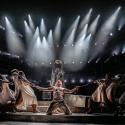
Michael Head's new play is based on the book They Took the Lead by Stephen Jenkins, which tells the true story of events at Clapton Orient (now Leyton Orient) Football Club during the First World War, when 41 men associated with the east London team – players, backroom staff and supporters – joined up en masse to fight the Kaiser. Three never returned and several others were seriously injured.
It's a familiar story of young men – whether united by town or occupation – who joined “pals regiments” (the Orient players joined the Footballers' Battalion) where they thought they would be having a laugh with their mates on a jaunt abroad. The laughter stopped when they reached the trenches of northern France.
The courage and cameraderie of the men is a rich area to explore
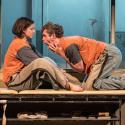
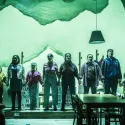
That's where the story starts in Head's play, as we see the young footballers on the Somme in 1916, joined by Lad (a fine Charlie Eales), who has lied about his age to sign up and fight alongside his footballing heroes. At the heart of the play is the relationship between childhood pals and later Orient team-mates William Jonas (Will Howard) and Richard McFadden (Peter Hannah); there's also a neat mirroring of the leadership role played at the Somme by Orient's captain, Spider Parker (Charlie Clements), and the team's boss back in London, Billy Holmes (Nick Hancock).
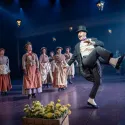
It's a fantastic story, but one badly served by a weak script (which is often jarringly anachronistic) and fussy direction by Tilly Vosburgh, and at two hours 40 minutes, the play is way too long. Too many scenes are unnecessary and hold up the action (the wives singing a goodbye song to their men, for example) while others merely repeat the same scenario – “We need to win this one, lads,” says manager Billy several times during the evening.
There are some annoyingly stock characters – the dimwitted team member, the lazy, overweight one who avoids training (played by Head) – and some less-than-scintillating dressing-room banter. And if there is one too many leaden jokes about local football rivals Millwall, there are several more about the Londoners in the team confusing Geordies with Wearsiders.
The courage and camaraderie of the men is a rich area to explore, but mostly what we see on the stage is pedestrian and predictable. And while the play has its heart in the right place, there is sadly little theatricality in the writing and staging. The actors do their best with the poor material.
- The Greater Game is at Southwark Playhouse, London SE1 until 15 October
- Read more theatre reviews on theartsdesk