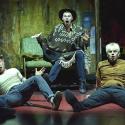
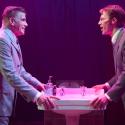
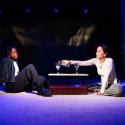
An apocalyptic title proves somewhat of a red herring for a slight if intriguing play that returns the dream team behind Harry Potter and the Cursed Child to their erstwhile stomping ground at the Royal Court. Set across 20 years in the Newbury kitchen of a socialist family most of whom on this evidence cannot cook, Jack Thorne's play traces a familial and political bequest that takes us from the arrival of Tony Blair as PM through to the spring of 2017 and a lone reference in passing to "Brexit Britain".
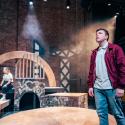
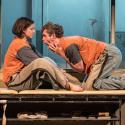
Structurally and thematically, the play at times puts one in mind of Mike Bartlett's decades-spanning Court entry from 2012 Love, Love, Love, though that play followed through on the passage of time to far greater payoff. Thorne gives us flashpoint moments in the fractious household of Sal (a deliberately abrasive Lesley Sharp) and David (the always-welcome David Morrissey) and their three children – Cambridge-educated Polly (Kate O'Flynn), adulterous Carl (Sam Swainsbury) and his detention-prone (and gay) younger brother, Tom (Laurie Davidson). Each of the three scenes comes with a major revelation or life event – of which death is inevitably the most dramatic – as references and changing fashions of the time flit by: Greenham Common and the CND, Deliveroo and the perils of sexting the next.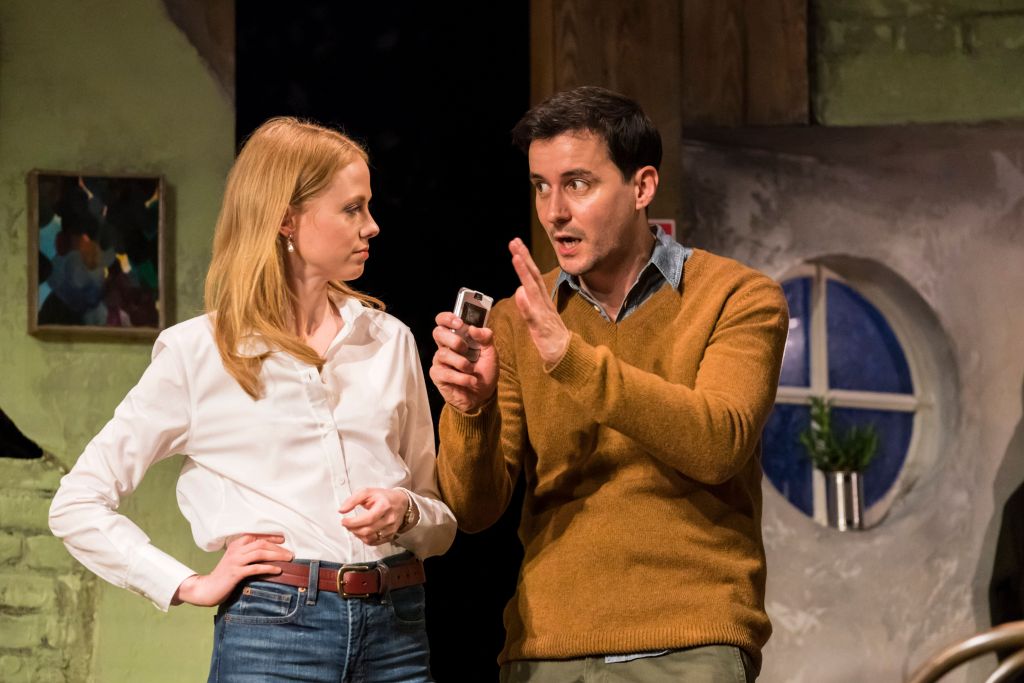 The closing passages have about them the feel of a requiem, which isn't always easy to square with what has come before. Certainly the first half hour or so is played with the accelerated rhythms of a sitcom, Sharp talking very fast indeed as she faces off not just against her children but against the posh (and, we discover, pregnant) Catholic girlfriend, Harriet (Zoe Boyle, with Swainsbury, pictured above), whom Carl has introduced into the mix.
Quite why Harriet would return for more when her mere voicing of the word "yeah" has earlier been used as a running (and cheap) gag is anyone's guess. But there she is again, this time a figure not of fun but of fury in a second scene that finds Sal and David summoning the children so as to announce their plans to disinherit all three in order to give the dosh instead to charity. How will that affect the hapless Tom, whom the fast-rising Davidson (of TV series Will and pictured below) invests with an inner life that suggests a play all its own? "I know Tom is struggling a little," concedes Sal, and that, it appears, is that: small wonder that the scene comes to rest with a predictably grievous offstage gesture.
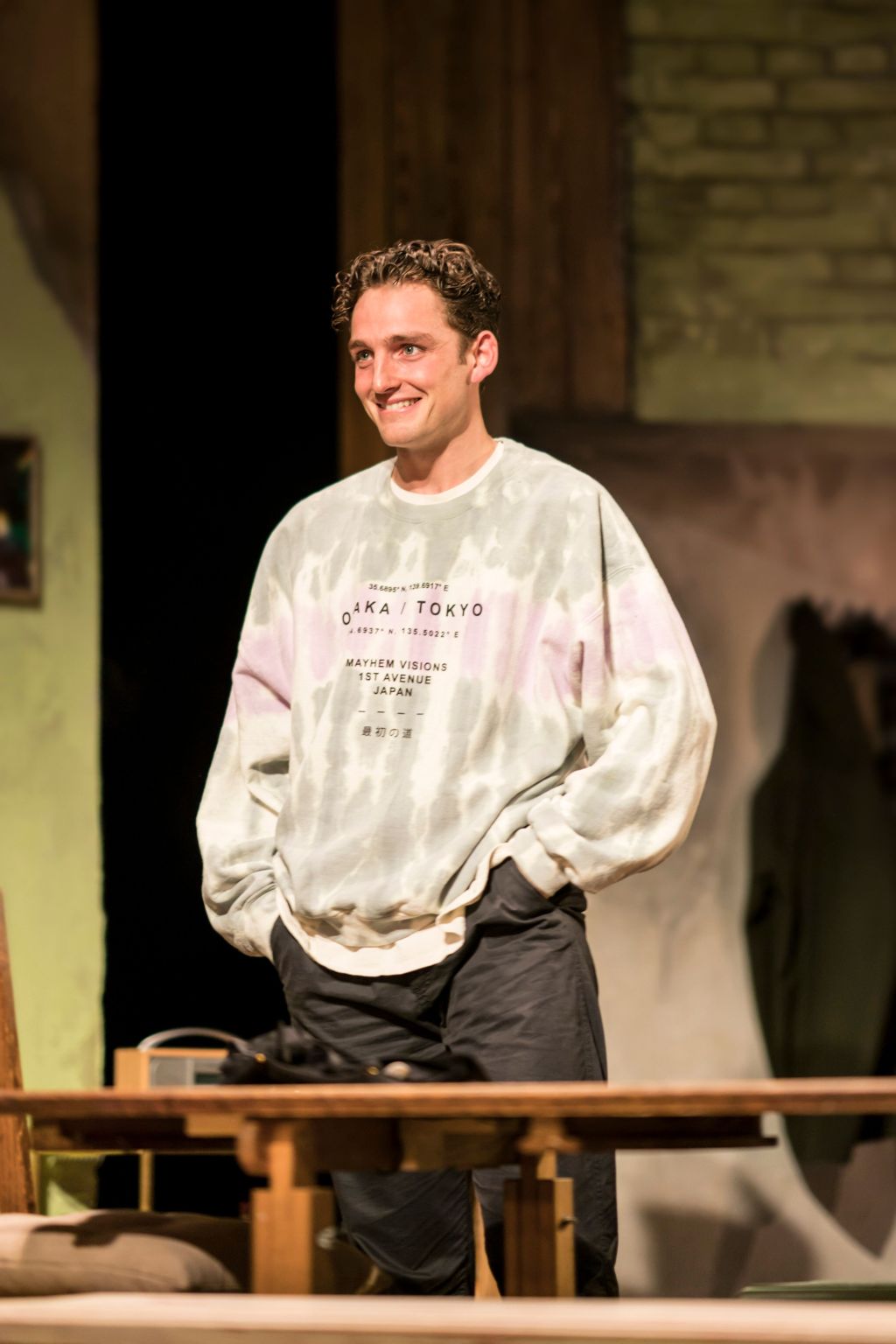 Cue 2017 and Tom is centre-stage, pondering whether the word "lasagna" is its own plural when he might have been better off checking on the olfactory capabilities of siblings who seem unable to sniff out a dish burning in an oven by their side. It's telling of the narrative problems here on view that we learn far more about one character in that person's absence than we ever do in the presence of someone who doesn't appear to bear much relation to what is later reported on their behalf. Much is made of the importance of the passing between generations of "keen minds", which, again, wouldn't seem to mesh with offspring, one of whom is daft enough to receive obscene photos on a work phone.
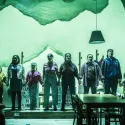
The title acknowledges Francis Fukuyama but also promises a political emphasis to events that instead devolve into the sort of parent-child agon that Philip Larkin might well recognise. Much is made of the disparity in wealth between this hardscrabble family and the comfort into which Harriet was born, though it's equally evident from Grace Smart's inviting set that Sal and David aren't exactly short of a crust or two. (Quite why Chinese takeaway apparently requires longer delivery times in Berkshire than elsewhere is another matter.) We hear about Sal's open embrace of newcomers into their home, so it seems a shame that the only outsider we actually see is treated as dismissively as Harriet is here.
The starriest cast seen at this address in some while tear into the piece with gusto, even when the fissures within the family ranks make one wonder why any of the children didn't decamp to Eritrea well before David decides to do so near the end. Indeed, so much is made of the self-contradictions within the parental ranks that their progeny seem just a tad shortchanged by a play that has to hit various hot topics at 10-year intervals when what we want is to know more about how these individuals got from there to here. The bustling scene changes eschew period-setting music in favour of a beehive of activity that allows Tiffany's longtime colleague, movement director Steven Hoggett, to do his thing. But the overall import of the evening never comes into focus – less the end of history than a play that, in some ways, has yet to begin.