Edinburgh Fringe 2019 review: Birth

Ravishing physical theatre on the beginnings of life from Theatre Re

share this article

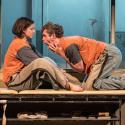
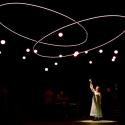
Eygló Belafonte: a strongly defined performance as Birth's central protagonist
Pamela Raith Photography

Physical theatre company Theatre Re are virtually Fringe royalty these days, with a several-year history of fine shows under their belts, plus success internationally and at the London Mime Festival. And judging by their assured and richly resonant Birth this year, they’re just getting better and better – their productions more ambitious, more accomplished and with greater thematic depth.

Following last year’s tearjerking take on dementia, The Nature of Forgetting, this year’s offering tackles – well, nothing less than human life itself. Birth follows three generations of women in the same family through pregnancy, childbirth and child rearing, interweaving their stories of fear and loss, love and hope, the mundane and the universal.

It’s an astonishingly adept work, almost entirely wordless but ringingly clear in its storytelling, and leaping back and forth through time to draw parallels and contrasts between its protagonists’ stories. Eygló Belafonte makes a strongly defined Emily, with Vyte Garriga and Claudia Marciano equally vivid as her mother and grandmother, each facing their own individual problems. Director Guillaume Pigé’s brisk, fluid production makes magical use of a stage-size sheet, and balances near constant movement with impeccable elegance – with so much going on, it’s a wonder that there’s so seldom a step, glance or prop out of place. Alex Judd’s elaborate musical score, which he plays live on multiple instruments, channels Nyman and Glass along with tender harmonies and catchy tunes as befits the subject matter.

Birth is a ravishingly beautiful, spellbinding piece of work, performed with panache and utter conviction. And it’s a joy to experience a show seen so firmly from the perspectives of women of different ages, without that ever feeling foregrounded or self-conscious. It’s a bittersweet joy from start to finish.

  • Birth at the Pleasance Courtyard until 25 August

Add comment

The content of this field is kept private and will not be shown publicly.
Name that you would like to appear as the author of the comment
Birth is an astonishingly adept work, almost entirely wordless but ringingly clear in its storytelling

rating

5

share this article

the future of arts journalism

You can stop theartsdesk.com closing! 

We urgently need financing to survive. Our fundraising drive has thus far raised £33,000 but we need to reach £100,000 or we will be forced to close. Please contribute here: https://gofund.me/c3f6033d

And if you can forward this information to anyone who might assist, we’d be grateful.

Subscribe to theartsdesk.com

Thank you for continuing to read our work on theartsdesk.com. For unlimited access to every article in its entirety, including our archive of more than 15,000 pieces, we're asking for £5 per month or £40 per year. We feel it's a great deal, and hope you do too.

To take a monthly subscription now simply click here.

Or
Why not take an annual subscription and save a third off our monthly price simply click here.

more theatre

Lots of innovative ideas, but we need to hear the line readings clearly
Eurovision star Sam Ryder is made for the title role, while Drew McOnie’s choreography makes us feel the delirium
Chloë Moss’s new drama is a nerve-fraying example of telephonic tension
Carrie Cracknell’s splendid revival of Stoppard’s masterwork transfers with its magic intact
Transatlantic tensions are diffused through alcohol, sex, and the etiquette of hot dogs
New play about domestic abuse adopts a radical form that works - up to a point
Adrian Lester’s spiky, swaggering hero is the apex predator in this linguistic ecosystem
American playwright Rajiv Joseph’s account of Serbian political assassins really rocks
Michael Longhurst's intelligent directing wrings fresh laughs from a familiar setup
Small-scale film becomes major emotional experience as a stage musical
Martin Crimp’s sparkling latest revisits Molière and gives the play a gender twist