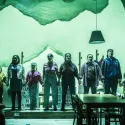
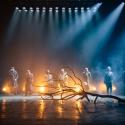
In normal times, Edinburgh Festival audiences would now be packing into the city’s invaluable Traverse Theatre, home to some of the most vibrant new writing in the country. Instead, the Traverse has created a new online venue, Traverse 3, that exists to extend its festival programme throughout the year and can point to an immediate success in a new 30-minute online film, Declan, adapted from a recent stage hit at this same address.
The source material for the actor Lorn Macdonald’s directorial debut is Mouthpiece, the 90-minute play by Kieran Hurley in which Macdonald appeared first in Scotland and then at London’s Soho Theatre.
The provocative two-hander explored Edinburgh’s economic divide and the middle-class domination of the arts as it united a struggling playwright called Libby and the working-class, unemployed 17-year-old artist, Declan Swan.
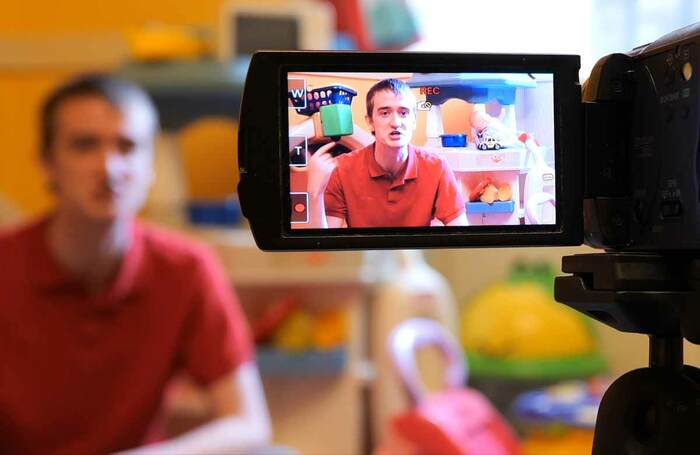 Rather than settle for a literal transcription of the original, for this celluloid Declan Macdonald has devised a kaleidoscopic reimagining that becomes a character study, shifting between black and white and colour (striking animation from Nisan Yetkin, too), all the while plunging us into the seething, swirling world of this lippy, anguished teenager who embraces art – we see him discover an affinity for Francis Bacon – but who refuses to be defined by it.
This time we hear plenty about Libby (and see her during the animated sequences), but the focus remains on Declan, who is played in different states of excitement and distress by both Macdonald and Angus Taylor – the two stage Declans here sharing the part for the camera. Macdonald at one point gets a priceless cameo as Declan’s mum, so is able to play against himself onscreen.
The “meta” import of the piece rests in Declan’s profound unease at being the subject of a play, especially one whose accolades, he can tell, will expound in well-meaning terms on “Britain’s poverty crisis”, thereby reducing Declan the individual to an emblem of something rather than seeing his tempestuous being in the round: a fledgling creator himself, Declan is not keen to be reduced to a headline, no matter how sincere.
The play explores the accessibility of art (Declan is surprised to find that theatre costs money to attend) or the difference between the Edinburgh he calls home and the “theme park for tourists and arseholes” that he laments the Scottish capital becoming. “Everything is going to be alright,” crops up now and again, echoing the neon installation by Martin Creed that adorns the Scottish Museum of Modern Art.
Whether that will be true for Declan may require an as yet unwritten sequel. In the meantime we have Declan onscreen in all its riveting and restless energy.