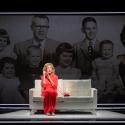
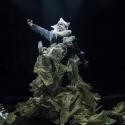
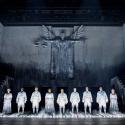
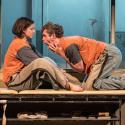
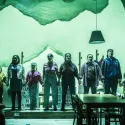
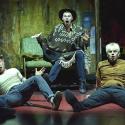
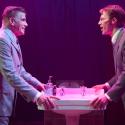
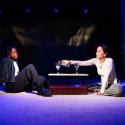
A dark star explodes. I cannot remember the future. A figure appears on the beach. We're always reaching out. It's always just over there. We're always dreaming. The grey rocks, the red sand, the blue sea. Everywhere, the sea. Everything you ever wanted to be.
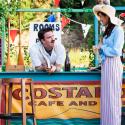
Torbay arches around the south Devon coast like a proscenium arch, a natural arena echoing with the past, present and future. From Torquay's white villas to Paignton's promenade and Brixham's fishing village, these holiday destinations, known as the English Riviera, conceal countless stories behind the resort's veneer: the real lives of those who service and witness those visits and visitors, and what happens in the other 50 weeks of the year. Over three weekends in September 2017, The Tale will tease out these narratives, from the past, present and future, setting one against the other. Combing the contributions of international artists and the perspectives of the people who live there, The Tale will spark a cultural reaction to Torbay's stories from the perspective of the 21st century.
The English Riviera was ever a place of escape
Resonant with the rocks burnt red when this land lay under prehistoric equatorial sun, its human history is unique: the inky darkness of Kents Cavern has been home to three species of human; the earliest human remains in Europe have been found there. Visitors have always been at the heart of this place. The way the land and the sea interact – along with their wildlife – creates a subtle but sublime dynamic, forever changing, forever the same.
At Brixham, the still-working fishing fleet is set against tourism and economic reality, a restlessness represented by its rampaging gulls and the plaintive strains of Abide with Me, written by its Victorian vicar and still played by the church bells. Its promontory, Berry Head, is a wild space held out to sea, encircled by porpoises and gannets, but its quarry was excavated for limestone to produce 1960s Cortinas. Paignton, with its pier and amusement arcades still strung with Victorian ironwork, holds on to its memories for the Northern voices heard on its streets, spending two precious weeks of escape, as swan-shaped boats float on its blue inland pool. Torquay rises through Georgian terraces to rocky hills. The grandeur of its Imperial Hotel announces enclaves of expensive real estate, hidden between bulwarks of sea-bent pines and wind-blown cordylines. Looking down from those red rocks to the turquoise sea, you might hardly believe yourself in England at all.
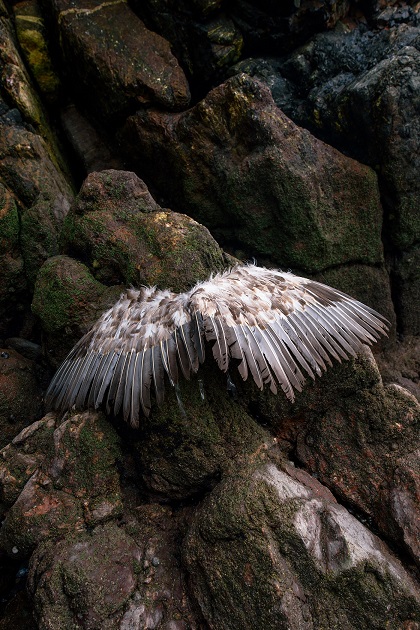 These three discrete elements live fitfully side-by-side, bearing testimony to notable visitors. The English Riviera was ever a place of escape, a way of leaving England, without leaving it, for John Keats, Percy Shelley, Elizabeth Barrett Browning, Oscar Wilde, Isadora Duncan, Wilfred Owen, Noël Coward, Agatha Christie.
Yet all these places live in the future, too: the constant yearning for a new life; ambition, creation, exploration. As much as this is a place that turns its back on the land, it looks out to the sea. Young people live different lives than their city counterparts: those coves and concealed places take on different meanings for them. Meanwhile, the older inhabitants, looking for another fantasy, have retired to a place which reminds them of being happy.
The Tale brings these elements together, in performance, sound and vision; in aspiration, ecstasy and melancholy. Its stories clash and merge to create a portrait of a place familiar to all our childhood family holidays, 14 days which represented release and longing; the same aspirations of the people who live here. And always there is the sense of waiting: for the rain to stop or the tide to turn, or something, or someone, to fall out of the sky.
- The Tale takes place over three weekends in September: 8-10 Sept, 15-17 Sept, 22-24 Sept
- Philip Hoare’s new book RISINGTIDEFALLINGSTAR, drawing themes from The Tale, is published by Fourth Estate
- Read more First Person pieces on theartsdesk