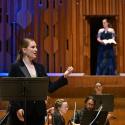
Covent Garden’s masked balls circling around the New Year feature not the seasonal bourgeois Viennese couple and a bat-winged conspirator but a king, his best friend’s wife and – excessively so in this production – the grim reaper. Big voices are what’s needed if it’s Verdi rather than Johann Strauss II, and if we can’t have Jonas Kaufmann, who’s committed his energies to a lesser protagonist, Giordano’s Andrea Chénier, this coming January, then much-trumpeted Maltese tenor Joseph Calleja will have to do. Sadly conductor Daniel Oren is no substitute for Antonio Pappano, also Chénier-bound, and the production is a dud.
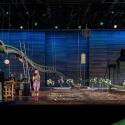
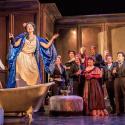
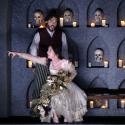
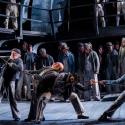
That's surprising from young German director Katharina Thoma, whose convalescent-ward jolt in Strauss’s Ariadne auf Naxos at Glyndebourne I was among the few to admire. Thoma nominally updates Verdi’s 17th century Boston or 18th century Stockholm to Mitteleuropa on the eve of the First World War, but Soutra Gilmour’s stage designs are drab, the few new ideas ineptly executed and the overall feel as conventional as any of Elijah Moshinsky’s mannequin-parade Royal Opera Verdi productions from the 1980s and 1990s. Much is made of what Elisabetta in Verdi's Don Carlo calls "the peace of the tomb": as it's Sarajevo assassination time, everyone is half in love with easeful death, and graveyard statuary comes to life as a zombie movement group. The moments in which the main tomb is wheeled onstage as platform for the principal characters are clumsy, especially so when the conspirators lift Amelia on it while husband Riccardo is shoved symbolically - but at odds with the realistic context - into an open grave.
 It also transpires – and this Thoma's Glyndebourne Ariadne couldn’t have told us – that she doesn’t know how to handle large groups, leaving choreographer Lucy Burge to do some unusually staid infilling, and nor does Oren: this is the messiest contribution I’ve heard from the Royal Opera Chorus, conspicuously so in the first and last scenes yesterday night, and it looked as if unclear direction from the pit was to blame.
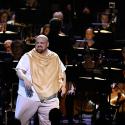
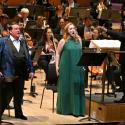
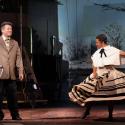
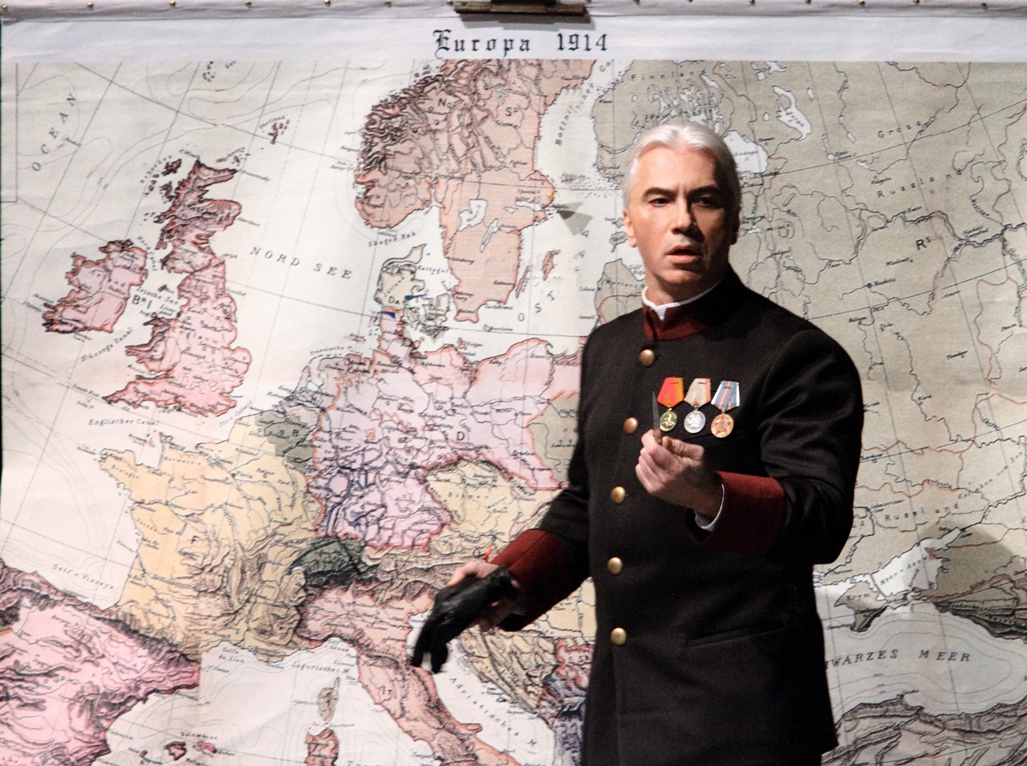
Perhaps Calleja can’t be directed. His movements are stiff and generic, while his distinctive tone – vibrant to some, bleaty-sounding to me – gets in the way of the Verdian line. He also ought to have a bit more fun with the irresponsible ruler in the carefree mode of the opera’s early stages. But then Serena Gamberoni’s stock, charmless page boy Oscar doesn’t either; the Parisian Opéra-Comique touch is dully handled by Oren and there’s no panache onstage, with military manoevres going on during what should be a sparkling Act One Scene One galop-finale. Dmitri Hvorostovsky (pictured above) as friend and minister Renato has to push sharp-ish at times, but this cello among great voices produces some beautiful legato singing, peerlessly so in the calmer section of the big aria “Eri tu, and sets up high expectations with the typically long phrases of his first cavatina.
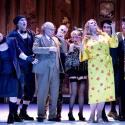
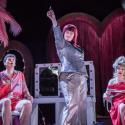
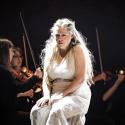
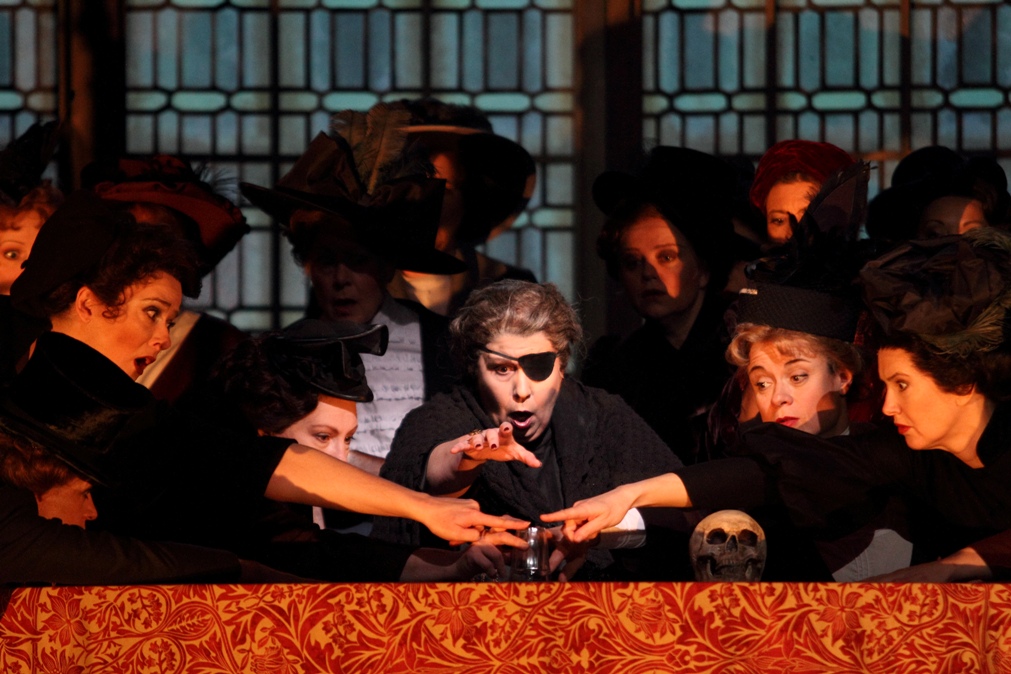 Energy goes up a notch after the first 20 minutes with the arrival of witch Ulrica, true Verdi mezzo Marianne Cornetti as a fashionable séance-mistress delivering baleful prophecies as usual (pictured left with women of the Royal Opera Chorus). I can’t hear her as Brünnhilde, a role the programme tells us she’s tackling, but on the other hand I also can’t wait for Liudmyla Monastyrska to travel north of the Alps from her Verdi calling-cards and essay Wagner’s Ring. More dramatic than lyric, her Amelia is a size too big, but better that than too small or top-less.
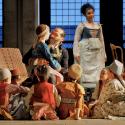
Monastyrska is also a superb musician and technician, singing stylish pianissimos and dominating ensembles like no other Verdi soprano I’ve heard (that was evident right from the start in her Covent Garden debut as Aida). Given the right director, she can act too, but here she simply looks noble or stricken, dignified against the graveyard monuments come to life in the midnight scene and giving the good mother bit – for Amelia's son is onstage a great deal – her best shot.
It’s Oren’s fault as much as Thoma’s if the interest comes and goes. Given such strong voices, the set pieces back in Amelia’s and Renato’s home can’t go wrong – and I’d recommend you go and see this production for these alone - but all life bleeds away long before the assassination. Verdi’s stunning mixture of experiment and tradition deserves a lot better than this.
- Un ballo in maschera at the Royal Opera until 7 January 2015
- BBC Radio 3 broadcast on 10 January