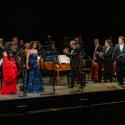
There are quite a few dull patches in the early Verdi operas that aren’t Nabucco, Ernani or Macbeth, so I wasn’t expecting so very much from the 26-year-old composer’s first shot. That was without taking into account how spiritedly the ad hoc Chelsea Opera Group Orchestra would play for conductor Matthew Scott Rogers, whizzing this shortish opera along but never breathlessly, and how well the main roles would be taken.
Rogers's skill in getting his orchestra to phrase and breathe was apparent right at the start in a string arrangement of Myroslav Skoryk's bittersweet Melody, originally for violin and piano, very familiar in Ukraine (Skoryk died in Kyiv in 2020, aged 81, spared the horrors that his more famous contemporary, Valentyn Silvestrov, has had to face). Then, without any slack – there never was any in the entire evening – we were hurled into the compact and effective Overture to Oberto.
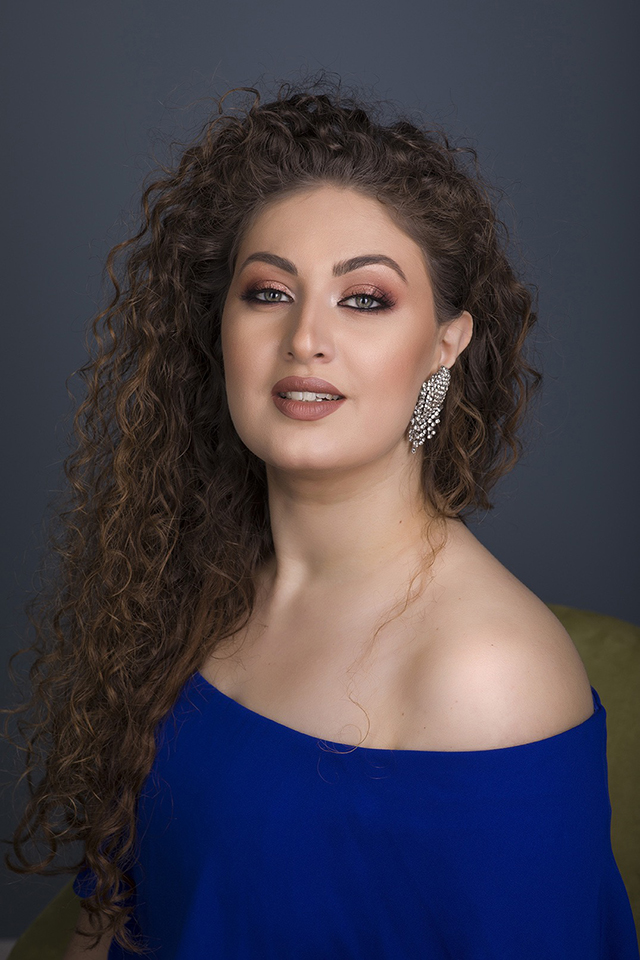 Thanks to supertitles it wasn’t necessary to consult programme synopsis or the libretto COG always makes available. As usual in Italian opera from the first half of the 19th century, the soprano and mezzo are, or have been, both romantically involved with the tenor, though unusually the mezzo is a Good Person. The jilted soprano’s bass-baritone father, like her, wants revenge on the tenor. Verdi and his librettist Solera (the same he used for Nabucco) promise a big confrontation at the wedding of the tenor to the mezzo, and shape the drama neatly to that end. What’s unusual is that all the women are left standing at the end, united by a bond of deep sympathy. Canny opera houses and directors could riff effectively on this.
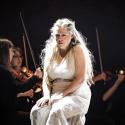
Musically, the clear signs of the great dramatist to come are in the faster sequences – cabalettas and the like – which have a rhythmic energy quite unlike the music of Donizetti or Bellini. The cavatinas can be generic, but we wanted to hear what all four leads here had to make of them. Anush Hovhannisyan (pictured right by Robert Koloyan) owned the platform from her entrance as the first of three Verdi Leonoras: not naturally vengeful, but prepared to face her duty; sad, poised and deeply sympathetic. Grace and bearing carry her through to the final scene, where all the reserve with which Hovhannisyan kept her perfect bel canto nuances in check could finally be set aside. Cuniza, the bride-to-be, gets the showier aria, a Rossinian display, at the beginning of Act Two; Carolyn Dobbin, another sympathetic presence, made her mark here, and I’d love to hear more from Eirlys Myfanwy Davies, singing the only comprimaria role in the opera as Cuniza’s confidante; this sounds like a great voice, gleaming in the Act One finale.
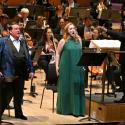
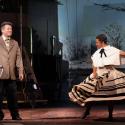
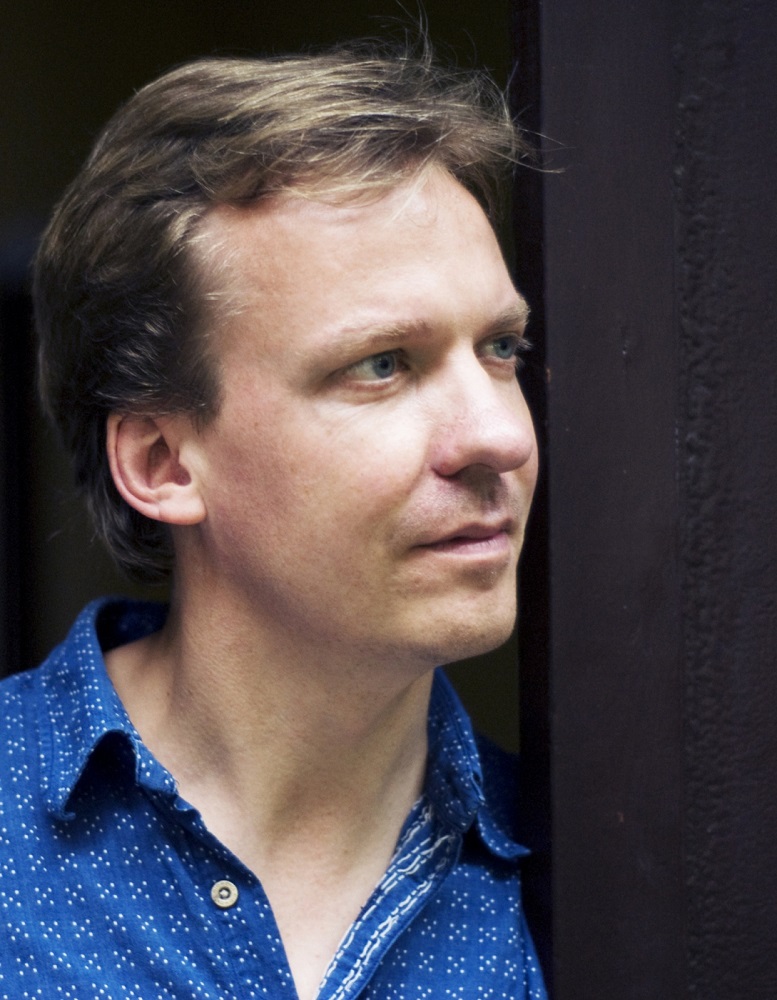 The title role has interesting, free-rein music in the first act and an aria in the second which was perhaps the most impactful of all. Stephan Loges (pictured left), one of the world’s great Lieder singers, was an unexpected choice but brought distinctive beauty of line here, having shown he could pull out the full Verdian stops in the declamation with which the old man challenges the faithless enemy, Riccardo, Count of Salinguerra, to a duel. Riccardo’s music is perhaps the least interesting of the four, but Peter Auty brought Italianate thrust where needed; the very top of the voice isn’t as ringing-tenorial as it once was, but his intensity matched that of the others.
COG choices need meat for the chorus, and its punctuating comments on the action or support for the principals are a constant throughout the opera; Rogers drew as much spirit from this backbone of COG as he did from the orchestra, if inevitably less refinement. No matter; the energy was always there; if only every Italian rarity could enjoy the same treatment.