I’m not one to get misty-eyed over La bohème (unless it be a red mist of rage), but this second revival of Jonathan Miller’s production at English National Opera brought me closer than any yet to understanding the snuffling, lip-quivering reactions of those around me in the Coliseum stalls. And if it wasn’t exactly emotion that got me there, then perhaps it was something even better: sentimental delight in joyous, glorious music-making.
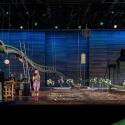
La bohème has suffered more than most operas at the hands of clever directors and conceptual visions. But at this stage in his career Miller has nothing to prove, and it’s a relief and a pleasure to settle down into his production and Paris of the 1930s. I remember struggling with its slightly too-sanitised, too-pretty portrait of poverty back in 2010, but things seem to have toughened up just a bit in this latest revival directed by Natascha Metherell.
Gwyn Hughes Jones just gets better and better with every appearance at ENO
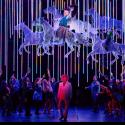
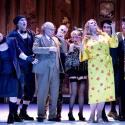
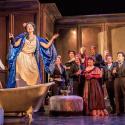
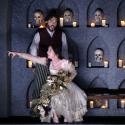
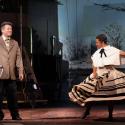
Mimi and Rodolfo may be about to unite under gentle snowfall and to some of Puccini’s most soaring music, but a prostitute unobtrusively plies her trade with a sailor in the background; Musetta (Angel Blue, pictured below) may be the toast of the Café Momus, but we still find her being pawed by an over-eager patron in a cheap bar. The Depression doesn’t scream here, but in the muted shades of Isabella Bywater’s designs its quiet desperations sidle and seep persistently into our consciousness.
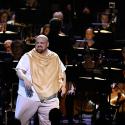
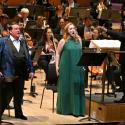
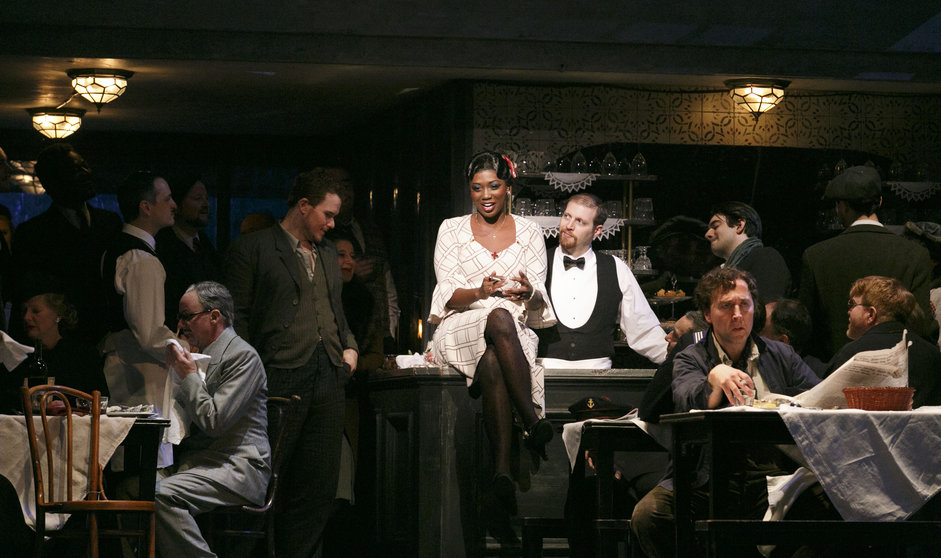 Only Amanda Holden’s translation strikes a jarring note – a rare misfire from ENO’s most reliably witty and skilled librettist. Dull syllables are stressed, vernacular phrases feel self-conscious and rhyming couplets force themselves upon our attention. But none of this detracts from the excellence of the finest quartet yet of leads in this production. Gwyn Hughes Jones (Rodolfo) just gets better and better with every appearance at ENO, relishing each leap and cherishing every vaulting top note, with “O Mimi, tu piu non torni” in his sights from the very start.
Thanks to Oleg Caetani in the pit speeds are defiantly swift, lending an urgency and matter-of-factness to proceedings that cuts nicely against any lingering sentimentalism there might be about the opera. His surging, warmly enthusiastic orchestra (occasionally just a touch too dominant) carries us along through romance and tragedy almost before we’re ready for it – an approach that might not fly with the self-indulgent big-names up at Covent Garden, but works a treat here with a young cast (two major role debuts among them).
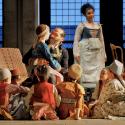
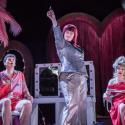
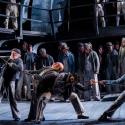
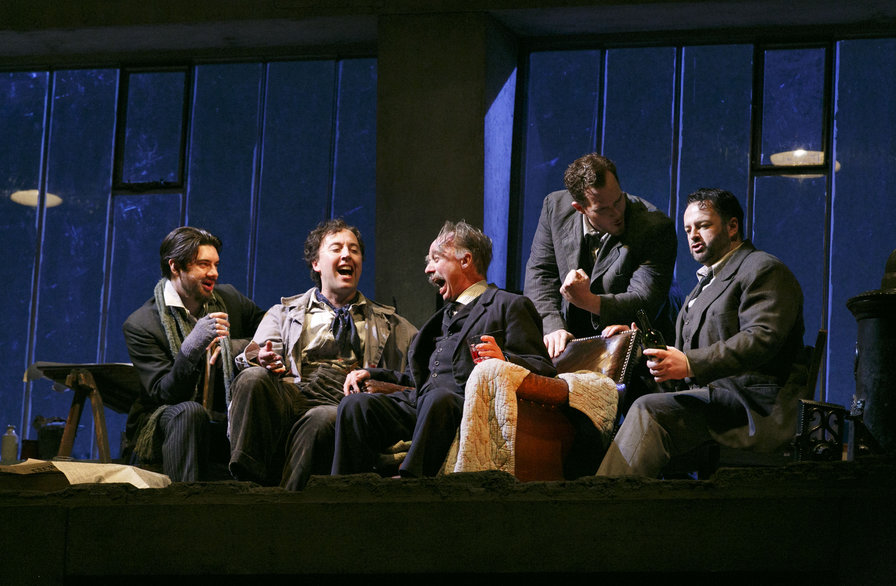 Kate Valentine’s Mimi is a genuine innocent – quite a shift from Elizabeth Llewellyn’s rather more knowing ingénue previously – and deliciously ardent with it. Less controlled than her Countess in ENO’s recent Figaro, Mimi feels like a role she may never play better dramatically but vocally will only gain colour and nuance from repetition. Also making his role debut is Richard Burkhard’s Marcello, leading the all-male scenes (pictured left) with warmth of tone and some beautiful phrasing, and managing not to be entirely eclipsed by Angel Blue’s Musetta – quite the feat.
It’s hard to imagine a more natural Musetta than the charismatic Blue, who sounds almost as good as she looks doing it. Fuller and heavier in her upper register than some, hers is the performance that really balances up to the ENO Orchestra in full flow, less the brittle seductress than a shrewd woman of the world who knows exactly how to play the game. Simon Butteriss returns to steal the scene with his cockney Benoit (“I may be old but I’m still randy!”), and Duncan Rock rounds out the young artists as a dynamic Schaunard.
ENO are at their best when experimenting, when taking risks and defending their very different role and mission to the Royal Opera. It’s been a tough few months for them though, and while they gather themselves for the next big push of concept and technology-driven works it’s a pleasure to be able to relax into such an accomplished, enjoyable production. Jonathan Miller’s bohème isn’t a game-changer in the showy, PR sense, but if its gentle realism and blindingly good music can persuade some first-time opera-goers to take a risk on another show, then it really doesn’t need to be.