Gounod's Faust is many things: vaudeville act, sentimental romance, Gothic tragedy, Catholic catechism, in short, a wholly unrealistic but winningly schizophrenic work that should be taken about as seriously as an episode of Sunset Beach. Director Des McAnuff's attempt to marshal this melodrama into revealing truths about Nazism, war crimes and the morality of modern science was always going to be a bit ambitious.
Gounod's Faust is many things: vaudeville act, sentimental romance, Gothic tragedy, Catholic catechism, in short, a wholly unrealistic but winningly schizophrenic work that should be taken about as seriously as an episode of Sunset Beach. Director Des McAnuff's attempt to marshal this melodrama into revealing truths about Nazism, war crimes and the morality of modern science was always going to be a bit ambitious.
But as well as being ambitious, it was also more than a little tasteless. That it wasn't a lot tasteless was down to the slipperiness of Faust's identity. McAnuff's Faust is seemingly a Nazi, a scientist working in the shadow of a blitzed Reichstag, about to make the final suicidal sacrifice.
 Unedifying, particularly as the opera lurched from grand opening statements to sentimental romance. Were we really meant to be absorbing the flutters of the heart of a Joseph Mengele? I hoped not and instead clung (as the clues started to hint in this direction) to the not much more savoury idea that we were instead following a nuclear physicist Faust, one who had fled Berlin and had joined the Manhattan Project. But oddities remained. Why the playing around with beakers? Who knows?
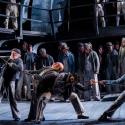
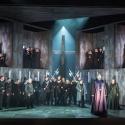
Bafflement resulted from McAnuff's breathless attempt to wed everything to an incoherent historic or scientific reality. Focus came briefly in Act Four with the arrival of a dirty, disabled, shell-shocked and incomplete regiment of German soldiers from the front of the First World War (the context of Faust's youth, to which he returns after his pact with Mephistopheles) singing the Soldier's Chorus. It movingly hollowed out the pomp of those famous martial oom-pahs to see a troop of damaged minds and bodies bellow this anthem.
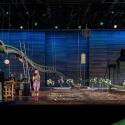
But here I felt one could espy the source of McAnuff's downfall. This act's tragedies (all rather disjointed it has to be said) seem to have been his starting point. The rest of the opera (much of which is conceived in a completely different tone) appeared to be adapted to fit with this act's darkness. Consequently the fragrance of the first three acts was all but expunged - though, to be honest, very little of interest or sweetness or life was ever likely to grow from Robert Brill's leaden sets of stultifying functionality and unsightliness.
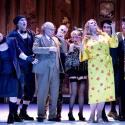
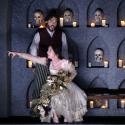
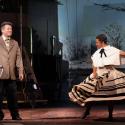
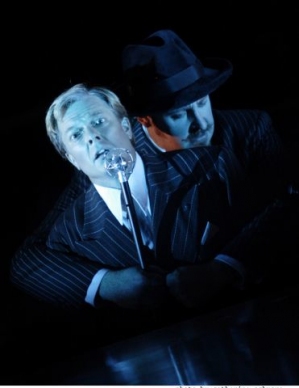
 However, it was worth making a Faustian pact with McAnuff's production if only for the music-making, all of which was very fine. Toby Spence's strong, thick voice held the course wonderfully as Faust, right to the bitter, beltering final trio. And for a character that was so weakly directed, he engaged us remarkably well (pictured above right with Iain Patterson).
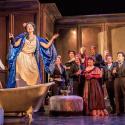
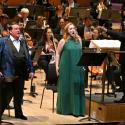
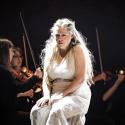
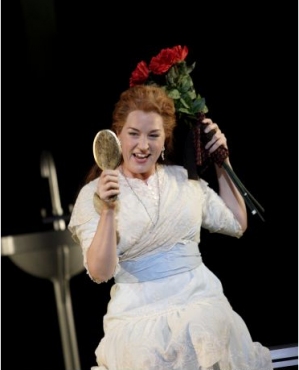
Iain Patterson's Mephistopheles was certainly present vocally if a little absent in character. Anna Grevelius's Act Three aria as the puppyish Siebel sparkled. Melody Moore's vocal contribution as Marguerite (pictured left) - more comfortable as the put-upon mother than the coquette - was darker-hued but no less attractive. Benedict Nelson's Valentin flowered after a flat opening. Conductor Edward Gardner didn't do much with the orchestra except what was needed of them.
It's something McAnuff might have heeded: less is more. Cleverness is not rewarded in Faust. One simply needs to make peace with the jarring incongruities of this opera, and indulge the helter-skeltering melodramatic mammon.
- See what's on at English National Opera this season