

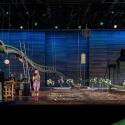
Benvenuti a Napoli cries the huge corny poster of the blue bay and ominous Vesuvius that looms over Neil Irish’s sets for Così fan tutte. However, we’re no longer in the Enlightenment city of cynical male experiments in female psychology where Mozart and Da Ponte’s opera of 1790 first took place. Now, in the 1950s stage of post-1945 America’s forever wars, Naples-posted US Marines Guglielmo and Ferrando meet up with long-distance sweethearts Fiordiligi and Dorabella after a transatlantic flight. Elizabeth Karani’s multi-tasking Despina serves as runway signaller as the arriving passengers shuffle past the passport booth to embrace loved ones.
Military power, tourist kitsch, a holiday playground full of traps, ruses and shows: Cecilia Stinton’s busy, entertaining and colourful production for Opera Holland Park makes the wide-open stage with its classical architectural backdrop do plenty of eye-catching work. Last year, for Opera North, the same young director presented the same piece in a tight, claustrophobic 18th-century period frame of confining boxes. Here, she puts these broad expanses to amusing and picturesque use. Naples promises freedom: but to whom, and for what end?
Holland Park’s liberties include the ability to watch conductor Charlotte Corderoy zestfully push the City of London Sinfonia – this venue’s regular band – through a buoyant, bubbling and strongly-spiced reading of the score. Neapolitan dash and swagger counted for more here than salon politesse, and the woods and horns (especially) sang out with a salty impudence. At first, music, settings and costumes (not to mention Robert Price’s cleverly nuanced Mediterranean lighting) herald a high-spirited Così: one that may underplay the misogynist malice of Don Alfonso’s scheme to test the visiting ladies’ virtue. Emphases will shift and tones will darken, but for much of its first half this version romps along, enlivened by a fresco-like panoply of Neapolitan tourist jollies. There are café tables, beach excursions, even sightseeing trips to ogle erotic Pompeian frescoes. It all feels like Carry on Mr Ripley with, later on, a touch of Up Pompeii.
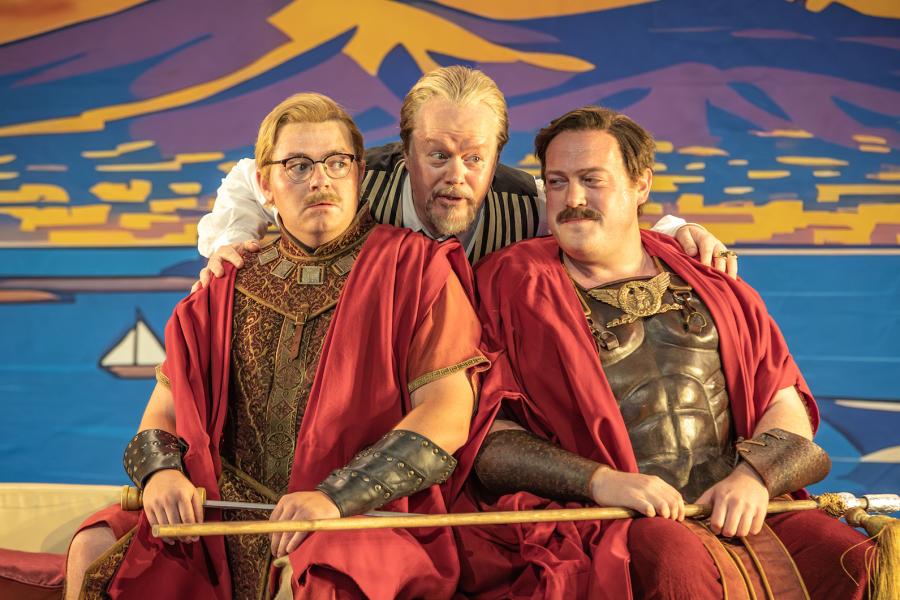
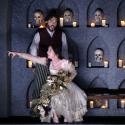
Cold-blooded philosopher Don Alfonso (pictured above, centre, with Osian Wyn Bowen and Paul Grant) is your conniving friendly barman who has an ace trick up his sleeve to entertain these free-spending Yanks. Holland Park favourite Paul Carey Jones lets rip with the locker-room banter, a huge-voiced Lord of Misrule who threatens to run away with the opening scenes. Except that the streetwise pizzazz of Elizabeth Karani’s Despina – not just maid but one-person mainstay of the tourist economy with a dozen different service jobs to do – vies with him in charisma, and beats him hollow for charm.
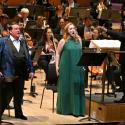
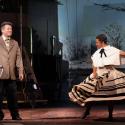
Given the allure of both, as singers and actors, our quartet of pressurised lovers take time to make their mark. Initially, Madeline Boreham’s Fiordiligi (pictured below) and Shakira Tsindos’s Dorabella, innocents abroad, seem outshone by their sassy plebeian help. Likewise Paul Grant’s Guglielmo and Osian Wyn Bowen’s Ferrando sound and look a little overawed by Alfonso’s worldly machinations. Only in the sublime leave-taking trio, Soave sia il vento, did Boreham and Tsindos begin to catch the true Mozartian magic while, around them, tearful military couples echo the pain of separation. (How, exactly, has Alfonso contrived this mass mock-“deployment”?)
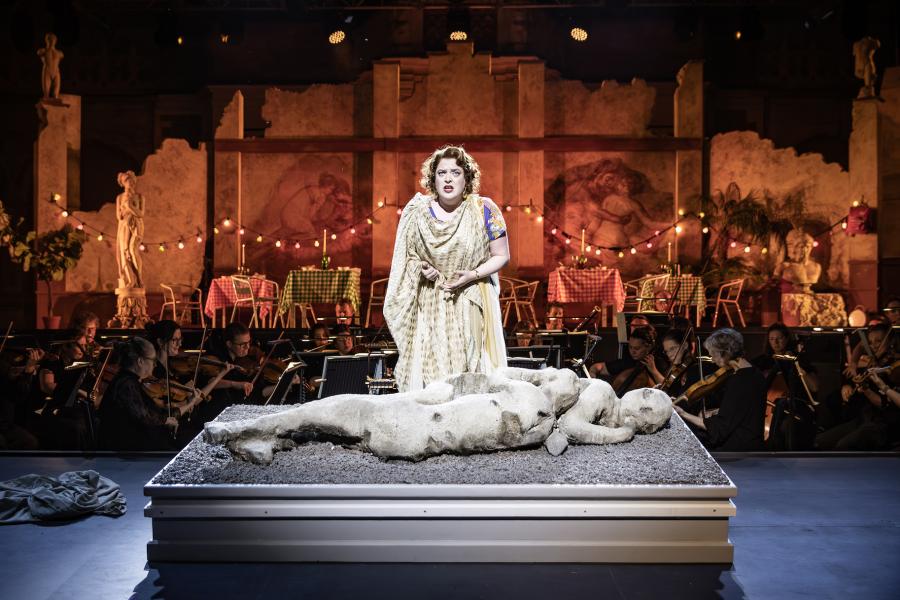
The tilt to farce continues when the disguised men return to attempt the seduction of the other’s beloved – kitted out as Roman centurions with swords and spears. Have they nipped up the coast to Cinecittà to buy cast-offs from a low-budget sword-and-sandal pic? In this strenuously signposted comic context, Boreham had to work even harder than usual to make “Come scoglio” land as a credible tempest of virtue outraged by an indecent proposal; the voice did its flexible and forceful best, however. Number by number, the tidal level of the singing rose: Bowen made “Un aura amoroso” float gorgeously across Kensington night air as warm as a Neapolitan July.
Relocated to a café (staffed, of course, by Alfonso and Despina), the fake-Romans’ wooing came with a stage dressing mixed from the sublime and the ridiculous. Stinton mounted her touristic tableaux with wit and flair, if not much restraint: during the evening passeggiata and, most of all, at the beach where Despina in her cossie disports with a retinue of jocks in shorts. This girl has it all sorted, the still-prim incomers might think. From the wide stage behind, to the close-up apron in front of the orchestra, fluid movements and changing focus make bold, full use of the playing area. It’s all so enjoyably diverting as to put some robust music-making in the shade – although the well-blended and punchily sung sextets, notably “Alla bella Despinetta, displayed strong ensemble work.
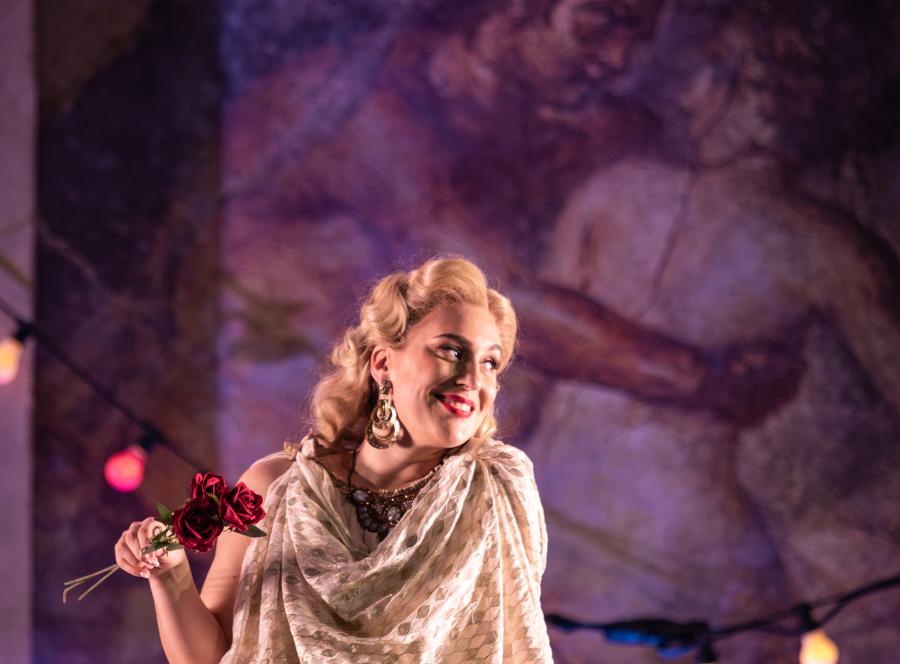
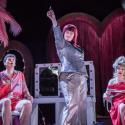
Stinton unfolds her beguiling and amusing scene – then, in the final act, most of it vanishes like a rolled-up holiday poster. Much of this is Mozart’s doing, of course: the flirtatious jesting turns deadly earnest when Fiordiligi and Dorabella find that chance and circumstance can abrade those vows of loyalty. Despina acquires a Roman uniform and sword: she has seized the masculine symbols of authority. Boreham and Tsindos find steel as well as silk as they mull over the mechanics of straying: “Prendero quel brunettino”. As they pursued their campaigns of seduction, Grant and Bowen both achieved polished and poignant duets with the “wrong” partner, although perhaps Bowen and Boreham’s “Fra gli amplessi” just about prevailed. And Tsindos (pictured above) shaped and phrased “E amore un ladroncello” with bittersweet tenderness.
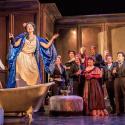
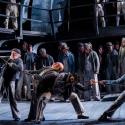
Did the Vesuvius of authentic, dangerous passion, as opposed to flighty holiday games, really blow its top? Perhaps not, but emotional reality bit to the extent that we forgot about much of the farcical Neapolitan business of café and beach life in the first two acts (pictured below). Stinton's Opera North version, less of an obvious crowd-pleaser, showed more internal coherence.
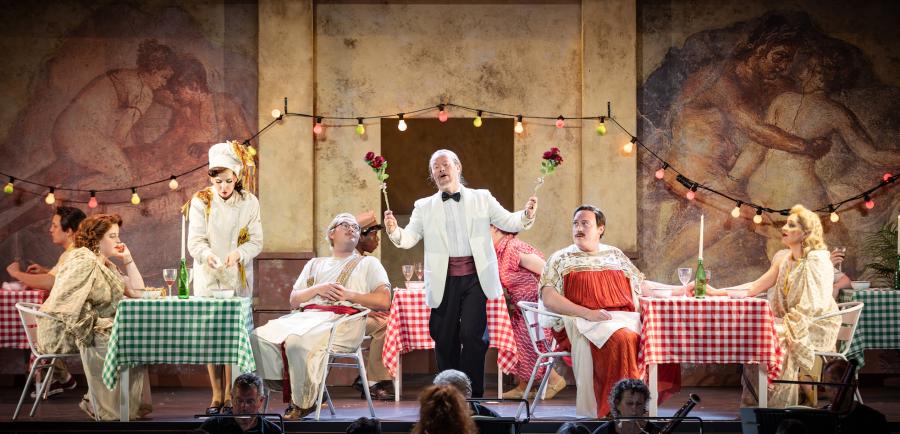
Rather clunkily, this final-act advent of life-and-death questions about truth of feeling and commitment was symbolised by Pompeiian casts of the volcano’s fleeing victims that occupied the front-stage area. Love yields to death, Eros to Thanatos. As a memento mori, in a world of ever-present military ops, it certainly hammered home a point. Ever the role-play artist, Karani’s always-engaging Despina effected her shift into a lawyer’s garb as well as she had managed being doctor, waiter, ground-crew and everything else.
These days, Cosìs seldom allow the conniving blokes to slip back into girlfriend business-as-usual after Alfonso’s wicked wheeze has been revealed. And Stinton gave us no kiss-and-make-up reunion. The singing in these final numbers washed away the preceding pantomime, or Italian sitcom, in lyrical refinements of pain, perplexity and yearning. Our Neapolitan vacation, which was fun if rather frantic, had come to a properly disenchanted end.

Add comment