

In 2016, when Richard Jones's production of Musorgsky's original 1869 Boris Godunov first amazed us, Putin had invaded Crimea but not the rest of Ukraine, and tens of thousands protested election results in August. A decade on, totalitarian Russia is almost a closed book to us and it had begun to feel as if Musorgsky, and the Pushkin history play on which he based his two versions, had nothing more to forecast about Russian times of change. That was to reckon without this stunning revival, where Mark Wigglesworth's vivid correspondence with Jones's taut vision, revived here by Ben Mills, goes deep and ultimately, in tandem with Bryn Terfel's latest thoughts on the protagonist, moves us profoundly.
What wonders Jones and Wigglesworth would have given us as the dream partnership at English National Opera; and while there's no cause for regret that the Royal Opera appointed Jakub Hrůša as Music Director, here's proof that Wigglesworth would have been just as good a choice. From the lone bassoon solo which conjures a Russian lament for times of trouble at the start to the veiled aftermath of Boris's death – not the major-key consolation to which Shostakovich so objected, but a backdrop to ongoing terror – the projection of a score which in lesser hands can seem too spare never falters.
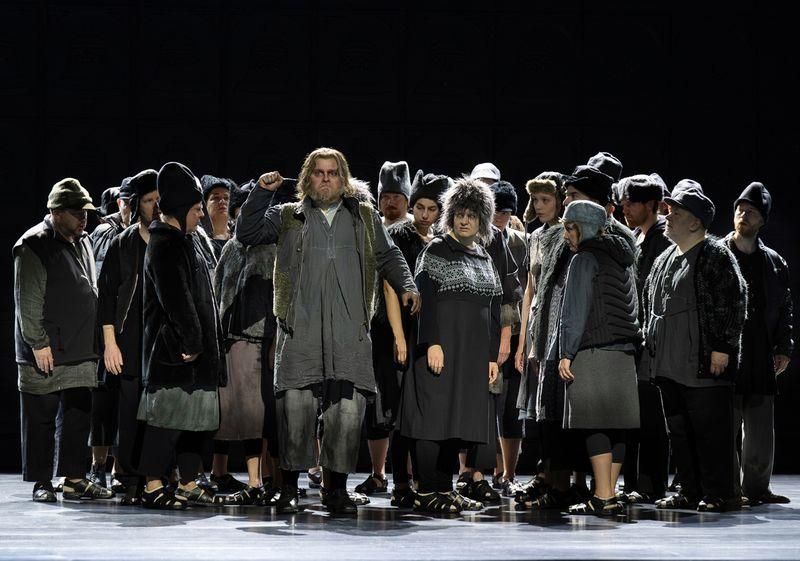
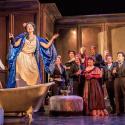
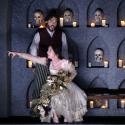
The coronation bells are swift and brutal, appropriate since the crowned Boris is trouble at beginning and end of the scene by visions of the heir to the throne with spinning top he had murdered. Tenderness is brief but touching in the central meeting with his own children, and recurs transfigured in Boris's dying moments. For once I wept at the demise of a repentant murderer.
Bryn Terfel matches the high standards of director and conductor. He now has to push the sound for maximum resonance, which means much of the singing is at full pelt, but at the last moment we get extreme softness to complement the halo of selective orchestral sound. Yet although this seven-scene original, performed straight through without an interval, ends with his death, and not the wildness of the Kromy Forest scene which Musorgsky added in 1872, Terfel remains part of a magnificent ensemble in which the symmetries of the original plan and its thematic concentration find their ideal interpreters in Jones and Wigglesworth.
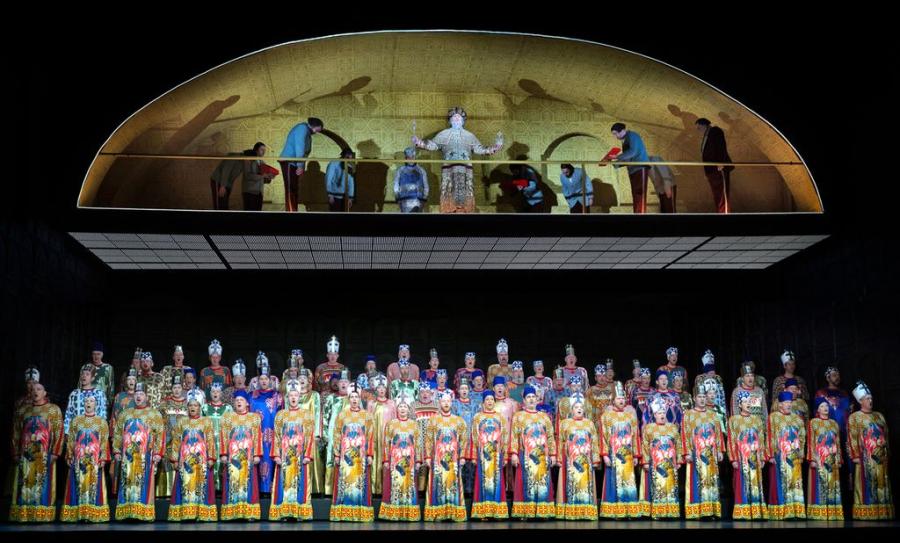
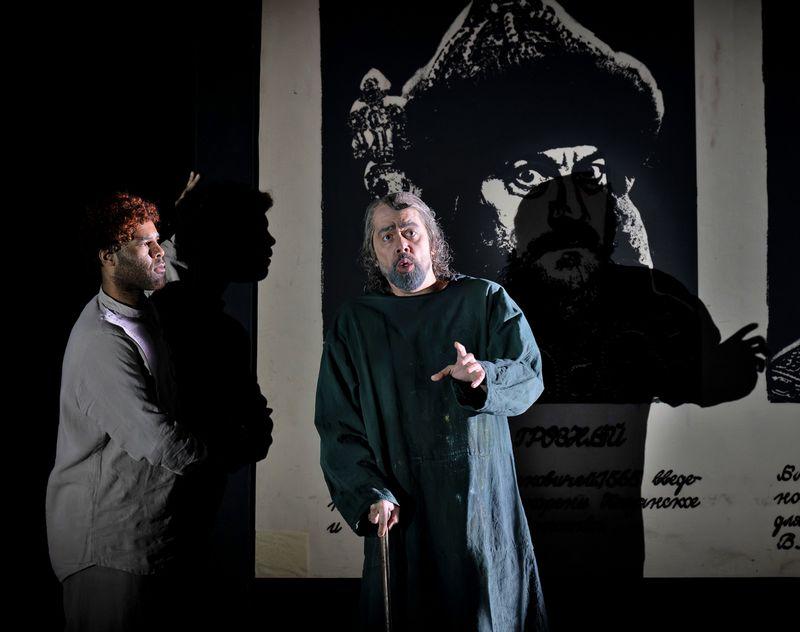
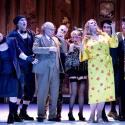
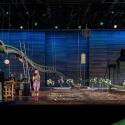
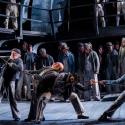
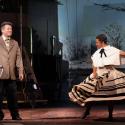
There are unexpected correspondences. I don't remember the scene with bickering Boyars being so visceral, a correspondence to the exchanges of the ignorant, superstitious Russian people in the opening tableau. Curiously Jones doesn't have them being forced to rejoice at the coronation: this is a colour-pageant below, always a dazzling vision in the joint work of Miriam Buether (sets), Nicky Gillibrand (costumes) and Mimi Jordan Sherin (lighting, extraordinary throughout), and more ominous business in the cramped room above (reminiscent of some of the spaces in St Basil's Cathedral; the scene pictured above). Chronicler-monk Pimen drags on a board of tsars past and (alarmingly) possibly future, suggested in the half-finished portrait of Grigory-as-Dmitry, echoed in the big map of Russia in the tsar's apartments which cunning Shuisky draws along to show the trouble coming from Lithuania.
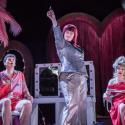
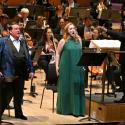
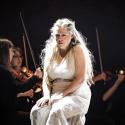
Adam Palka narrowly avoids making Pimen the usual human sleeping-tablet, though it's more about rich bass sound than characterisation. The other main bass, Alexander Roslavets, brings huge energy to the vagabond monk Varlaam, complemented by the rollicking orchestra in the song about the siege of Kazan, with genuine laughs coming from the wielding of the spoons by his co-rogue Missail (Alasdair Elliott). Two of the tenors are vocally a bit short of the ideal - Jamez McCorkle's disconcertingly wide vibrato takes a bit of getting used to (pictured below left with Palka), and the Holy Fool could do with more of the high-tenor strangeness than Mingjie Li can give the role - but John Daszak gives a rounded portrait of intriguer Shuisky. Andrii Kymach brings resonance to the decrees of Boyars' clerk Shchelkalov. It's good to have a boy as Boris's son, and Robert Berry-Roe, alternating with Zechariah King, touches the heart.
Pushkin gave us a final scene where it's clear the tsar's children are the latest victims of the ongoing cycle of murder. Musorgsky doesn't suggest that, but Jones does, and once again it's worth noting how Wigglesworth matches the unease at the last minute. Magnificent work from the chorus crowns the evening, with the cry for bread in the penultimate scene very much the aural climax. Chilling and involving from beginning to end; don't miss it, even if you've seen either or both of the previous incarnations.
Comments
I saw this back in 2016, and…
Boris Godunov
Worth going again for the conducting. And yes, I agree with you about 1872/3, though having grumbled as much before going I saw more than ever how Jones's brutal concentration suits the original. It's all perfectly unified. True, too, that most companies favour 1869 because it's cheaper (of course the Royal Opera had the expanded version in Tarkovsky's production for a very long time).
Boris Godunov
That was David Nice, the author. For some reason names don't appear right now, and text gets doubled up.
My observation about the…
I'm afraid I can't say…
I'm afraid I can't say. Formatting of comments has been problematic, so the latest reposting may have caused much of your comment to fall off. I've asked the team responsible to find out.