The Weaving create a magical tapestry on Anglo-Irish debut 'Warp & Weft' (Dlúth & Inneach)

Powerful debut set of Anglo-Irish tunes and songs

share this article

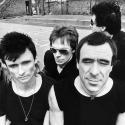
The Weaving is an Ango-Irish trio of accordion, voice, fiddle and piano. The voice belongs to Méabh Begley, from Kerry’s prominent musical family – she sings one of her father  Séamus Begley’s songs, “Dán Lae Breithe”, further in this superb debut set of 12 songs and tunes. Cáit Ní Riain from Tipperary is on piano, and the fiddle player is Leeds-born Owen Spafford, of the acclaimed British folk-ambient duo Spafford Campbell, whose second album, Tomorrow Held, on Real World, was my album of the year in 2025.

Owen Spafford describes Warp and Weft (Dlúth & Inneach) as “a cultural exchange between West Kerry, Leeds and Tipperary”. As such it draws its juices not only from the rich musical wellspring of the West Kerry Gaeltacht, where they first started playing together, but from Spafford’s Yorkshire playing traditions too, and the music Cáit Ní Riain heard growing up in the Jim of the Mills pub in Tipperary. Their local musical identities combine and forge new ones out of the warp and weft of England and Ireland’s long, complex relationships.

The warp and weft of the title sums up their music and method. Owen Spafford explains: “In traditional weaving, Warp is the vertical thread which interlaces with Weft (the horizontal thread) to create the structure of the cloth. This point of meeting is what interests us, the tension between the two strands is what binds the cloth together and creates the texture that makes each tapestry unique.”

Begley’s unadorned, perfectly set vocals on the likes of  “The Flower of Sweet Strabane” is an album highlight, while her mouth-music for the jig “Young Tom Ellis” is gently hypnotic. 
I’d seen them perform early on in their weaving, at the Hammersmith Irish Centre in 2024, and they’re playing Hackney Folk Club on 19 February, a good place to find yourself if you want to hear the trio’s magical tapestry fill the air.  

Add comment

The content of this field is kept private and will not be shown publicly.

Plain text

  • No HTML tags allowed.
  • Lines and paragraphs break automatically.
  • Web page addresses and email addresses turn into links automatically.
Their local musical identities combine and forge new ones out of the warp and weft of England and Ireland’s long, complex relationships

rating

4

explore topics

share this article

the future of arts journalism

You can stop theartsdesk.com closing! 

We urgently need financing to survive. Our fundraising drive has thus far raised £33,000 but we need to reach £100,000 or we will be forced to close. Please contribute here: https://gofund.me/c3f6033d

And if you can forward this information to anyone who might assist, we’d be grateful.

Subscribe to theartsdesk.com

Thank you for continuing to read our work on theartsdesk.com. For unlimited access to every article in its entirety, including our archive of more than 15,000 pieces, we're asking for £5 per month or £40 per year. We feel it's a very good deal, and hope you do too.

To take a subscription now simply click here.

And if you're looking for that extra gift for a friend or family member, why not treat them to a theartsdesk.com gift subscription?

more new music

Never mind the snow, this Danish city festival celebrates unfettered internationalism
Electroclash original remains direct, filthy and more than relevant
Exhaustive, stylistically varied, box-set memorial to the fabled Bowery venue
An ode to reinvention that's not quite a pop album but not a film score either
The Belfast master of slow, sad club sounds is on peak form
Brett Anderson and co. deliver energy, sing-alongs and punk-tinted kicks
Jill Scott’s first album in over a decade is an absolute gem
A slick show from the duo offered vibrant stagecraft and varied genres
A boom bap return that feels as personal as it is timeless
Explosive collection of the Sheffield stylist’s favourite singles
A look back at the long-gone world of the original songs