

The voice is fluting, translucent. The melodies it carries are linear yet sinuous, their rise and fall akin to undulating terrain. The instrumentation – acoustic guitar, bass guitar, some keyboards – is unobtrusive. Spíra is about the voice. It is also timeless – sounding as if it were recorded at any point in the last 60 years.
However, getting to grips with what is being sung is less straightforward as the lyrics of Spíra are in Icelandic – a demonstration of the bond of trust between non-Anglophone songwriters and listeners who are not from their home territory or do not speak their language. On one hand, the songwriter wants what they’ve recorded or are performing to be accepted on its own merits, irrespective of any language barrier. On the other, listeners have to accept that what’s expressed is worth spending time with.
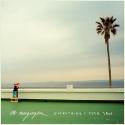
With Spíra, Ólöf’s fifth album, this is especially pertinent as her last two – Palme (released in 2014) and Sudden Elevation (2013) – were entirely in English. Before this, 2010’s Innundir skinni featured a few English-language songs. Only Við og við, her 2007 debut album, was entirely in Icelandic. Spíra, then, can be seen as a form of reset; an acknowledgment that one’s own traditions can be enough.
Musically, Spíra overtly nods to the folk derived. The spartan nature of how the songs are presented is akin to the early Anne Briggs or Vashti’s first album. In Iceland, some of Spilverk þjóðanna’s more sparse recordings may be a parallel.
Subject-wise, Spíra – which translates as “sprout” – tackles relationships with the environment: “Úfinn sjór” (Rough Waters) is about embracing the Icelandic winter. Metaphor is used to express personal circumstances: “Stein fyrir stein” (Stone by Stone) is about Ólöf’s uncle, who took care of her and her sister after their father died; “Vorkoma” (The Coming of Spring) celebrates her friendship with the writer Guðrún Eva Mínervudóttir; “Tár í morgunsárið” (Tears at Dawn) is about the spiritual gap left by renouncing Catholicism; the title track explores the emotions raised by her son moving between her home and that of his father, from whom she is divorced
Ultimately though, for the non-speaker of Icelandic, Spíra is about the voice. Nonetheless – even without understanding the language – it is clear that emotion is central to what is expressed.






Add comment