With its throbbing crowds and its performers baying for attention (and for audiences), the Edinburgh Fringe can be a hectic, raucous place. But for anyone who needs a break from the crammed-full, in-your-face stand-up gigs, thankfully three shows provide far calmer, more intimate experiences – involving just you and one other.
At Summerhall, Without Sin (★★★★, until 27 August), created by Dublin-based Unqualified Design Studio, takes the explicit form of a confessional – quite literally, with a specially constructed, two-alcove wooden box nestling on one side of the venue’s courtyard. Enter it with a stranger and you’ll take turns at being confessor and confessee, though there’s no expectation of divuling anything particularly sinful or shameful. Instead, through a series of pre-determined questions, you’ll be invited to reflect on yourself, what makes you tick, and aspects of yourself you might not feel so comfortable with. It’s quite gentle stuff, with a lot of leeway for guarding your privacy or opening up more fully, depending on how the mood takes you – or depending on your fellow participant. Indeed, Without Sin’s strengths lie in its questioning of connection, and in establishing a temporary link between two strangers who come together for its 20-minute duration, or indeed reaffirming existing relationships, judging by the reactions cards left pinned to the booths’ noticeboards.
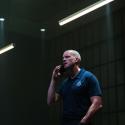
Also at Summerhall (though in truth it could be experienced anywhere there’s a phone signal), An Alternative Helpline for the End of the World (★★★★, until 27 August) is a disarmingly brief, fragile but potent creation from Glasgow-based performance artist Katrine Turner. We live in uncertain times, and we’ve no doubt all got worries about the future – the impending climate collapse is just the start of them. But Turner can help – or, at least, her computerised survey and advice generator can. Through a phone call and a series of questions, she’ll guide you through your worries, and offer an oblique reflection on them as your take-away. An Alternative Helpline… is at once a gentle satire on the digitisation of very much analogue data (just try making a vague, uncertain response fit one of Turner’s amusingly pre-determined categories), and a quiet acknowledgement of the futility of easy answers to our current complex questions. But it’s a charming, thought-provoking piece all the same – and, rather gratifyingly, Turner’s ultimate piece of advice (there are, it seems, many possibilities) may offer some genuine insight and hope.
Across the road at House of Oz, Two Strangers Walk Into A Bar… (★★★★, until 27 August) from Adelaide-based actor Tilda Cobham-Hervey is a far more playful work that questions and choreographs what’s effectively a blind date with another lone participant, using a whole load of cues and props in a special bag of tricks and concealed teasingly around the venue itself. It’s an elaborate, engaging work that lightheartedly places any worries or self-consciousness in a broader setting, but paradoxically seems to encourage genuine connection and expression while also closely controlling that connection with its detailed script. Through that friction, though, Cobham-Hervey manages to draw attention to the unspoken social rules we’re all following, while asking us to question them, all with whimsical humour. And through its anonymously written letters from past participants and to those in the future, Two Strangers… even looks to establish unspoken connections right across the festival.