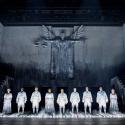
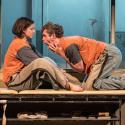
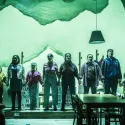
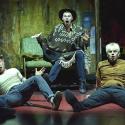
The Breach is a coming of age story and an age-in-the-making story. The play takes place in the U.S. in the 1970s and 1990s, switching back and forth between teenagers in Louisville and their older selves 15 years later. The promise of the 1970s in the US (and UK) when inequality was actively being reduced, and the undoing of that potential, are played out amongst this group of young friends.
What I wanted to examine in the play is how societal pressures divide us from one another and how, when a betrayal strikes - that's to say, betrayal of one another and of youthful dreams – we wrestle with regret, bereavement, and the means by which we go on living. While located in Kentucky, it is my hope that this play will appeal to wider audiences as it touches on the universals of adolescence, friendship, and the broken loyalties of the past.
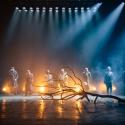
 The first of a trilogy, The Breach was recently produced, and later toured, in France, translated by Dominique Hollier, who also translated my play One Flea Spare for La Comédie-Française. The production journey of The Breach is perhaps the oddest of my career. Commissioned by Actors Theater of Louisville some years ago, the play was then sent packing due to fears about some of the stories in the play hitting too close to home (or perhaps too close to the corporate donors of the theatre). At the time, I was heartbroken by that decision. A few years later, however, I was in Paris, hearing the play in French under the direction of the talented Tommy Milliot. (Wallace pictured above, photo c. Gregory Costanzo)
The Breach now finds itself at the Hampstead Theater, directed by Sarah Frankcom, for its very first English-language production: I will be overjoyed to hear the play, finally, in the language I imagined it through. I couldn’t be happier for how the odd journey of this play has unfolded, nor more grateful to the Hampstead Theatre for this premiere.
I wrote The Breach in part because I am haunted by the young people with whom I came of age. Although I moved away in the following decades (and have lived in North Yorkshire for many years), I returned every summer to visit Kentucky. Looking back at these Louisville youths of the 1970s, some might have called us a "rough crowd". But that was only on the outside. Inside, we were scared and lonely and filled to the brim with a yearning for love we didn’t always find at home, and so we became each other’s homes.
Part of the backdrop to our lives in the 70s was the continuing civil rights movement, the Watergate scandal, and an ongoing colonial war fought 8000 miles away. The static of this war (and the daily death tolls) were heard every night on the TV in our living rooms. The ideology of patriotism and the (white) patriarchal family were as ubiquitous as air, and for us as insubstantial. But we understood solidarity and often felt that the fabric of society as it was sold to us by the mainstream media and government was a tissue of lies.
American youth wrestled to transform subservience to patria into something intimate and meaningful through the tenacious bonds that held their friendships together. Fifteen years later, in the 1990s, where half The Breach is set, the US was already entering another war, this time in Iraq and Kuwait. The economic transformations of the Reagan administration, the rise of Big Pharma and anti-unionism – the pushback against the social gains of the Sixties and Seventies – were in full force.
But in the Seventies, like most teenagers who came before and after us, we believed we were indestructible. The combustibles of love, lust, and loyalty were our fuel. And the one thing we were certain about? That we’d grow up and fashion the lives we needed to live, that none of us would be hungry or without a job, that all of us would be in love forever. We didn’t understand the precarity of our own lives or the powerful social forces that would shape and twist each of us in ways not of our own choosing.
And before life came barrelling towards us to knock some of us down for good, we youths fell hard in love with each other, fought with each other, got drunk on Jack Daniel's and wrecked cars together. Promises of loyalty were made that we were sure could not be broken. By the time I was in my early thirties, half the close friends I’d grown up with were dead through overdose or suicide. These youths continue to live within me, and they remain some of the most intelligent and joyous people I have ever known. And when they were young and alive, they could tear holes in the Kentucky dark by the sheer ferocity of their imagination.