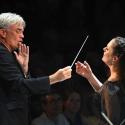
At last! The eagerly awaited first opportunity in the new 2021-22 Belfast concert season to catch up with the Ulster Orchestra’s Chief Conductor, Daniele Rustioni has arrived. He took up his appointment for the new autumn season in 2019, but the arrival of the pandemic early in the following year put an untimely cap on building the relationship, so expectations were running high in Ulster Hall. They were more than amply fulfilled by the cracking delivery of a programme featuring Lyadov, Korngold and Rachmaninov.
After months of silence from both orchestra and audience, The Enchanted Lake by the Russian miniaturist Lyadov turned out to be an unexpectedly apt opener. This was seven minutes of seemingly timeless contemplation on watery stillness and reflection upon the enduring magic of nature, untrammelled by humanity and evoking a sense of rapt mystic wonder almost as a reconsecration of the power of live music itself that held everyone spellbound in silence until the conductor lowered the baton.
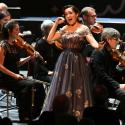
From fairy tale Russia to Hollywood as the Russian violinist Alena Baeva joined the orchestra for more challenging virtuosic magic in a rollicking and sensitive account of Korngold’s still under-appreciated and fiendishly difficult concerto. Tapping into the soaring aspiration of the first movement, she then tugged the heartstrings of the bitter-sweet slow movement with winsome tone, but no over-indulgence. The exuberant rough-and-tumble parrying between soloist and orchestra in the high-spirited finale delivered the ideal foil to the previous two movements, amply demonstrating that the composer’s film scores and concert works took late-Romantic Vienna to the USA, not the reverse. 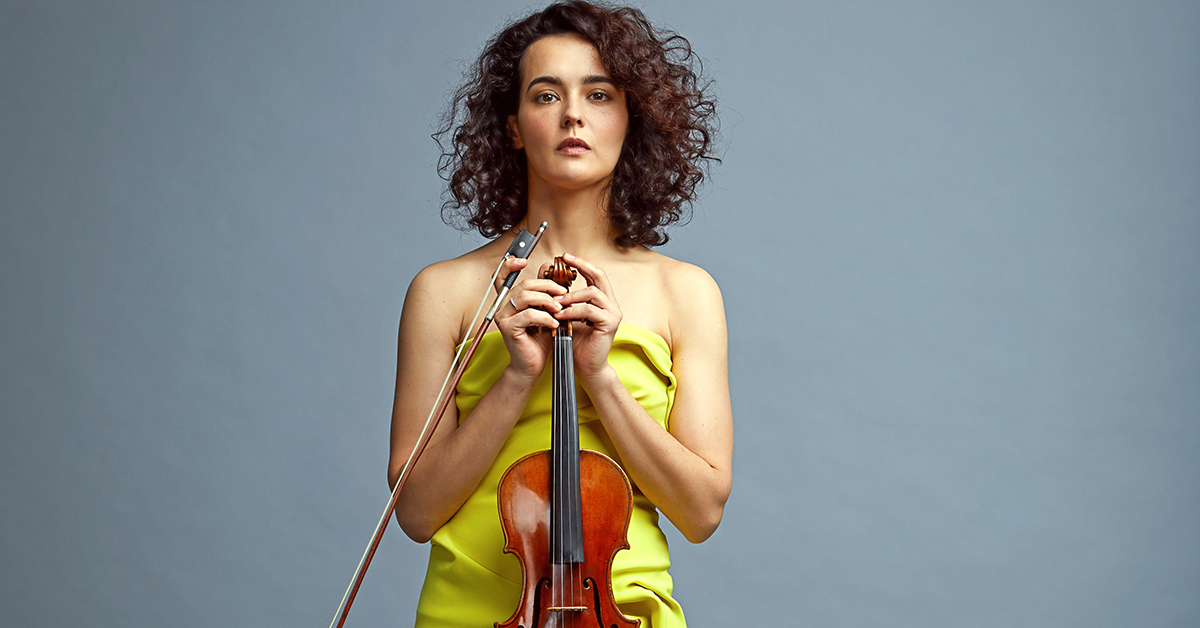 Encore etiquette took a significantly higher profile when, after several solo bows and some reluctance from the soloist to return to the stage, the ongoing audience applause for more was supplemented by the conductor striding through the orchestra to the raised tier by the horn section to wave her back to the stage as he sat and listened. She duly returned to deliver a scorching performance of the Polish Caprice by Bacewicz to set the seal on an impressive performance.
Hopefully the old quips damning Korngold as Hollywood corn without the gold and Rachmaninov being all old-Russian nostalgia and gloom are now consigned to the dustbin of musical history. Both émigrés took their music to the USA with great success in the 1930s and 40s, readily integrating elements of their new world environment into their compositions. For Rachmaninov, this prompted a transforming leap of new inspirational energy and style resulting in his most accomplished masterpiece. Initially conceived as a ballet triptych of Morning, Noon and Midnight, the plan never came to fruition and became the Symphonic Dances for orchestra, his last completed work.
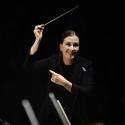
Daniele Rustioni was alert to all the intricate thematic interplay, rhythmic impetus, brilliant orchestral colour and balance crucial to the work, especially in his subtle pacing of the transition passages that frame the contrasting central section of each dance. Every section of the orchestra responded with incisive and lyrically expressive playing that was much enhanced by a host of eloquent solo contributions, most notably from the alto sax, cor anglais and principal clarinet. Both the conductor’s feet had levitated from the podium at the end of the Korngold concerto, but come the final tam-tam stroke of the Rachmaninov, he was airborne and taking the audience to the skies with him. Catch him if you can conducting the revival of Phyllida Lloyd’s production of Verdi’s Macbeth at the Royal Opera in November. In the meantime, expectations run high for the announcement of further programmes with the Ulster Orchestra next year.