Lyndon Morgans goes back a long way – in the 1980s he formed a band, Sad Among Strangers, instead of going to university. But then he turned to theatre, writing some award-winning plays which found an audience at the Royal Court.
His playwrighterly credentials are much in evidence in his songwriting, to which he returned in 2000, when he put together Songdog and recorded The Way of The World, the first of a half-dozen albums which have drawn repeated comparisons with Nick Cave. It’s easy to see why, but there are a myriad other comparisons and influences discernible: Bob Dylan inevitably, Tom Waits, Dire Straits, but also Belle and Sebastian, Ray Davies and even Rod Stewart in his “Tom Traubert’s Blues” moments. Not Leonard Cohen, though: Morgans is not enough of a cunning linguist nor as clever a black humourist.
But you’re drawn in from the outset: on “Joy Street”, the opening cut, Morgans’s solo acoustic guitar, the sounds of his fingers on the strings, is immediate and beguiling… and doesn’t quite prepare you for the opening line: “I’d had a hangover all day long.” The lyrics are conversational and observational; wry, mordant. Morgans’s teenage interest in Eliot, Nietzsche et al is no surprise.
“I’ve got a small flask of hooch we can share,” he sings in “It’s Not a Love Thing”. It’s a line that sums up the spirit of the album – maybe Morgans should get together with Mary Gauthier. “Raise Your Glass in Praise” finds him channelling Manfred Mann’s sound: Dylan at a remove. Blonde on Blonde, “Don and Phil Everly” are among the many toasts Morgan raises: better make that a large flask. The “yew tree and a bench” place “Amen, Baby, Amen” firmly in the graveyard. Is it love that’s died, or his one and only? It’s not clear, but it’s a heartfelt if unconventional love song containing some of the album’s many references to religion and ritual. Chapel, you assume, loomed large in Morgans’s childhood.
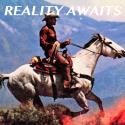
Joy Street is an album that grows on you, in all its melancholy and irony. There are some distinguished and distinctive musical touches (even a hint of mariachi in the Marty Robbins-inflected “Helldorado”), guitarist Jimmy Forres, cellist Margit van der Zwan and accordionist Dave Paterson deserving of special mentions. Thea Gilmore adds backing vocals on four tracks and Nigel Stonier produced.