You’ve arrived at a party in a pub, tagging along with a guy you just met. You’re attempting to catch the barman’s eye, while scouting for a friendly face. The band declares that everyone must dance to the next one, and you wish you’d ordered a double. A man you’d like to speak with keeps walking past, but you can’t think of a single opening line. This situation is seriously awkward. And that’s before you factor in the real reason you’re here.
A collaboration between immersive theatre company Hydrocracker and interactive media artists Blast Theory, Operation Black Antler is a piece of participatory theatre in which you assume the role of an undercover officer. The Investigatory Powers Bill, increasing state surveillance, is due to be passed by the end of the year. The Pitchford enquiry is underway, exposing the extent to which police have spied on political campaigns. Undercover’s on the telly. It couldn’t be more timely.
He’s no BNP cartoon, but you can guess where the conversation’s headed Operation Black Antler has also proved controversial. The original, sensationalised programme notes had to be rewritten following an online storm, particularly amid Brighton’s strong activist community. Were participants going to be asked to take on a dead child’s identity in the name of experiential theatre? To marry targets and have their babies??
In fact, the controversy gave Hydrocracker’s co-directors the opportunity to lay out the solid research and serious intentions behind the piece. They wanted participants to think about what the state is, and isn’t, justified in doing to protect its citizens. How? By forcing them to make the decisions themselves, within a constructed fictional world.
At a distance of a few hours, the result feels like a work-in-progress judged by its own intentions. The mobile phone element is more minimal than implied, and comes to feel tokenistic. It isn’t used to propel us between multiple locations (there are only two), or to guide us through a more structured sequence of challenges.
But when you are inside the party section, Operation Black Antler is consuming. It is a uniquely and purposefully intense experience that genuinely disconcerts. You’re in a real pub, with a drink in your hand and a band on the stage, and no initial idea who is and isn’t a cast member. The acting and direction of the party is disorientatingly realistic, and sustained in improvised polyphony over one 45-minute crowd ‘scene’.
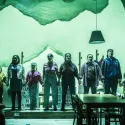
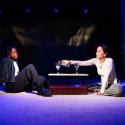
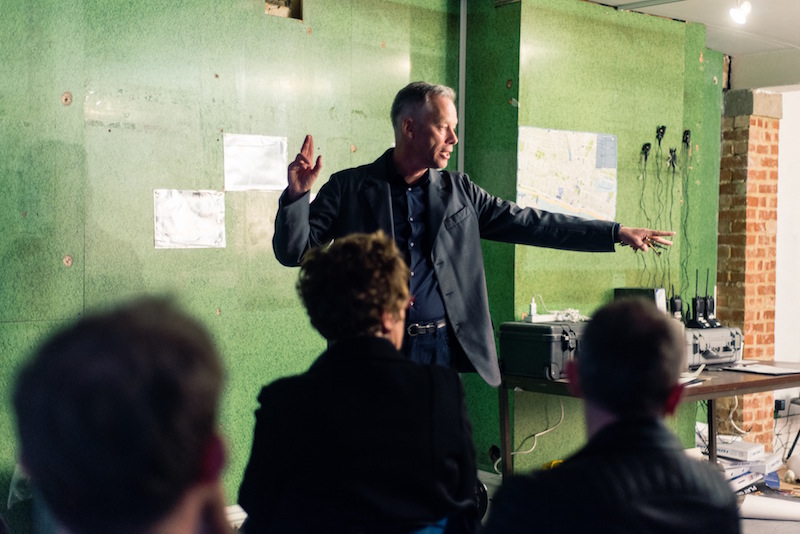 The other, earlier location is a briefing room (pictured above) inside a deserted shop, where comms equipment crackles and plainclothes officers talk gruffly about the recent activities of far-right groups. Here we are rehearsed in fake identities and coached up on our target POI (person of interest). We are told to infiltrate the group they belong to and “get me some dirt”.
How we do this is up to us, and this element of choice is crucial. You might get chatting to a charming geezer, ex-army, four grandchildren. You might feel glad to have found someone to talk to, flattered when he starts laughing at your jokes and singling you out for confidences. Then he starts talking about Muslims. He’s no BNP cartoon, but you can guess where the conversation’s headed. He looks to you for a sign that you feel the same way as him. What are you going to do?
After the piece finishes, one participant is shaken, having found herself sharing true information about her sick son in order to win someone’s confidence. Another has played such a good game that he’s been recruited to drive the van to the group’s next rally.
We don’t learn how everyone has fared, because there is no staged debrief. There's an informal post-show gathering, but no opportunity to collectively piece together the story of the far-right group from facts we’ve collected alone – we are deprived of the big picture. This seems like a major oversight. But perhaps it’s a hint at how real undercover officers feel when they are flung, dazed and compromised, back into the real world.
- Operation Black Antler is at Brighton Festival until May 28. An accompanying debate, Complicity and the Ethics of Undercover Security, is at The Old Courtroom as part of Brighton Festival on 23 May
- Read more Brighton Festival reviews on theartsdesk