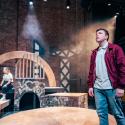
When a play is preceded by a long list of content warnings, it’s hard not to let your judgement be coloured in advance. Sexual violence, strong language, strobe lighting, smoke effects, audience-actor interaction – we’re told in advance that Liberian Girl has them all. As such, the atmosphere as the audience arrives and people find a place to stand on the red sand-strewn set is tense.
It is only when the action properly gets underway that you realise that this anxiety is being skilfully manipulated by director Matthew Dunster and writer Diana Nneka Atuona. Given the play’s subject matter – the early years of the Liberian civil war, in which over 200,000 people died – it is right that we should feel unsettled.
Atuona’s story centres around the tale of Martha, a young girl who is forced to flee her home with her grandmother after reports of rebel activity near by. The older woman, hardened by the years of conflict in her country, knows what fate will await her young charge if they are captured, so cuts off her hair and forces her to pose as a boy as they trek towards Monrovia. Soon, Martha’s desperate subterfuge is the only thing keeping her alive as a posse of child soldiers murder her guardian and co-opt this new “boy” into their ranks.
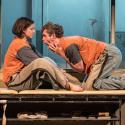
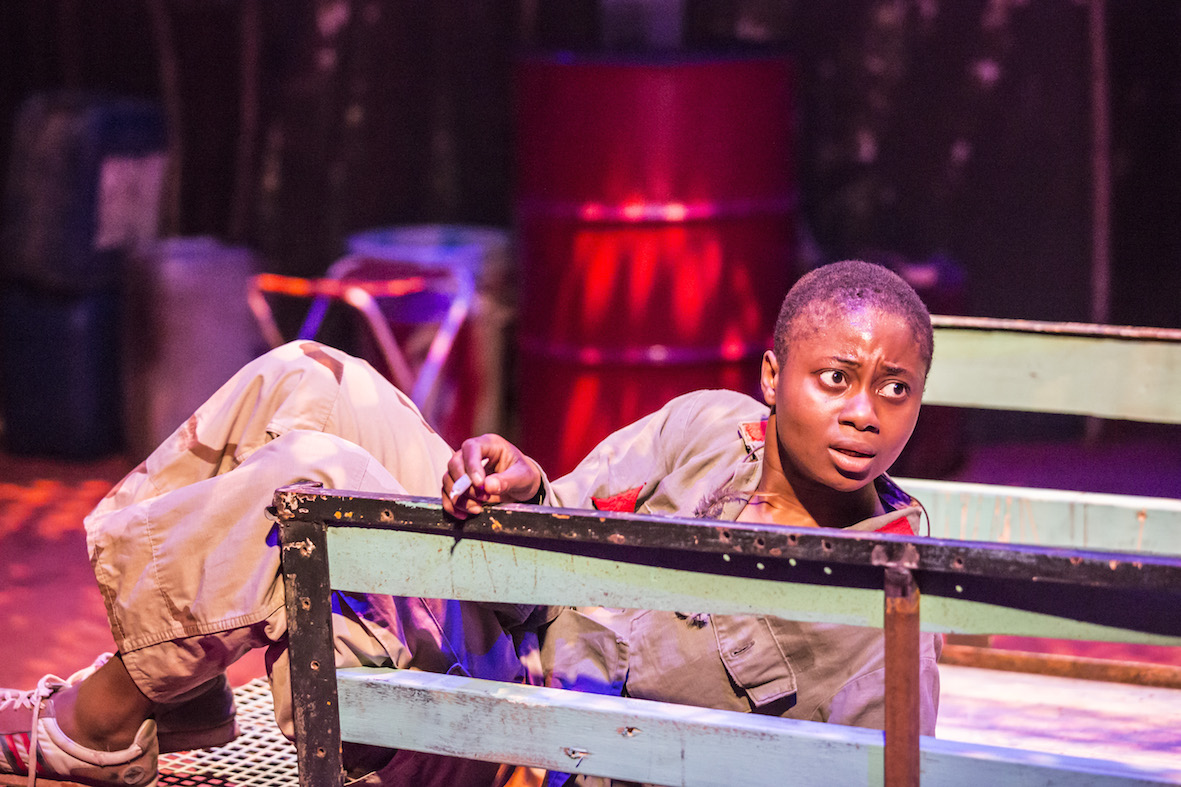 Juma Sharkah, as Martha (pictured right), is a revelation. Her transformation from abject terror to swaggering cruelty is compelling. As she cringes through gun drills and forced interrogations, you can sense the chant inside her head without ever needing to hear it: “I will not be raped. I will not be raped.” In one of the play’s most distressing and powerful scenes, two of Martha’s comrades-in-arms – known as “Killer” and “Double Trouble” – force her to join them in the torture of two captured girls. Simultaneously terrified of discovery yet somehow intoxicated by the power her new masculine role brings, Martha ruts against the petrified Finda (played by Weruche Opia) to howls of appreciation from her fellow soldiers.
The immersive, interactive elements of this production are used to great effect. When the young men curse and shout and order the men in the audience to separate from the women at (plastic) gunpoint, you sink deeper into the drama. The fight choreography, which frequently has the young soldiers – high on cocaine, blood lust and bizarre justifications for brutality – brawling at your feet, is excellent. The scenes where the commander is interrogating and brutalising his “small boy unit” are all the more powerful because you are standing among their ranks. The way Fraser James, as the commander, transitions from viciousness into joyful singing at times can feel a little forced, but it's a rare slip in an otherwise excellent performance.
Diana Nneka Atuona is a writer worth watchingAt times, you can feel why Martha is able to participate in this horror. Despite all the terrible cruelty, at least as a boy soldier she has some agency in the conflict. Previously, as a girl, she had nothing but fear, pain and misogyny to look forward to. We even learn later on that the “bush school” her grandmother was preparing to send her to is a place where female genital mutilation is practised. Atuona does this with a light touch, but we are constantly forced to confront the question: in this terrible situation, is it worse to be the woman who suffers, or the man who causes her suffering?
Atuona is a firm believer in the idea that a writer needs empathy with her subject matter, not necessarily direct experience of it (she is a British-born Nigerian from Peckham, south London). Underscoring the political power of her work, this play was performed at the Global Summit to End Sexual Violence in Conflict in 2014. Liberian Girl is her first play, and it is a remarkably assured, innovative debut. This is a writer worth watching.