His recent film adaptation of Anna Karenina framed the action of Tolstoy’s novel in a theatre, so it seems only natural that director Joe Wright should follow it up with a return to the stage himself. Redolent with the smell of “gas and oranges”, Arthur Wing Pinero’s Trelawny of The Wells is not just any play, but a play about the business of theatre-making - a sentimental romance between life and art that hides its simpering blushes behind a veil of farcical comedy. It’s meta-theatre, Victorian-style, but can so period a piece really bear the weight of Wright’s high-concept passion for the stage?
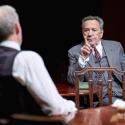
With a little help from Patrick Marber, whose new text “rearranges the furniture” of Pinero’s Victorian original a bit, it almost can. Marber writes both character and caricature better than almost anyone, and with his help a cast of theatrical gypsies and society grotesques gain flashes of Dickensian truth among all the clowning and hamming. The scenes at the Gower family’s oppressive London townhouse are a glorious collage of ensemble fragments; Maggie Steed’s delicately puritanical Miss Trafalgar (her vowels more pinched than a masochist’s bottom), Ron Cook’s tyrannical Sir William and Jamie Beamish’s brainlessly overbred Captain de Foenix generate a period sitcom of running jokes and stock scenarios, each aided by the delicate irony of Wright’s decision to use his cast to double both the Wells’ actors and their disapproving opposition.
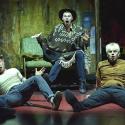
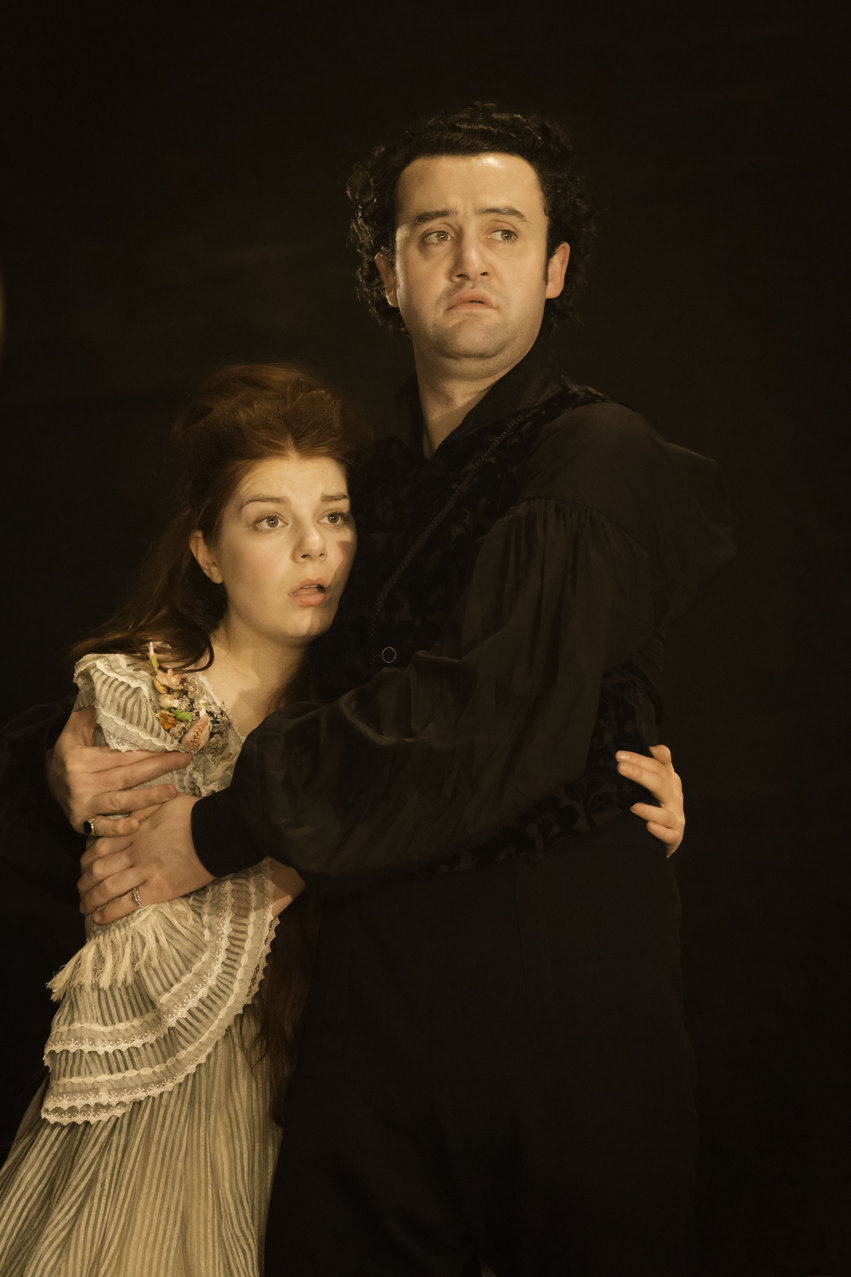 It does all take unnecessarily long to warm up, however. For a play about plays, Trelawny of The Wells is remarkably light on plot, with the embattled romance between “popular but toiling actress” Rose Trelawny (Amy Morgan) and bland society-boy Arthur Gower barely bothers to go through the motions. Despite some engaging sweetness from Morgan and a smooth enough shift from high camp pre-interval to romantic naturalism post-interval, the interest is all in the supporting cast. Aimee-Ffion Edwards reprises her Recruiting Officer turn as the dim but good-hearted Avonia, working her wide eyes to efficient comic effect. She meets her match in Daniel Mays’ Ferdinand Gadd (pictured with Edwards), whose limbs and face rival one another in their contortions, finding implausible humour in even the most unpromising of dialogue.
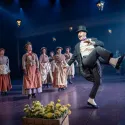
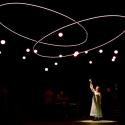
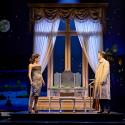
Lest we forget the conceit of Pinero’s play-within-a-play-about-a-play, Hildegard Bechtler’s designs make broad visual puns, with papier-mâché meals served up in front of painted backdrop furniture, and a row of scalloped footlights along the front of the Donmar’s very un-proscenium stage. In conjunction with the archness and excess of Wright’s direction it all occasionally risks chasing its own theatrical tail, but the energy of the cast, strategically placed musical numbers, and some surreal moments of comedy just about keep things from getting too smugly self-involved.
Trelawny of The Wells is feel-good farce for audiences still recovering from the emotional assault of the Donmar’s Julius Caesar. Marber has successfully loosened the stays on Pinero’s tightly corseted comedy, flashing a bit more ankle than Great Aunt Trafalgar would approve of, and he and Wright have guaranteed us all a reliably warm evening’s retreat from the bitter weather this month.