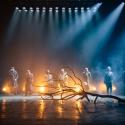
"All this hatred is exhausting," or so remarks Will Young's ceaselessly grimace-prone Emcee in Cabaret in a comment that encapsulates the evening as a whole. Returning to a show he directed to acclaim on the West End six years ago, the director Rufus Norris has reconsidered John Kander and Fred Ebb's song-and-dance classic with less nudity, stronger voices, and lots of stage business where its bite should be.
Audiences will turn out for a show that features bigger names than were on offer on Shaftesbury Ave. in 2006, where musicals neophyte Anna Maxwell Martin played Sally Bowles opposite a purposefully joyless James Dreyfus as a clearly doomed Emcee. But as if to accommodate an admittedly game singer (Young) here making a hyperactive West End debut, the sting of the earlier staging has taken a showbizzy turn that only occasionally honours arguably the most resoundingly political musical ever to hit the Broadway mainstream.
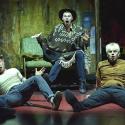
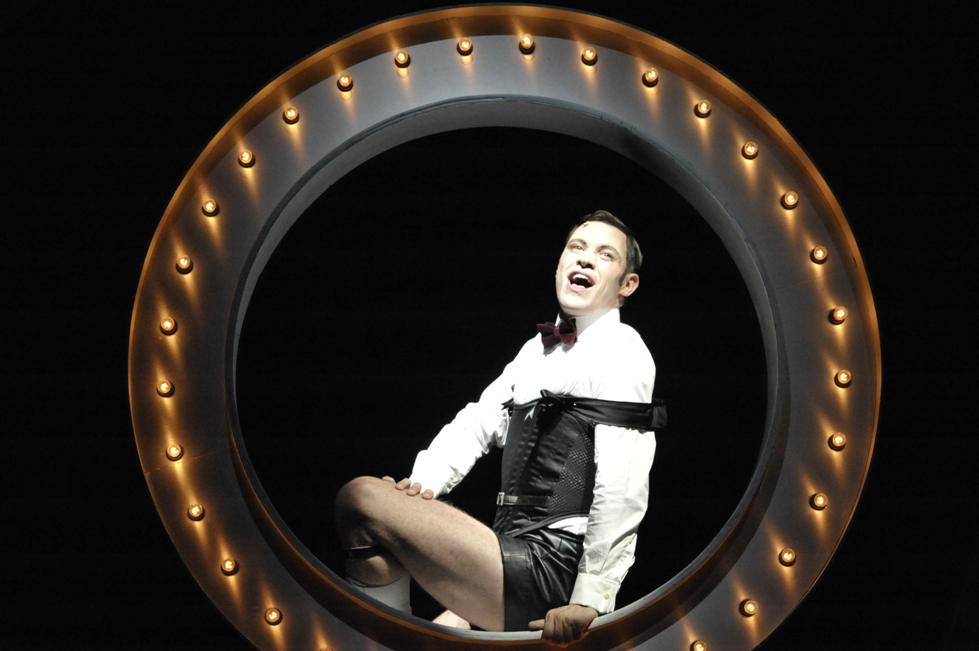 One can hardly fault Young (pictured right) for giving it his all (and, at one point, baring all, albeit in a production that elsewhere dispenses with the abundance of flesh from before, at least until the closing image). From the moment he first appears midway up Katrina Lindsay's at once forbidding yet fluid set, the Pop Idol star rarely stops wincing and pulling faces as he struts and high-kicks his way from one state of quasi-undress to another, along the way scooping up songs that aren't necessarily within this character's remit - "Tomorrow Belongs to Me", the ominously lovely first-act finale, preeminently among them.
The phrase "less is more" was made for a star turn so determined to impress that one ends up seeking respite from this omnipresent, omnisexual figure of hedonism hurling itself toward the grave in 1930s Berlin. And for all that the show's master of ceremonies has been an authorial construct as opposed to a flesh-and-blood character pretty much from Joel Grey onwards, two-plus hours of vampy posturing can take their toll. In context, it's scarcely a surprise that Young's ghostly and deliberate "I Don't Care Much" late in the second act represents the finest moment in a performance that elsewhere has yet to settle, though a sense of proportion may well come into play as the run continues. (This cast had a month on tour prior to arriving at the Savoy.)
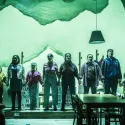
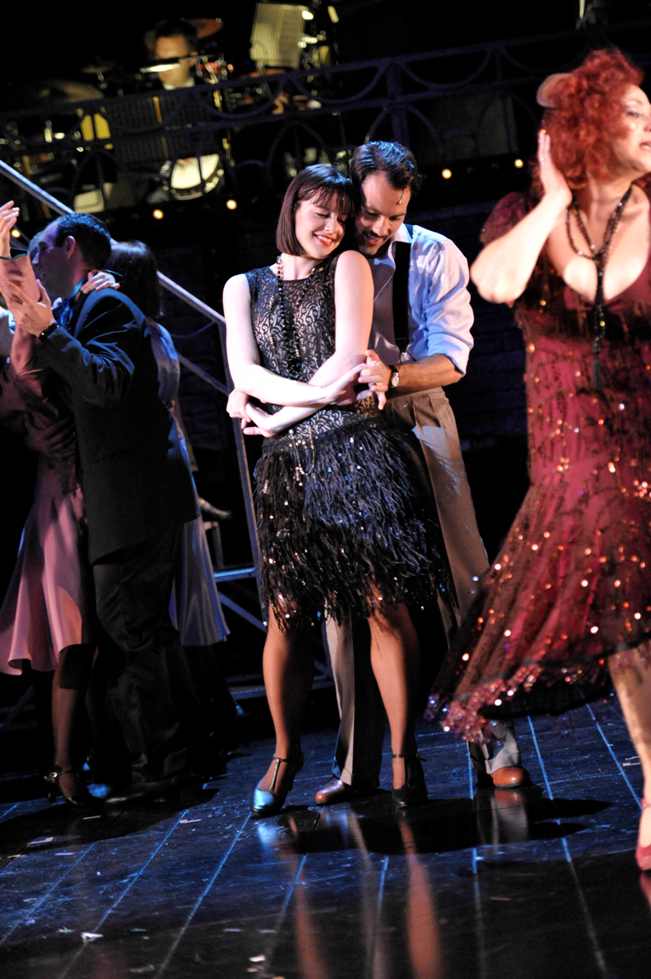 Elsewhere, Norris as before communicates the dreamscape tipping into nightmare traversed by all the show's inhabitants, from the heedless chanteuse Sally Bowles (Michelle Ryan) through to the ageing landlady Fraulein Schneider (a hammy Sian Phillips) and on to her beloved Herr Schultz (Linal Haft), the Jewish shopkeeper who refuses to acknowledge the genocidal march gathering pace around him. "It will pass," he says, resisting the chance to exit the country that against mounting evidence he continues to hold dear.
"Wake up, Sally," the bisexual novelist Clifford Bradshaw (Matt Rawle) tells the small-time, large-voiced singer who has been sharing his bed. But Cliff alone can read the increasingly swastika-laden writing on the wall amidst a community collectively so blinkered that even he briefly succumbs to the intensifying moral aphasia in "Why Should I Wake Up?", the lesser-known but haunting number that West End regular Rawle - giving by some measure the performance of the night - sends soaring eerily into the ether.
 Cutting a bruised portrait of battered innocence, Rawle's Cliff falls prey, in Javier de Frutos's reworking of his 2006 choreography, to some cartwheeling thugs, as if to suggest the UK-based Venezuelan as the man for the job should West Side Story ever be looking for someone besides Jerome Robbins to relate the antagonisms of the Sharks and the Jets. (The "Bali Hai"-like backdrop to "It Couldn't Please Me More", meanwhile, is a mistake.)
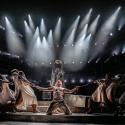
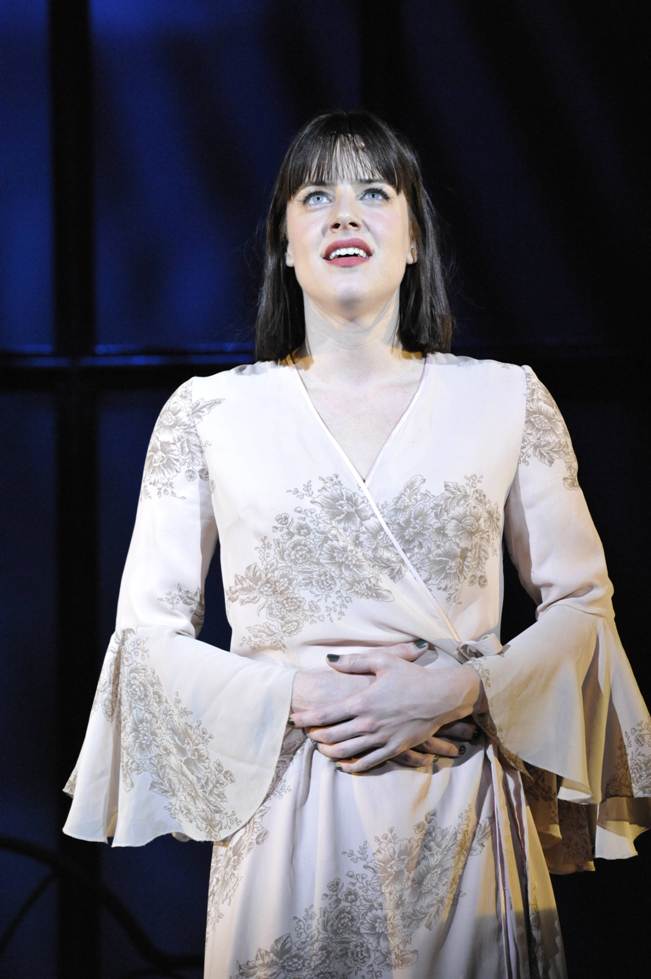
And what of West End first-timer (and EastEnders alum) Ryan (pictured) as that perennially self-deluded songbird, Sally? It's a pleasure to hear the most anthemic portions of the score for once allowed the sort of vocal heft too often sidelined by directors hellbent on the idea that Sally can't actually sing. But Ryan grievously undersells the book scenes in which this solipsist's spirit starts to break and has her part to play in one's overall feeling that a once-audacious production has on this occasion been defanged.