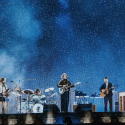
Ten o'clock at night and the WOMAD air felt as hot as Dakar preparing for Baaba Maal. Sadly, given this year's hugely expanded audience, it was hard to see the stage unless you know how to glide to the front like a snake (which years of festival practice have taught me). Though I still missed close views of the opening three songs and the singer’s acoustic guitar accompaniment, it was impossible not to hear his voice, even adjusted to unusually soft and mellow soulful tones rather than the familiarly sharp, declamatory style that pierces the heart.
A slow start and build-up was a plan perfected by Salif Keita, who would wear dazzling boubou robes and a white prayer hat to deliver spiritual prologues before the main performance with his band. Baaba Maal took a different route, dressed in an odd padded beige jacket and black trousers and looking like an elegant Parisian-African, while singing secular but equally spiritual numbers in a voice closer to Al Green and Otis Redding than Youssou N’Dour. Closing the first three songs, he announced, “I love it here in London!”
The performance built to multiple fever pitches as the band – more an African orchestra - launched its polyrhythmic workout and the singer returned to his traditional flowing and staccato style. The back line of brass was as sharp and tight as a salsa section with spiralling trumpet choruses and piercing solos; five lanky djembe drummers began lastingly loud, excited, rhythmic conversations which the singer moved in and out of, and keyboards, bass and electric guitar laid out melodies beautifully transformed by the kora player.
Baaba Maal’s voice floated over the audience, sounding richer, deeper, more mature. Having emerged in the wake of N’Dour's phenomenal success, he still managed to develop an immediately recognisable vocal style with emotional expression just as powerful, and always sharing the high-pitched, declamatory technique derived from sub-Saharan and North African traditions.
Watch video of Baaba Maal performing "Dakar Moon"
A couple of acoustic songs were built around his spoken messages as an ambassador for Africa’s HIV/AIDS campaigns and today’s horrific drought crisis, issues which share his musical life, but they are overlong for this situation. Piling on “I love you” messages to the audience is irritating and unnecessary.
In the final climax, the long-limbed, dreadlocked dancers darted around the stage, competing in solo moves and sharing chorus-line routines like a row of kick-boxing sprites in a speeded-up cartoon. By then, Baaba Maal had removed his jacket to reveal a black shirt and was loosened up enough to dance - more like a sensual Western contemporary dancer working with Bill T Jones than an African break dancer.
Towards the end, we reached the smoochy “Dakar Moon” from the recent Television album. It's loved or loathed, and being a sucker for country music, kitsch and smoochiness, I love it. Particularly for the way the singer has again adapted his voice to a different cultural style. His stretched syllables, quirky English pronunciation and elongated notes fit around the guitar’s almost flamenco vibrato and Duane Eddy electric twang, contributing to its swoony perfection. I felt sorry for those friends who were bored by Baaba Maal’s opening acoustic set and dropped out to eat and carouse. Gloomy faces were the reaction to reports of the sensational performance they'd missed.
 Find Baaba Maal on Amazon