Mahler cycles in his centenary year are about as predictable as dead leaves in autumn. But they perhaps belong more in Birmingham than in some other cities. Mahler, after all, was a big factor in making Simon Rattle’s name, and Rattle was a big factor in getting this superb concert-hall built. So the current cycle there, now halfway through, is like a civic statue to the Master: a tribute both ways, honour to the giver and the receiver.
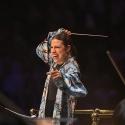
The fourth term in this equation, the CBSO’s present music director, Andris Nelsons, also has excellent Mahler credentials, and some may feel it’s a shame that his contribution has ended with this performance of the Ninth Symphony (he previously conducted Nos 8 and 5). Others will look forward to (for example) Gergiev in No 7 next month and, for sure, Rattle himself in Das Lied von der Erde at the end of the series in June. Personally I’m in two minds about this. Nelsons’s Ninth raised a great many intriguing musical questions – more about the character of Mahler’s writing, perhaps, than the state of his soul; but if it was also often very exciting, not to say thrillingly played, it was sometimes the kind of excitement that prompted the Duke of Plaza-Toro to lead his regiment from behind - the kind one can often manage without.
'With Nelsons one feels that everything comes from the score, even if magnified two or three times'
Let’s try to be specific. Mahler had developed a style that involved terrific extremes of expression: violent crescendos and sudden diminuendos, drastic changes of pace, absurdly fussy phrasings and dynamic markings, even somewhat melodramatic string bowings (which the players sometimes even observe). Probably he was a bit like that as a man: nervy and convulsive, prone to outbursts of emotion and temper, a difficult, hyper-sensitive, tyrannous personality.
One remembers how conductors like Bernstein have milked this quality in Mahler, sweating and heaving their way through these tortuous masterpieces. Nelsons is also a highly gestural conductor, but in a different, more meticulous fashion. With him one feels that everything comes from the score, even if magnified two or three times. If a sudden change of pace seems excessive, you check in the score and there it is, marked. If a horn plays too loud, you think: careless balance. But look at the music, and lo and behold it will tell the horn: “sweetly sung, but very prominent”.
Mahler’s orchestral texture is often so complicated and dense that balancing it must be a nightmare, especially since the writing for even what used to be regarded as supporting instruments is as difficult as for the leading parts. The long D-flat chord that ends the work – very soft, excruciatingly hard to sustain – is topped not by the first violins (who have given up by this time) but by the seconds. Nelsons’s tempo for the Rondo burleske third movement would have tested an orchestra of wind and string Paganinis, and his “etwas gehalten” (rather held back) halfway through was a lot more than “etwas”.
'The CBSO followed their conductor like dressage horses faced with a cross-country course'
Yet how brilliantly the CBSO handled these treacherous moments. Through all the extravagant switches of speed and mood in the long first movement, they followed their conductor like dressage horses faced with a cross-country course. In the slow waltz of the Ländler second movement the wind playing, in that dry, sardonic “dance” music, had wit and focus, settling down after some mildly doubtful tuning at the start of the work.
So much to admire, enjoy and study, then; but for me, in the end, a sense of excess. Must the Rondo dash along so fast that one is more conscious of the speed than the music? Does that final Adagio have to slow down so much more in the closing pages and go so quiet that one can hear one’s neighbour’s stomach gurgling? Is it really the case that Mahler’s style gives licence to any degree of contrast, as if there were world records in such things which modern training methods enable us to keep beating? Or is it possible, after all, to remain a classical Mahlerian, hoping for a subtlety of emotional drama that will keep this great composer where he belongs, at the end (admittedly) of a tradition that began with Haydn and Mozart?
The question was partly answered before it was asked by Mark-Anthony Turnage’s moving cello concerto, Kai, which, somewhat bizarrely, preceded the Mahler in a performance by Uli Heinen with the Birmingham Contemporary Music Group (an ensemble mainly drawn from the orchestra) under Nelsons. Kai is also a very emotional piece; it was composed in memory of the cellist Kai Scheffer, who died young in 1989. But it is tightly composed out of catchy fragments of jazz, which form easily heard motives against the lyrical flow of the solo writing. It has noisy moments, but doesn’t protest. It sounded beautiful in this large, sympathetic hall after the more studio-like CBSO Centre, where these players performed it last November. But it was inevitably swamped by what followed.
- See the rest of the CBSO Mahler series
- Check out the Philharmonia's London Mahler cycle
- Check out other Symphony Hall concerts