I once sat in a rehearsal room in a brick-box theatre on the outskirts of Cape Town. The cast was warming up for Carmen. First, the choreographer put 40 mostly black South African singers through a gruelling physical warm-up. Opera singers are rarely slender, and they were all in a muck sweat by the time the vocal coach stepped forward to lead them through a vocal warm-up. But when they opened their mouths it was as if someone has strapped you to a chair in a wind tunnel. The noise was transforming, majestic, all-powerful. So I knew roughly what sound to expect in Singing for Life, a documentary about the miscegenation of the black township choral tradition and the white man’s most exclusive art form, opera.
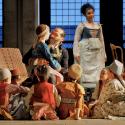
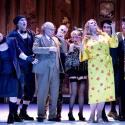
We all know about opera’s eagerness to uncouple itself from the stench of privilege. Nowhere has the project happened more expeditiously than in South Africa. In the UK there has been great success for the company which brought township versions of The Mysteries and The Magic Flute to the West End in recent years while the same company's film U-Carmen eKhayelitsha won the Golden Bear at the Berlinale a few years back. But back in the early 1990s, when the apartheid system began to unravel, it was the Cape Town Opera which seized the opportunity to go scouting among the limitless reservoir of natural talent in the townships.
Powerful sets of lungs are not in short supply in Guguletu, Khayelitsha, and the township we visited last night, Langa, where two young hopefuls were aspiring to follow the trail of Fikile Mvinjelwa, who in 1993 became one of the first township choristers to make his way onto the operatic stage.
Fikile Mvinjelwa sings "Bess, you is my woman now"
One of them, 16-year-old Mandelaki, lives in a tin shack where four members of the family sleep in shifts on the one available bed. Her mother works in a sock factory and when Mandelaki comes home from school her tasks are not singing practice but looking after the baby and cleaning the house. Thami, 18, has it slightly easier. He lives in a brick house with his mother, a domestic worker, and while he can’t read music, he has the ability (and the equipment on which to do it) to ingest melodies from CDs and DVDs. He also has a child of nearly three.
Both young singers, it goes without saying, have remarkable voices. But they are members of what is being labelled “the lost generation”, born after the end of apartheid and still waiting for the economic miracle. Just as boxing used to be a way out of the ghetto, so singing can be for young black South Africans. “It’s rare to find voices like this in Europe,” explained former Cape Town Opera director Angelo Gobbato as hopeful auditionees crammed the corridors at the University of Cape Town. But that is only part of the battle. Can they act? Can singers whose mother tongue may be Xhosa, Sotho or Zulu conquer not only English but also Italian for Rigoletto, German for Die Zauberflöte or French for Carmen? Can they successfully overcome the cultural rift that still exists between the township choir and an operatic tradition associated with white oppression?
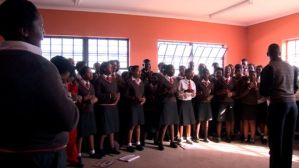 Mvinjelwa, it was demonstrated, is a living example of the sacrifices required of a chorister transferring choral skills to the opera stage. For one, the community ethos of the township choir (school practice, pictured right) is at odds with the competitive individualism of opera. And for years he had to put up with people dissing his conversion to a European, colonial form of music. Before Nelson Mandela’s election to the presidency, he and other pioneers were even accused of giving succour to the system. And then, once he made it all the way from Cape Town to the Met in New York, everyone back home wanted him to buy them a beer.
Those anxieties about the white man’s music still persist. “In the township they don’t like opera that much,” said Thami. “When I sing they tell me to shut up.” Of course that might conceivably happen in this country too. But a British music teacher wouldn’t be forced to resign from his job simply because colleagues didn’t approve of inculcating a passion for opera in pupils. (Not yet, anyway.) This, we discovered at the end of the programme, had happened to Mandelaki’s singing instructor. Antipathy goes all the way to the top. The government recently slashed funding for opera to support traditional African music instead.
Singing for Life was mercifully not a programme built around audience manipulation. By the end we hadn’t found out if either young music pupil had sung their way out of poverty. Real life isn’t like that. It takes years to create an opera singer, rather than grow one overnight in the Popstar to Operastar labs, like cress out of a wet flannel.
My one complaint about Singing for Life is that it could have been shown a month earlier. It might then have countered a now global assumption that a nation with choral traditions matched nowhere in the world but Wales is capable of producing only one note, the foggy blast of the vuvuzela (although I confess I'm a fan). This programme redressed the balance slightly too late.
But it wasn’t as badly timed as Gazza’s Tears: The Night that Changed Football. Scheduled last night as a taster for the World Cup semi-finals, this was a straight retread of One Night in Turin, which was carefully launched long before the footballing world convened in South Africa. Both films commemorated the England team which reached the semis 20 years ago. No one will remember the slow-coach ruffians and lamb-hearted knaves who (in case you’ve been politely looking the other way) lately failed to follow in their studmarks. A plague on all their mansions.
Powerful sets of lungs are not in short supply in Guguletu, Khayelitsha, and the township we visited last night, Langa, where two young hopefuls were aspiring to follow the trail of Fikile Mvinjelwa, who in 1993 became one of the first township choristers to make his way onto the operatic stage.
Fikile Mvinjelwa sings "Bess, you is my woman now"
One of them, 16-year-old Mandelaki, lives in a tin shack where four members of the family sleep in shifts on the one available bed. Her mother works in a sock factory and when Mandelaki comes home from school her tasks are not singing practice but looking after the baby and cleaning the house. Thami, 18, has it slightly easier. He lives in a brick house with his mother, a domestic worker, and while he can’t read music, he has the ability (and the equipment on which to do it) to ingest melodies from CDs and DVDs. He also has a child of nearly three.
Both young singers, it goes without saying, have remarkable voices. But they are members of what is being labelled “the lost generation”, born after the end of apartheid and still waiting for the economic miracle. Just as boxing used to be a way out of the ghetto, so singing can be for young black South Africans. “It’s rare to find voices like this in Europe,” explained former Cape Town Opera director Angelo Gobbato as hopeful auditionees crammed the corridors at the University of Cape Town. But that is only part of the battle. Can they act? Can singers whose mother tongue may be Xhosa, Sotho or Zulu conquer not only English but also Italian for Rigoletto, German for Die Zauberflöte or French for Carmen? Can they successfully overcome the cultural rift that still exists between the township choir and an operatic tradition associated with white oppression?
Mvinjelwa, it was demonstrated, is a living example of the sacrifices required of a chorister transferring choral skills to the opera stage. For one, the community ethos of the township choir (school practice, pictured right) is at odds with the competitive individualism of opera. And for years he had to put up with people dissing his conversion to a European, colonial form of music. Before Nelson Mandela’s election to the presidency, he and other pioneers were even accused of giving succour to the system. And then, once he made it all the way from Cape Town to the Met in New York, everyone back home wanted him to buy them a beer.Those anxieties about the white man’s music still persist. “In the township they don’t like opera that much,” said Thami. “When I sing they tell me to shut up.” Of course that might conceivably happen in this country too. But a British music teacher wouldn’t be forced to resign from his job simply because colleagues didn’t approve of inculcating a passion for opera in pupils. (Not yet, anyway.) This, we discovered at the end of the programme, had happened to Mandelaki’s singing instructor. Antipathy goes all the way to the top. The government recently slashed funding for opera to support traditional African music instead.
Singing for Life was mercifully not a programme built around audience manipulation. By the end we hadn’t found out if either young music pupil had sung their way out of poverty. Real life isn’t like that. It takes years to create an opera singer, rather than grow one overnight in the Popstar to Operastar labs, like cress out of a wet flannel.
My one complaint about Singing for Life is that it could have been shown a month earlier. It might then have countered a now global assumption that a nation with choral traditions matched nowhere in the world but Wales is capable of producing only one note, the foggy blast of the vuvuzela (although I confess I'm a fan). This programme redressed the balance slightly too late.
But it wasn’t as badly timed as Gazza’s Tears: The Night that Changed Football. Scheduled last night as a taster for the World Cup semi-finals, this was a straight retread of One Night in Turin, which was carefully launched long before the footballing world convened in South Africa. Both films commemorated the England team which reached the semis 20 years ago. No one will remember the slow-coach ruffians and lamb-hearted knaves who (in case you’ve been politely looking the other way) lately failed to follow in their studmarks. A plague on all their mansions.
- Watch Singing for Life on BBC iPlayer
- Find U-Carmen eKhayelitsha on Amazon