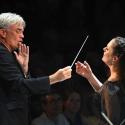
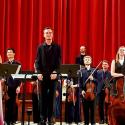
If Beethoven’s Third Symphony Eroica was the seismic upheaval, not just for Beethoven but for the entire symphonic movement, then the Second Symphony was most certainly the pre-shock. And we can be precise about the moment that Beethoven blows the Haydn model right out of the water and glimpses the far horizon of his brave new world: it’s the extended coda of the first movement where a devious harmonic shift sets collision course for the rip-roaring climax in which the trumpets turn wilful dissonance into exultancy. Ivan Fischer and the Orchestra of the Age of Enlightenment nailed it like they knew that nothing would ever be quite the same again.
This Beethoven symphony cycle – the OAE’s first for a decade – is all about rekindling such surprises and coaxing jaded ears into a new way of listening, really listening. It’s hard to strip familiar Beethoven of centuries of changing performance practice and return it as far as is possible to the moment of inception – but that’s the aim here. I’m not sure I had fully appreciated before how stealthily the dancing variants of the Second Symphony’s second movement Larghetto become trifles of real consequence and how the casual and the formal become effortlessly and inextricably reconciled. The honesty of the sound helps enormously in hearing precisely what is going on and why Beethoven made the choices he did.
The devilish finale of the Second has the entire instrumental assembly guffawing, chortling, chuckling in accordance with the character of their voices. Bassoons naturally pair off with grunting basses – a grudging, slightly grumpy, good humour. There’s the smooth-talking cello-led second idea but the joke lies in how much mileage you can get out of a theme that’s barely a theme at all and how loudly or softly you can play it. Fischer and his motley crew got pretty much all their laughs.
And when we returned after the interval Fischer didn’t wait for us to settle down but rather silenced us with the two explosive chords that effectively changed the course of musical history. The imperative of what followed reminded us that so much of the heroic nature of the Third Symphony lies in its unstoppable momentum. It is in every sense of the word “defiant” and the way Fischer laid down those titanic punctuation marks in the opening movement – pretty much redefining the term sforzando – gave notice of his exhilarating, uncompromising, stance.
But here is a composer outreaching the sonic limitations of his orchestra and inevitably it is harder in this symphony to vanquish from your inner-ear the weight and depth of modern instruments – especially in such passages as the first movement development and mighty double-fugue at the heart of the Marcia funebre culminating in that epic horn statement (a single brave soul in this instance). Fischer focused instead on the starkness of the scoring and its part in laying bare the harmonic workings of the piece. The parched string sound, not least the rosiny growling of the basses in the dying moments of the funeral march had a colour all its own and as Prometheus rose from the ashes of that movement to dispense liberation in the theme and variations of the finale it was like having all one's musical sensibilities steam-cleaned.