If what you wanted to do was go out to the middle of the Mexican desert, invert the Cross and dip it in blood, screaming obscenities all the while, surrounded by a sunburnt band of fellow travellers all off their heads on mescalin, Tutuguri is definitely the music you’d want to do it to. Which is OK, because those are pretty much the images conjured up by Antonin Artaud’s poem-radio play To Have Done with the Judgment of God, which prompted Wolfgang Rihm to make a two-hour instrumental setting of this "Rite of the Black Sun" for large orchestra, taped chorus, howling vocalist (Leigh Melrose) and prodigiously equipped percussion ensemble.
Artaud’s text is a real piece of work, and it’s quite possible to understand why: having commissioned it, the chaps at French radio got cold feet and shelved the play a day before the scheduled broadcast on February 2 1948. It is literally almost the last, furious gasp – Artaud died in a psychiatric clinic a month later of colo-rectal cancer – of the Theatre of Cruelty’s creator, prefaced by a spittle-flecked tirade against American imperialism and staying stoutly, ever-outrageously true to his original manifesto to rediscover "the magic of genuine ritual" and make a theatre "in which violent physical images crush and hypnotise the sensibility of the spectator".
One thing about rites is that there will be boring bits for everyone at some point. It’s in their nature
More impressive is Rihm’s fidelity both to principle and text. Substitute "physical" for "musical" and you have a good idea of how Tutuguri works, though the periodic and relentless pounding of drums makes its own very palpable assault on the senses. However, with the subtitle of a Poème dansè he gave it an unlikely heritage stretching back to Debussy (Jeux) and Dukas (La pèri), and such unearthly beauty as may be found in Tutuguri comes from old places: a slowly shifting bass pedal, an expanding sequence of Messiaenic chords, a whitening light of wind and brass put out at full beam.
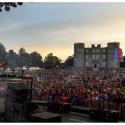
So the BBCSO’s concert performance of the UK premiere was a singular event, falling into that category of "try anything once" – and a few did, though one hesitates in passing to guess at what fraction of the cost to mount this climax to a "Percussion Discovery Day" was covered by ticket sales. Hiring half the score and parts? A third of the percussion section? A quarter of Kent Nagano? In fact the performers gave everything. Faced with an unfamiliar score of formidable complexity, the BBCSO can become the best orchestra in the world, and Nagano marshalled them with dynamic assurance, giving no more than necessary to the percussionists so that they could establish their own unanimity of pulse and purpose.
One thing about rites is that there will be boring bits for everyone at some point. It’s in their nature. There are no half-hour rites – well, maybe one. Even Indian weddings and Orthodox Easters have their moments where something important is going on somewhere else and you can’t see or hear or work out what it is. They are not symphonies or novels, compressing time. Some of the delicately scored winding-up in the first two movements was sonic air between onslaughts, whose cumulative effect some might find tiresomely phallic. Messiaen’s Et expecto and Xenakis’s Pleïades may be there in the background, but Rihm has to be bigger, longer, louder.
Such scepticism, however, looks puny in the face of the sheer technical mastery which gives rude life to the fourth and final section of Tutuguri: Crosses… The Horseshoe (The Six Men... The Seventh). This is scored for the six percussionists alone and sets up myriad cells of violent activity which threaten to overlap and overwhelm each other before coalescing into a new, larger unity that then collapses to become another tiny cell, and so the process goes on, generating an awesome unity from intricacy: the crowd of Elias Canetti in exultant, untrammelled power. In presenting Towards the Millennium during the 1990s, Sir Simon Rattle and others put on performances of the major orchestral works of the last century. It isn’t often one hears something they missed. Rattle described Stockhausen’s Gruppen at the time as "an unavoidable monster". With hindsight, so is Tutuguri.
- Listen to this performance of Tutuguri on BBC iPlayer until 28 February