Founder rate ends 9th September.

We’re rebuilding theartsdesk to secure the future of real arts journalism. Be part of it by subscribing: if you do it now, the founders’ rate of just £40 yearly is yours FOR LIFE!

SUBSCRIBE NOW 

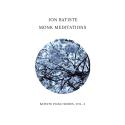
Jon Batiste meditates softly on Thelonius Monk in 'Monk Meditations'

The genre-crossing musician brings a New Age sheen to his solo piano tribute

share this article

Batiste’s aim is to erase barriers between jazz, blues and classical

Tread softly into Jon Batiste’s third volume of his Piano Series, Monk Meditations, drawing on and drawing out a number of introspective solo piano pieces inspired and adapted from Thelonius Monk. It’s one of two Monk-based sets (Monk Movements is its twin) that land on the same day along with a second volume of Black Mozart – August 14. While Movements sees Monk classics, such as the title track of his 1967 album Brilliant Corners, transform into classical piano suites, Batiste’s aim on Meditations is to erase barriers between jazz, blues and classical by embracing a minimalist, ambient New Age route.

Which means the inner character of Monk’s jagged, arresting music, with all its tensions and tales of the unexpected, is turned right down in favour of a soft, glistening solo set that barely ripples the surface. Nevertheless, they are entrancing pieces that could occupy double berths on Radio Three’s Ultimate Calm. Batiste says he spent a solid, formative year listening to Monk, and describes himself as entering “the flow state” when embarking on these recordings. The piano sounds polished to perfection, the air hazy with Pledge, such are the reflective, glistening surfaces of these meditations. 

Perhaps meditation is more about surface than depth; or the surface through which you attain depth. It is flawlessly attractive, if often at a remove from the impish Monk spirit. Though that’s not the case on album highlight “Monk’s Mood”, which raises some of disruptive Monk moves while still cleaving to the transparency of the album’s meditative surface. It’s the album’s penultimate piece, with a 90-second reprise of the quietly potent opening track, “Always Know”, bringing a spectral sense of departure and closure, resting on that one piano note that returns us to the beginning, and the silence. 
Tim Cumming's website

The inner character of Monk’s jagged, arresting music, with all its tensions and tales of the unexpected, is turned right down

rating

3

explore topics

share this article

Help secure the future of arts journalism

In this era of algorithmic recommendation, opaquely sponsored content and AI slop, theartsdesk’s mission to preserve real journalistic and critical values has never been more important.

If you like what you see here, please join us 
in this mission.

Subscribing to the site will help us in our coming 
redesign and expansion.


If you do this before the 9th September this will be at our guaranteed founder’s rate: 
your subs will never increase again.

Subscribe now for £5 per month. 
or yearly for just £40.

Or if you simply want to support us with a one-off donation, you can do so here.

more new music

The genre-crossing musician brings a New Age sheen to his solo piano tribute
The London trio add toilet bowls and ugly crying to the hedonistic glamour
New York band’s blend of folk rock and psychedelia grabs attention
Northern indie four-piece offer a vim-laden snapshot of disenfranchised Britain
Ladysmith Black Mambazo and Laura Mvula shine
Garage, French House and feeling collide in latest release
A creative, inclusive, endlessly imaginative festival for families
Prolific Aussie psychedelicists marry dance and prog sounds
A soaring fusion of atmospheric melancholy and energetic punk