VINYL OF THE MONTH
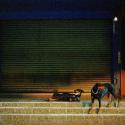
West Virginia Snake Handler Revival They Shall Take Up the Serpents (Sublime Frequencies)
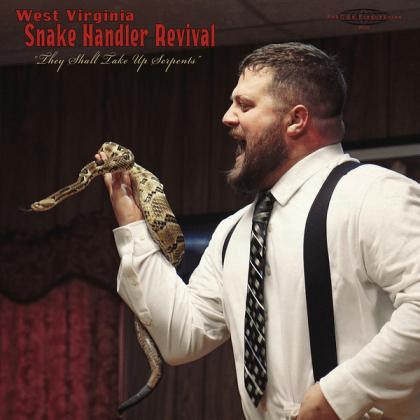
Californian producer Ian Brennan walks, loosely speaking, in the footsteps of groundbreaking (and controversial) father and son song collectors, John and Alan Lomax, who, between them, gathered an essential storehouse of American folk music in the early-to-mid-20th Century. Like them, he’s interested in the cultural context of roots music and he’s ranged across the world, from Rwanda to Azerbaijan. His recent 2023 Parchman Prison Prayer album, recorded at a church service in Mississippi State Prison, is a good example of his finding beauty in the most damaged, unexpected places. His latest album was recorded at the last snake-handing church in the US, which is in West Virginia. The practice is banned in the sect's traditional Appalachian heartlands due to the high mortality rate (over 100 preachers succumbed to snake bites during the last century - both the father and brother of the lead preacher on this album died this way.). The Christian outliers' beliefs are based on a literal interpretation of a passage in the Gospel of St Mark which mentions that true believers will “take up the serpents” and survive. They’ve been round since at least 1910 and reckon they invented electric guitar rock’n’roll in honour of Jesus, but then Satan stole it. The album makes a good case. It was recorded at a Sunday morning service and is rife with maniacal preachin’ of a kind Alabama 3 can only dream of, and improvised lo-fi praise songs ripe for a psychobilly moshpit. The combination of gut-howled testifying, bloody danger, and raw riffin’ is deranged and visceral. Comes with a 12” x 12” four-page photo/info insert.
VINYL REVIEWS
Yakkie Kill the Cop Inside Your Head (Yakkie)
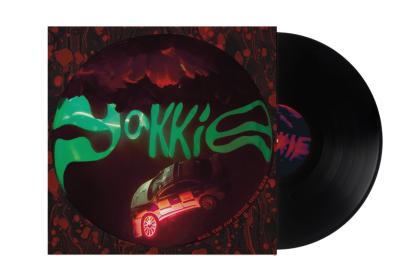
Yakkie are a brilliantly raging London group whose members Janey Starling, Robin Gatt, Laura Ankles and Maeve Westall hail from other bands (Petrol Girls, Dream Nails, Colour Me Wednesday, itoldyouiwouldeatyou and Personal Best). The songs on their debut album ride the intersection between anti-capitalism, feminism and gender politics, focusing on gaslighting, male violence, objectification and commodification. Mine came with a 24-page fanzine-style booklet with the lyrics alongside short essays on their themes. There’s also a red-drenched 12” x 12” photo/lyric insert. This lot have listened to Bikini Kill but their sound is more heavy rock. Given the themes and the fury, it’s also surprisingly tuneful and compelling, well-sung and full of fire. Yakkie deserve a bigger platform to shout from.
Pink Floyd Wish You Were Here 50 3xLPs (Columbia)
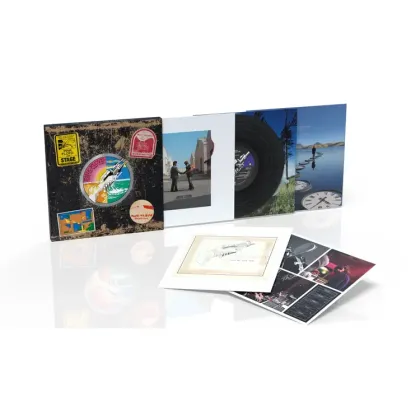
What to say about this one? It’s one of my most-played albums of all. Of course, I used to hate it when young, but, as the years passed, and people started dying and going mad, so it became a friend. Actually, I didn’t hate it when young. I just remembered that, although I religiously loathed all Pink Floyd (except the Syd stuff) in my teens, by the time was I was hardcore raving circa 1991 (aged 23-24), this album used to go on all the time. I listened to it when the drugs wouldn’t let me sleep. Anyway, enough autobiog blather. You’ll likely know the back story; the album made in honour of LSD-shot ex-band-leader Syd Barrett. And you’ll also likely know the songs; the gorgeous hopelessness of “Shine on You Crazy Diamond”, the music biz addled cynicism of “Have a Cigar” and “Welcome to the Machine”, and, of course, the heartfelt longing of the title track. So, let’s focus on the extras. This 3LP version has two albums of them, the peach of which, for those who desire more than the original’s 13-and-a-half minute take, is a 25-and-a-half minute version of "Shine On…” (parts 1-9 instead of the usual 1-5). Since it’s a song I wallow in when the going gets weird, I’m ripe for it, even if the additional material is just synth tones and extended riffing. The other treat is a version of “Wish You Were Here” recorded with French gypsy-jazz violin royalty Stephane Grapelli. Elsewhere are two minutes of the rubbed wine glasses from the beginning of “Shine On…”, plus demos of various cuts, including early instrumental takes of interest mainly to those who enjoy the minutiae of an album’s birthing process. What an album!
Skinshape X Horus Skinshape X Horus (Lewis)

Mike Lewis of Lewis Recordings was on BBC 6Music the other day. He was talking, with genial pragmatism, about what it's like to run a small label, which he’s done for quarter of a century. It’s not about the bread, man, that’s for sure. Whether theartsdesk on Vinyl digs the music from independent micro-labels or not, I have nothing but respect for them, fighting for culture in a world mainly interested in boring, boring money. Happily, the latest vinyl from Lewis is something to get behind. It’s by funky noodler Will Dory, AKA Skinshape, and his pal Ben Bell. The pair run roots reggae-centric label Horus, and their new album combines their talents for a delightful set of dub-touched bubblers, including the occasional talents of singers Winston Reedy, Modou Touré and Andy Platts. While opener “Bettina” is a delicious easy listening-touched cover of a 1970 number by Brazilian jazz guitarist Bola Sette, many of these tunes would fit in comfortably beside original Seventies roots cuts. Warm and welcome.
Grupo Um Nineteen Seventy Seven (Far Out) + Various Nicola Conte presents Viaggio (Far Out)
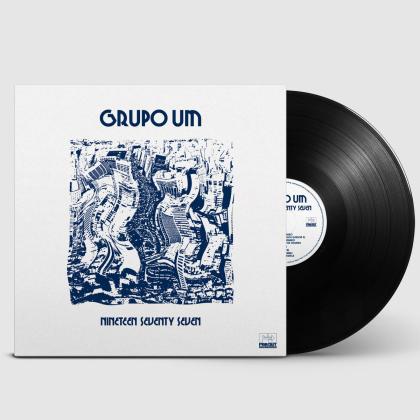
A couple from London’s reliably imaginative Far Out Records. Back in the 1970s multi-instrumentalist-composer Lelo Nazario lead the band backing Brazilian alt-jazz figurehead Hermeto Pascoal. They went on to become the experimental outfit Grupo Um. In a country where making vanguard music was a dangerous and political act, theirs was some of the most radical. A taste of this is to be found on Nineteen Seventy Seven, a previously unreleased set featuring Lelo’s brother Zé Eduardo on drums. It’s a hyperactive collection of funk-fusion-enlivened free jazz, further boosted by pure percussive interludes. Intense, busy, rife with speeding piano and loose sax, its out-there-ness won’t be for everyone, but the sense of excitement is undeniable. Comes with photo/info inner sleeve notes by Zé Eduardo.
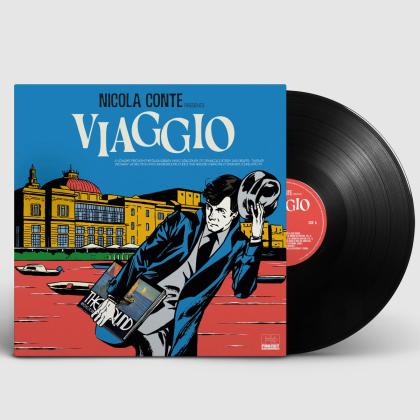
Respected Italian jazzer Nicola Conte curates a compilation of instrumental cuts drawn from 1960s production houses Cenacolo, Rotary and Giraffa, who served the country’s suddenly booming film industry. This gave an excuse for under-employed jazzmen, such as pianist Amedeo Tommasi, to ply their trade and get paid. The 12 tracks vary from loungey easy listening to Hispanic groovers, none of them dull. Of particular interest to theartsdesk on Vinyl is the freaky, flutey proto-electro of Joél Vandroogenbroeck’s “Electronic Jungle (Images of Flute in Nature)” but it’s all worth an ear.
Joe Harvey-Whyte & Geir Sundstøl Langeleik (HUBRO) + Joe Harvey-Whyte & Bobby Lee Last Ride (Curation)
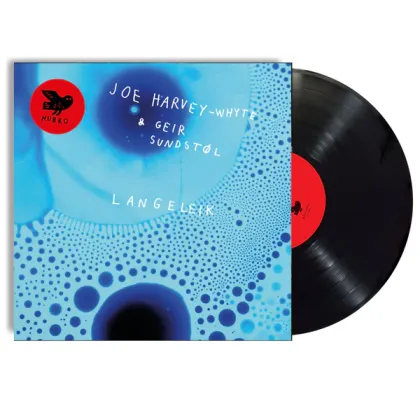
In the last edition of theartsdesk on Vinyl compliments were thrown at Joe Harvey-Whyte & Paul Cousins’ ambient odyssey In a Fugue State. Little did I realise that such a short time later I’d be presented with two more Harvey-Whyte albums. The steel guitar virtuoso has been a sideman with big names (for one, he played on the, admittedly not much-loved, Liam Gallagher/Jon Squire album), but, left to his own devices, he’s much more into atmospheric outings. Neither of these two releases is as floaty as In a Fugue State but both have their appeal. Langeleik, with Norwegian multi-instrumentalist Geir Sundstøl, is a cuddly journey that woobles and flits about over soft blankets of tones, chugging and hovering in an opiated but awake manner.
The album with Bobby Lee is closer in tone to what we usually expect from steel guitar material, mustering soundscapes for dusty, lonesome US southern emptiness, albeit overlaid with a psychedelic electronic aspect. Bobby Lee, by the way, is not the late Californian steel guitar proselytiser but a Sheffield Americana axeman.
Goldfrapp Supernature: 20th Anniversary 2LP Deluxe Edition (BMG) + Madonna Bedtime Stories (Sire) + Madonna Bedtime Stories – The Untold Chapter (Sire)
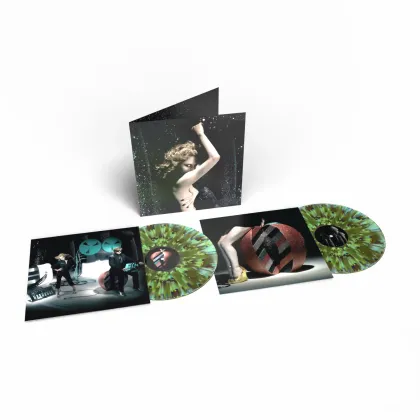
Two reissues from major electronic femme-pop stars. Supernature came out just over 20 years ago and the vinyl now reappears on double in gatefold, fatly mastered. The second disc featuring six remixes. Supernature was singer Alison Goldfrapp and synth don Will Gregory’s most successful album by some distance, the second of a pair of electro-pop outings that gave the band a global rep. The hits still cut it – “Ooh La La”, “Ride a White Horse”, “Number One” and “Fly Me Away – as does the rest, but what most will come to this package for is the remixes; Richard X, Alan Braxe & Fred Falke, Phones and Goldfrapp accentuate the stomp of “Beautiful”, “Number One” “Ooh La La” and “You Never Know”, respectively. All good for dancefloor frolicking but perhaps the most interesting versions are Goldfrapp’s slow, doom-synthy take of “Let it Take you” and the echoing dubby beats mix of “Koko” by Sun’s Signature (AKA ex-Cocteau Twin Elizabeth Fraser and her partner, Echo & the Bunnymen/Spiritualized drummer Damon Reece). Madonna, of course, was once a barometer for the sonic zeitgeist. While her 1980s work is, perhaps, her

most loved, her highest flying moments, musically, derive from a dozen-year run which began in 1995 with Bedtime Stories. On it, she utilised the production talents of trip hop originator Nellee Hooper, but even the songs that don’t feature him retain the vibe. It showcases a woman back in touch with her muse (and with contemporary clubland). Whereas none of us chem-gen sorts would have touched her previous album, the crass Erotica, these late night breakbeat slow-rollers might have sneaked into post-club late shifts. The singles “Secrets” and “Human Nature” hold to this, while the title track heads into the trancier territory that she’d pursue next. Comes on gatefold. Alongside Bedtime Stories, Sire release an eight-track sister EP, The Untold Chapter, a set that only adds to the original’s lustre. The demo versions of “Right On Time”, “Don’t Stop” and “Love Won’t Wait” aren’t that interesting but the demo of “Freedom” benefits from its strummy roughness, and the remixes have genuine breakbeat heft and are well worth seeking out for fans both of Madonna and of mid-Nineties trip hop.
Lucy Kruger & The Lost Boys Pale Bloom (Unique) + Marta del Grandi Dream Life (Fire)
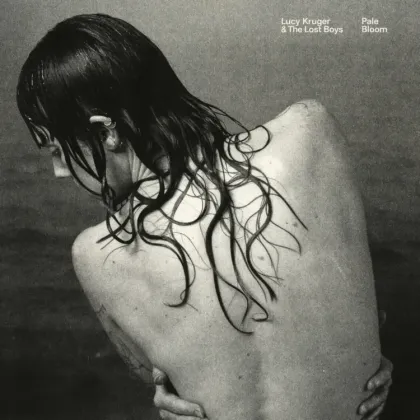
Two female singer-songwriters doing something a little different from the usual that term conjures. Berlin-based South African musician Lucy Kruger is up to her seventh album. There’s a haunting, minor key quality to Pale Bloom. It’s a band record, really, yet led by her singularly doleful lyrics and whisper-sung vocals. At times the songs oscillate with suppressed electronic threat, at others they ride a firm, stern rhythm section (as on highlight “Damp”). Wherever they go, they hold gothy interest. Comes on transparent vinyl in photo-art inner sleeve.
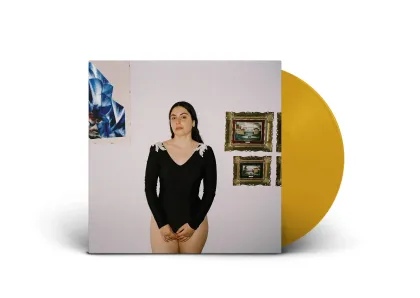
The third album from Italian singer Marta del Grandi arrives on gold vinyl in photo/lyric inner sleeve. It’s quirky take on pop recalls the early-Eighties output of acts on New York’s Ze Records, such as, say, Cristina or Lizzy Mercier Descloux. She’s not as No Wavey as them, but her angular funk and jerky squeaky-woodwind pop have a touch of that. But it's her own 2020s spin, her voice a sweet clear instrument, as capable of subtle emotion as bouncy jollity. I don’t hear a breakout song but I do hear an original.
David Forman Who You Been Talking To (High Noon)

The trouble with this, an unreleased 1977 album by New York singer David Forman, is that it arrives with a substantial 24-page photo/info booklet full of backstory. It’s far too interesting and well-written, so I lost a chunk of time I could ill afford diving deep into his haphazard life story. He was a singing pal of the Aaron Neville and his brothers who slipped sideways into music via connections in the world of B-movies, where he sometimes worked in design, scriptwriting and more. Arista put out his self-titled debut album in 1976, and it flopped completely. The follow-up, produced by his pal Jack Nietzsche (of Phil Spector fame), was shelved… all the way until now. It’s hard to believe it wasn’t a huge hit. Featuring players such as Ry Cooder and Flaco Jiménez, it comes on like Randy Newman and Harry Nilssen, but with dollops of southern soul and frolicking widescreen rhythm’n’blues pop. His singing voice is akin to Elvis Costello but the overall sound is pure pre-punk Seventies American mainstream. Yet with musical depth. He doesn’t easily fit in any box. Indeed, if I read “Randy Newman and Harry Nilssen but with…”, etc, I’d probably run a mile. Somehow, though, 90% of the record gels spectacularly. Now I have to find the album he actually did release back then. Also comes with 12” x 12” lyric insert.
Kibrom Birhane Lisané Bahir (Flying Carpet)
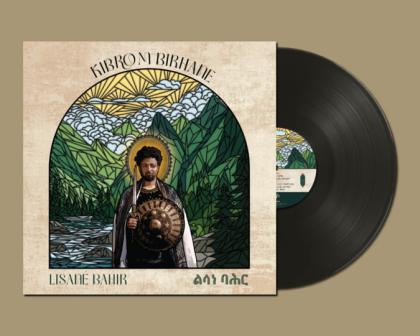
Anyone who heard the last album from Kibrom Birhane, a Los Angeles-based jazzer of Ethiopian descent, will be much surprised by his latest, his fourth. 2022’s Here and There drew plaudits for its varied palette, blending Afro flavours akin to Mulatu Astatke with keyboard stylings akin to a young Thelonius Monk. By contrast Lisané Bahir is an exercise in burbling effervescent analogue synthesizer. Listeners need not have any interest in jazz to dig it, but those who enjoy Public Service Broadcasting, Air, Tonto’s Expanding Headband and the like may find sounds to their taste. Mostly instrumental, the tracks vary from slow drone nodders to twinkly chill-out to submerged funk to a couple with vocals. Lots of musicians imagine themselves musical explorers; with this sidestep Kibrom Birhane proves himself to really be one.
Link Wray Early Recordings (Ace) + Various Little Bangers from Richard Hawley’s Jukebox Volume 2 (Ace)
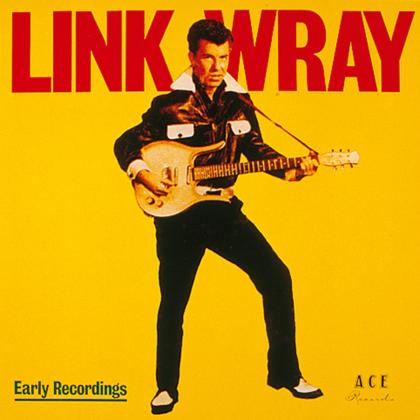
Two albums that celebrate the sound of long-ago fuzzed-out guitar. When Link Wray stuck a pencil through his speakers in early 1958, causing the sound to distort, for his single “Rumble”, he became the godfather of every punk, metaller and rock’n’roll reprobate in history who over-amped their guitars, from The Stooges to The Jesus & Mary Chain to Metallica to Idles. This reissue, on bright yellow vinyl, of a 1978 collection of his recordings for Swan Records between 1963 and 1964, includes fine noisy re-recording of his tune “Jack the Ripper” (as well as “Rumble”) plus a bunch a originals ranging from the Batman theme to a Cramps-like vocal take on Willie Dixon’s “Hidden Charms” to the Shadows-ish surf rocker “Scatter”. The man was ahead of the
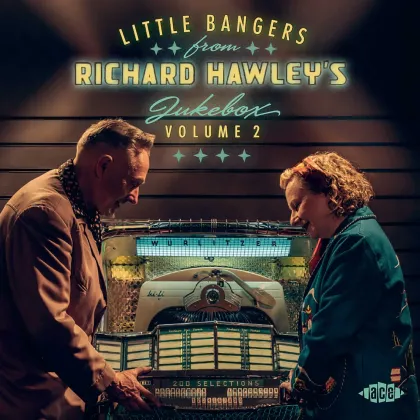
game. Never mind whether you like Richard Hawley’s music, his 2023 comp 28 Little Bangers, full of Sixties scuzz-guitar instrumentals, is an essential purchase. Now comes a sequel. It has wider range than its predecessor, with more vocals songs (check the 1966 punk version of The Monkees’ “Stepping Stone” by The Flies), less focus on the early-Sixties, and more interest in garage bands. Link Wray appears (“Commanche”), as well as Gene Vincent, Chet Atkins, Jack Nitszche, Bo Didley and Jet Harris, but it’s not the names that matter, it’s that there are four sides of no-filler, primitive, slashed speaker brilliance. Comes on double in a gatefold packed with song details.
Neba Solo and Benego Diakité A Djinn and a Hunter Went Walking (Nonesuch) + Toumani Diabaté with Kélétigui Diabaté and Bassekou Kouyaté Djelika (Chrysalis)
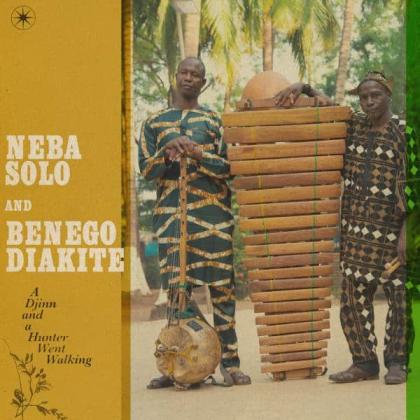
Two from Malian musicians, one new album, one old. Warners subsidiary Nonesuch Records have a recognisable aesthetic and brief (rare in the world of major labels), a connection with global sounds and music of authenticity. This is well-represented in the first of a new album series put together with ex-boss of World Circuit Records, Nick Gold. On it Neba Solo plays the marimba-adjacent balafon and Benego Diakité the lute-like donso n’goni (or hunter’s harp). Accompanied by occasional chorales, strings,
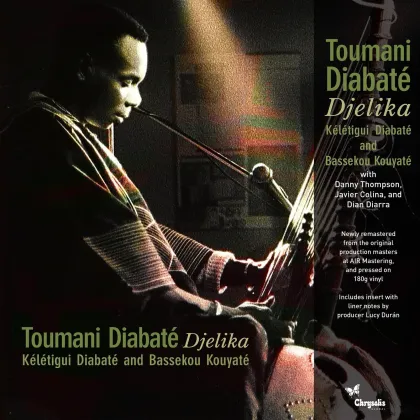
guitar and mellotron, they muster a swaying loveliness. Comes with 12” x 12” info insert. The late Toumani Diabaté was one of those who broke the sound of the 21-stringed African harp known as a kora to a global audience. His 1995 album Djelika was part of the process. On it he’s accompanied by Kélétigui Diabaté on balafon and Bassekou Kouyate on ngoni. The sound they make together is hypnotic in the same way as US minimalist classical. It gets in your head, but it’s neither cerebral nor stoned; there’s a joyous uplift to Diabaté’s playing that takes it to a whole different place. Luscious stuff.
Top Jimmy and the Rhythm Pigs Pigus Drunkus Maximus (Blind Owl)
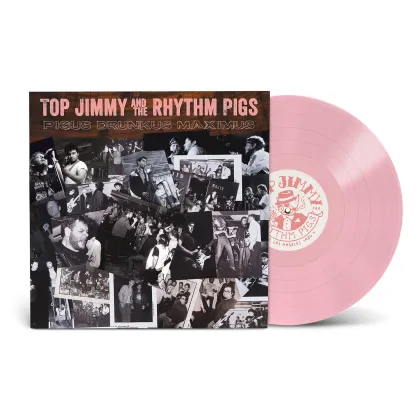
Imagine that The Commitments, instead of being an annoying imaginary generic Irish pub band, were a bunch of drunken early 1980s Los Angeles degenerates with a residency every Monday at a sodden dump of a Chinese restaurant called The Cathay. Imagine too that the venue was rockin’ with sweaty movement, Tom Waits in the audience, Steve Berlin, who’ll one day be in Los Lobos, on sax, Dave Lee Roth or a teenage Maria McKee ripe for a guest vocal. Top Jimmy and The Rhythm Pigs were for a while, a live must-see, for those in the know, but unlike equivalent bands, such as The Blasters, their moment never arrived. Frontman Top Jimmy eventually died from the booze at 46 but his long-lost sole album now reappears on milky pink vinyl in photo gatefold with a 16-page 12” x 12” booklet full of background and photos. The set comes on like The Doors through the prism of The Blues Brothers. It’s party music but made with a punk urgency, closing with a greasily great blues-dirge version of Dylan’s “Ballad of a Thin Man”. It’s a snapshot of a place and time and gives anemoia for what sounds like an excellent debauch.
Sam Bhok Sloom (Two For Joy) + Tomora Ring the Alarm (white label
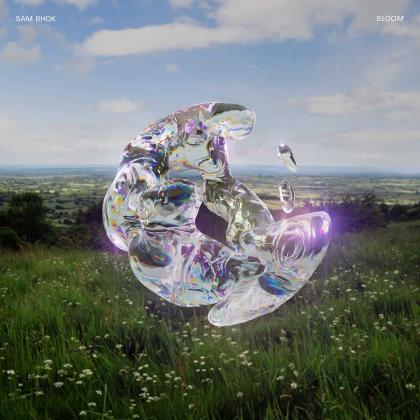
A couple of electronic bits. Bristol producer Sam Bhok’s debut album contains eight tracks of gloopy, cut-up electronica that, very loosely speaking, travels in the footsteps of Sam Gellaitry’s early output. Which is to say that, while you could jump about, it’s more interested in making the brain jellify or, on cuts such as “Diffuse Spectacle” generating an IDM massage akin to prime 1990s Warp Records. According to the press release the album is “charged with anxieties about technology, capitalism, culture and climate”. I am not getting that at all but, ignoring such claims, it's a bubblebath of analogue-digital freakery that’s most welcome. Comes on vinyl that looks like a granite-themed Damian Hirst spin painting.
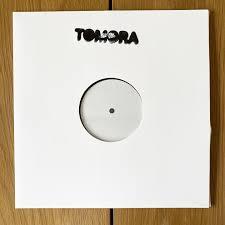
Tomora, on the other hand, is the new duo of Tom Rowlands from The Chemical Brothers and Norwegian pop star Aurora. I look forward to hearing more from them but, for now, I have a white label which contains the pummelling, techno-like “Ring the Alarm” (the phrase shouted by her throughout), and another, unnamed cut which starts a bit like very early Goldfrapp, soprano vocals matched by a synth washes, until it explodes into a gnarkly bass-addled monster. A tasty album should be in the offing…
Late Transmissions starring Eve Quartermain The Heart Wants What it Wants (Music Saves)
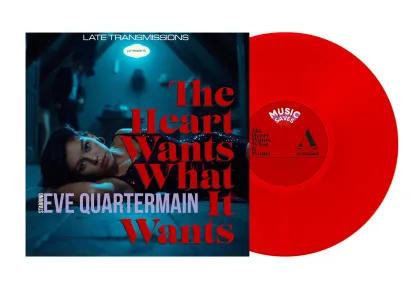
Long, long ago in post-punk Liverpool, before he was the man who “discovered” Blur, David “Dave” Balfe was a member of The Teardrop Explodes. Before that he was in synth band Dalek I Love You alongside David Hughes. The latter would go on to work with OMD before a long career scoring film and television. The pair have reconvened over a love of cinematic Sixties pop and reappear as Late Transmissions, their secret weapon being singer Eve Quartermain. The trio go at it with absolute commitment to John Barry-esque orchestration, arriving at a sound somewhere between the Theme to The Ipcress File and “Diamonds Are Forever”, with a smidgeon of early Portishead and that Propellerheads song with Shirley Bassey. It’s bright, brassy, and Quartermain fully inhabits her doomed nightclub diva persona in both vocal stylings and lyrical drama. Vinyl is limited to 500 and comes in scarlet with a postcard of Quartermain signed by the trio and a chunky eight-page photo/lyric/info booklet, which also contains a short interview with the band.
Zu Ferrum Sidereum (House of Mythology)

Italian trio Zu deserve respect for being at the challenging end of challenging music for well over a quarter of a century. That's one hell of a long time mining this particular seam. Even Swans long ago adopted more traditional rock tropes. Zu’s line-up is drums, bass and sax. Their sound is a frenetic melee of pure attack, containing elements of thrash metal, John Zorn-style avant-jazz, No Wave in the vein of James Chance & The Contortions, and pure noise of the Merzbow variety, interspersed with numbers that bridge sludge metal and Gazelle Twin-esque gothtronica. Their latest album (of many) is a double on art gatefold. It’s one of those where the joke is that you can put it on when you want guests to leave. But stick with it and it’s more than a tired punchline. Amidst the maelstrom and gloom-tones, as one sits with it, there are mesmeric passages, sequences inside the clouds of cacophony that grab the attention, sudden contemplative moments of calm percussion. It’s not one most will want to listen to regularly but it’s different, deliberate and it has something
Carolina Chocolate Drops Genuine Negro Jig: 15th Anniversary Edition (Nonesuch) + Various Highway of Diamonds: Black America Sings Bob Dylan (Ace)
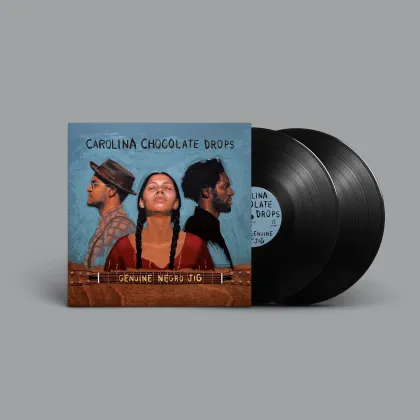
The Carolina Chocolate Drops reissue is a double version of the album which won the 2011 Grammy for Best Traditional Folk Album. It arrives with a whole extra record of bonus tracks. The group, which had various members during its existence and split up in 2014, launched the career of Rhiannon Giddens. Its reputation derives from emphasising the way the banjo, often associated with white Appalachian music, has as rich a heritage with black America. Genuine Negro Jig hammers this home with a lively, pared-back set of old-timey tunes (and a Tom Waits cover!) delivered with urgency, strings and hoedown spirit, retaining a welcome unprocessed feel. The seven bonus tracks show off the band diving gleefully around the fringes of their terrain, including a Giddens co-write and a number borrowed from an ultra-obscure black fiddler named Will Adams. Comes with a 12” x 12” four-page photo/info booklet that tells the background to all the songs. Another set which gives voice to a fresh Afro-American slant is
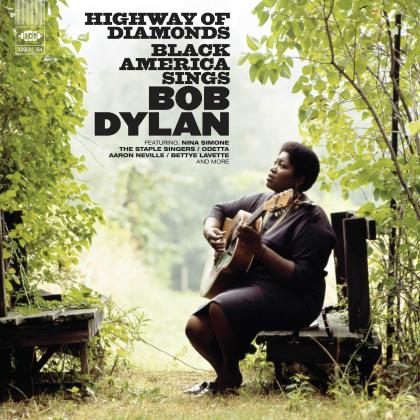
a Highway of Diamonds: Black America Sings Bob Dylan, a sequel to 2010’s similarly themed How Many Roads compilation. It’s hard, all these years later, to conceive how Bob Dylan’s releases of the early and mid-1960s were interwoven completely into the social changes that were righteously earthquaking American society. The Civil Rights movement was, of course, part of that, and the way the artists on this album embrace Dylan’s music speaks to that. They range from the sparse sensual blues-funk of Bettye Lavette’s “Everything is Broken” to Billy Preston’s string’n’wah-wah soulful "It’s Alright, Ma, (I’m Only Bleeding)” to the quavering piano’n’double bass jazz of Jimmy Scott’s “When He Returns”. It’s a richly felt set that necessarily offers a fresh angle on the material. Other artists on board include Nina Simone, Solomon Burke, The Staple Singers, Natalie Cole, Odetta, Harry Belafonte, Sarah Vaughan, Lizzie Wright, Aaron Neville, Merry Clayton and Cassandra Wilson. Comes in inner sleeves densely filled with welcome info and images.
ALSO WORTHY OF MENTION
Naz Nomad & the Nightmares Give Daddy the Knife Cindy (Ace): When I first heard of it, circa 1986, this album was already semi-legendary in the circles I travelled, unavailable although only released a couple of years before. It was presented, as the inner sleeve notes make clear on this long-overdue reissue, as a long-lost mid-Sixties soundtrack to a Psyche-Out-type LSD exploitation flick, by a long-lost Nuggets-style garage band. They're led by Naz Nomad with the other members being Sphinx Svenson, Buddy Lee Junior, Ulla and Nick Detroit. The music consists of a disheveled set of covers of bands such as The Seeds, The Electric Prunes, Them, The Litter and Kim Fowley, alongside a couple of originals, one of which, “Just Call Me Sky”, is a trash pastiche treat, bootleg-sounding, live before screaming girls. In fact, the band was a Captain Sensible-less Damned, just prior to their chart-storming Phantasmagoria era (but sounding nothing like that!). 40 years later, it’s a raw, fun set, a blast, capturing how we fetishized those flash-in-the-pan US Sixties bands, but I don’t think it could ever live up to its long-ago rep. Comes on purple vinyl.
Hater Mosquito (Fire) + The Grownup Noise No Straight Line in the Universe (The Grownup Noise): A couple of indie guitar outings that showcase the genre at its more elegant. Danish quartet Hater have been around for a decade or more and reliably fill their albums with shoegazing songs that are plangent and often unforcefully catchy. Dream-pop, to coin the unfortunate term. Their latest sees them on solid form – fans will enjoy but unlikely to grab fresh passersby - and comes on transparent vinyl on lyric inner sleeve. Boston, Massachusetts, band The Grownup Noise release their sixth album and first for a few years. It’s a wistful string-laced set, with singer Paul Hansen’s light voice giving the songs extra poignancy. Opener “We Become Roses” is a corker, a gorgeous light-hearted meditation on mortality, and nothing afterwards quite matches it, but there are moments of easy going charm.
Various Fabric presents Floorplan (fabric): Floorplan is the space where much-respected Detroit techno original Robert Hood, accompanied by his daughter Lyric, combines his Christian witnessing (he’s a minister) with the techno that made his name. Floorplan’s latest recorded mix for fabric is dedicated to his wife (and Lyric’s mother), Eunice Thompson-Hood, who died last September. It’s a worthy and joyful elegy. The unmixed vinyl version contains eight tracks spread over four sides, mastered fat and loud, with gigantic low-end. It ranges between the stark preacher-shouty 4/4 crunch of Floorplan’s “Only God” to the all-out gospel praise of Will Clarke & House Gospel Choir’s “Weekend Love (Floorplan Remix)”. It’s techno but very funky, underpinned by a jackin’ house urgency, ripe for dancefloors whatever one’s spirituality. Time to go to church!
Doves So, Here We Are: Best of Doves (EMI North): Doves were always a funny one, post-Oasis, proto-Elbow, with ultra-Mancunian spirit. They were eclectic and emotional in their indie-rockin’, a band fit for the post-Travis vulnerable-boy-next-door era, yet not bunch of solipsistic whiners. Their Best Of… captures their appeal, running from psyche-tinged 1998 song “The Cedar Room” through to last year’s “Lean Into the Wind” single and a new one, “Spirit of Your Friend”. I prefer the wonky, broken-hearted busker jangle-pop of the earlier material to the newer, more straightforward arena indie of later stuff but isn’t that often the way. Comes on gatefold double.
Hen Hoose Collective The Twelve (Alba Cheuthaanchail): Hen Hoose Collective is a female and non-binary multimedia outfit, many members with a Scottish connection. They have, together, operated in the worlds of festivals, education and more, and, individually, had success in multiple musical fields (from soundtracks to alt-pop records). The members are, in alphabetical order, Ray Aggs, The Anchoress, Susan Bear, Bishi, Caris Crosbie, Carla J Easton, Elisabeth Elektra, Djana Gabrielle, Sarah Hayes, K4CIE, Kiana Kalantar-Hormozi, Jill Lorean, Tanya Melotte, Frances McKee, Pippa Murphy, Lucy Parnell, Nightwave, PAIX, Emma Pollock, Karine Polwart, Tamara Schleisinger, Shears, Inge Thomson, Amandah Wilkinson, Kathryn Williams, and XZO, so some familiar names and proven talent. Together, twelve of them recorded this debut album on the Isle of Lewis and it’s a lively affair, mingling electronic pop tropes with rock guitars and a choral ebullience. It’s big and organic-sounding. Some of the songs leap out as especially catchy and witty, such as the lyrically sharp pop of “Rich (Katy’s in Space)” (Ms Perry will never live that one down!) and the PJ Harvey-esque “Ego Death”. Comes on gatefold on marbled denim-blue-ish vinyl.
Bat For Lashes Fur and Gold (BMG): Bat For Lashes is not an artist theartsdesk on Vinyl has ever massively connected with but, if ever there was a case to made for her music, the debut album, Fur and Gold, is it. This 20th anniversary edition, remastered at Abbey Road, shows off Natasha Khan’s baroque alt-pop to good effect. The whole is keyboard-led - there’s a harpsichord-y feel throughout – and, at its best, it escapes from the long shadow of Björk and makes its case. In retrospect, Khan’s aesthetic opened the door and Florence Welch ran through it, took the ball, and ran off with it.
Various Eternal Journey: The Arrangements and Productions of Charles Stepney (Ace): Charles Stepney died far too young (of a heart attack), aged only 43 in 1976. He is, perhaps, best known for being the Svengali behind Sixties psychedelic soul originators The Rotary Connection, and going on to work with their singer Minnie Ripperton on her best-known solo output. Eternal Journey is an overdue overview of his work, a double set that includes well-loved whoppers such as Ripperton’s “Les Fleur” and Marlena Shaw’s “California Soul”, alongside Rotary Connection fare, but also cuts by The Dells, Terry Callier and the Sixties rebel sunshine of The Meditation Singers’ “Stand Up and Be Counted”. Less expected by theartsdesk on Vinyl, but very welcome, is Side 4, which contains Stepney’s work with classic blues artists such as Howlin’ Wolf, Buddy Guy, Muddy Waters and Bo Diddley. A delicious set, from start to stop.
Lucy Kitchen In the Low Light (Bohemia Rose) + Tessa Rose Jackson The Lighthouse (Tiny Tiger): Two bar-raising albums by female singer-songwriters. Hampshire singer Lucy Kitchen’s third album is a superbly calibrated heartbreaker. It’s written in the wake of her husband’s death from cancer. What makes it so touching is the way the music, Americana-tinted singer-songwriter fare with additional band, brass and strings where necessary, is laced with uplift. Presumably this comes from the release of making it after such a harrowing time. The accompanying lyrics are forthright and articulate without wallowing. It’s a potent combination and a tricky balancing act. She pulls it off beautifully, her voice a sweet, firm, light instrument, dignified but hinting at the underlying emotion. Comes in photo/lyric inner sleeve. When Dutch-Brit composer Tessa Rose Jackson isn’t creating music for film and TV, she has a parallel career as a singer-songwriter. Her latest album, The Lighthouse, comes on gatefold double with die-cut cover and, again, it’s a set partly dipped in sadness, gentler and quieter in mood than Lucy Kitchen, revolving plucked guitar patterns underlined by ambient tones, her reticent breathy voice tiptoeing around the music. Far from forceful, it feels like 1.00 AM by candlelight, pondering the good and sad of life.
Scritti Politti Songs to Remember (Rough Trade): Scritti Politti’s beginnings represent a time almost unimaginably different from 2026. Green Gartside, the band’s key ideologue, was interested in the intellectual underpinnings of society, originally as a Marxist, but later as a post-modern free-thinker. Imagine Yungblud doing that! Green Gartside was – and is – a fascinating individual, full of ideas. His early work was also important as an inverted reaction to punk’s Year Zero ethos. Scritti Politti’s 1982 debut album, Songs to Remember, became Rough Trade’s biggest album to that point (making No.12 on the charts!). Listened to today it sounds like quirky indie bedroom funk with notably oddball lyrics (check out the politico-pop cultural dissection of “Jacques Derrida”). “The Sweetest Girl” is a catchy stand-out but, at the time, Gartside’s smooth strange voice, his penchant for slow, balladic thoughtfulness, as on “Getting’ Havin’ & Holdin’”, were a drastic alternate route for anyone who’d appeared from punk’s firestorm.
Joe Wilkes Hope in My Chest, Fire in My Heart (Frontline): Acoustic guitar-pickin’ London singer-songwriter Joe Wilkes comes from the old tradition of folk as a force for social change. Indeed, his latest album was slow coming, due to his being seriously injured during the occupation of an arms warehouse. The best of Hope in My Chest, Fire in My Heart, by far, are the three songs on it that he wrote (the rest are traditional numbers), particularly the fiddle-accompanied “We Don’t Talk About the Weather”, explicitly about German Seventies revolutionist Ulrike Meinhof, and the story-song “Traditional Style”, a narrative imagined around his blacksmith grandfather. I bet he tells a few good yarns in concert.
Lyn Collins THINK (About It) (BGP): You may not think you know the Lyn Collins song “Think (About It)”, but you likely do, as it’s been sampled to death in hip hop (Snoop Dogg, Run The Jewels, Kanye, J Dilla, Nicki Minja, NWA and many, many more, most famously, perhaps, “It Takes Two” by Rob Base & DJ E-Z Rock), In fact the whole of this James Brown-produced 1972 album has been plundered. This makes it no less of a funk romp, featuring the cream of various James Brown band line-ups of the three years before it was released. Essentially, it’s primetime JBs with a sassed-up femme frontin’.
Sunday Mourners A-Rhythm Absolute (Curation) + The Dream Machine Fort Perch Rock (Modern Sky/Run On) + Demob Happy The Grown-Ups Are Talking (Milk Parlour) + Dog Chocolate So Inspired, So Done In (Upset! The Rhythm): Four indie guitar bands who gun things beyond the average. Sunday Mourners are a Los Angeles outfit who play spiky but are also verse-chorus enough to be grab ears outside the skronk ghetto. Somewhere between Art Brut, The Fall and the billion bands flavoured by The Velvet Underground, they can even do sweet slow material (like their song “Darling”). A-Rhythm Absolute is their debut and comes on emerald-green vinyl in art/lyric inner sleeve with a small poster of the band. The Dream Machine are a Coral-affiliated Merseyside band whose third album is not a million miles from the Liverpudlian jangle of their mentors’ early work. It comes on quartered red and blue vinyl with white feathering in photo/info inner sleeve and a 12” x 12” signed photograph of the five-piece on card. But what I like better is the four-track 7” EP (on, I think, glow-in-the-dark vinyl) that comes with it, all covers of classics by seminal pre-Supremes girl band The Shirelles. They deliver these with panache, somewhere between Sixties psyche-pop and a spy film hotel lobby band. Brighton three-piece Demob Happy (originally from Newcastle) have been going a while now, a decade-and-a-half at least, but their fourth album sounds even zestier than ever, a set of rampaging heavy rock, energized riffing, fuzzed round the edges, splattered with fat spliffed production, like the Jon Spencer Blues explosion having it out with the Jim Jones Revue at Download Festival. They sound like they’d be amazing live. Also theartsdesk on Vinyl’s pick of these four. Comes in photo/lyric inner sleeve. London outfit Dog Chocolate get right in your face with their wilfully noisy and angular fourth album, So Inspired, So Done In, sounding somewhere between Stump, The Pop Group, Alternative TV and Idles, socio-political bite leavened with humour but with no desire to be friendly. It’s the most interesting of these four but also the most dissonant. Comes with a small poster and an eight-page lyric booklet.
PICK ‘EM UP AT THE MERCH STAND (Albums by bands who we should probably see live for max kicks)
- Independent label Krautpop! usually focus on bands from their local area, Cornwall, but have now signed Brighton group School Disco to release their fourth album, SD IV, which will appeal to fans of the area where prog melds into the world inhabited by Mogwai and the like. In cuts such as “Messiah of Love” they lay down an impressive post-Barrett, pre-Dark Side Pink Floyd-style stoner-riff stonker that bodes well. One to watch, for sure. Comes on transparent blue vinyl.
- Kroustpop! Is the folk-leaning sister label of Krautpop! (as per last review), and Ephemera is their latest release, a five-track EP from Sheffield band Posturing. Fronted by trumpet-playing singer-songwriter Laura Durdley and pushing towards baroque pop in places, they some over like a cross between PJ Harvey and The Last Dinner Party, which is no bad place to be. Comes in lyric/info/photo inner sleeve.
- Prolific Cork singer-songwriter John Blek hits us with his latest album, The Midnight Ache, jointly released by K&F and Bigger River Records. Well, he doesn’t exactly hit us as it’s mellow, his voice soft and reassuring, the songs genial, belying their lovelorn ache and self-laceration. It arrives in lyric inner sleeve, the better to display those words. He tours a lot and those who attend are promised a night of chat and yarns alongside the tunes.
- British rhythm’n’blues singer Elles Bailey has developed a solid rep in the live arena, supporting the likes of Don Maclean, Rag’n’Bone Man and Van Morrison. The music on her sixth studio album, Can’t Take My Story Away on Cooking Vinyl, harks back to Memphis long ago, swingin’ and rollin’ loose, her potent voice leading from the front but giving the band room to breathe in a Seventies rock manner. Comes on white vinyl lyric/photo inner sleeve.
- Hard-to-define English five-piece Ulrika Spacek have been around the block a few times but their first album for Full Time Hobby Records is called EXPO and sees them reinvigorated. Their music is not straightforward but nor is it wilfully unapproachable. Some of it reminds of long-lost Nineties noise-pop originator The Ecologist while other moments remind of The Go! Team (but more cacophonic and with a male vocalist). Like I said, hard to categorize. Bet they make you dance live, though. Arrives on transparent vinyl.
- Suzanne Alt is an Amsterdam-based saxophonist and DJ who’s been recording for a couple of decades. But anyone expecting clubland sounds from her latest album, Dark Horse on Venus Tunes Records, will not find them. It’s straightforward funky jazz, too supper club for theartsdesk on Vinyl, yet boasting a musicality and lively edge that’s persuasive. Skilful and pleasant, in other words, and I’ll bet it’s buzzier when she plays live, which she regularly does in the Netherlands.
AND WHILE WE’RE HERE
- German producers Dominik Felsmann and Patrick Tiley return with a second album, eight years after their first. It’s their debut for Mute Records. Their stage name is Felsmann & Tiley and the record’s called Protomensch. It inhabits similar territory to the likes of Maribou State and Moderat, ie, swishy, atmospheric, post-trance electronic songwriting laced with the vocal vulnerability of James Blake. That said, they are capable of battering when they fancy (as on “Opioid”, featuring London duo Pet Deaths). With the right tailwind, I could imagine them doing very well. My copy comes in a limited-edition foil-laminated gatefold.
- The late Jon Lucien was a soul singer from the British Virgin Islands who spent the 1970s on the periphery of making it in the US. Success beyond his peers and limited audience evaded him but crate-diggers have long been appreciative of his mingling of lush soul, slick funk, and a voice somewhere between Bill Withers and old time crooners of Tony Bennett's ilk. Search for the Inner Self on Kent is a collection of cuts recorded before he signed to RCA in 1970, with an inner sleeve packed with notes by Snowboy and Kevin L Goins giving deep background. The sound is somewhere between late-Sixties psychedelic pop, easy listening and the string-swathed sound Motown was embracing at the time.
- Martin Rebelski, who performs under his surname, is the keyboard player for Doves (although not a band member, he’s played on most of their output, live and in studio). His third solo album is self-released and entitled Algorithms. It is a calming, reverbed exercise in ambient-leaning piano experimentation and should be sought out by those seeking to soothe frazzled nerves. Comes on powder blue vinyl in photo/info inner sleeve,
- Hamburg pianist-composer David August delves into very similar terrain to the above on his fifth album, Hymns, on the 99Chants label, although his music is, perhaps, more influenced by classical minimalism and electronic music’s underlying pulse, and is more inclined to the atonal.
- Chris Bangs and Mick Talbot came together when Paul Weller engaged the former’s production skills (honed with the likes of Galliano) for The Style Council (of which the latter was keyboard player) Bangs is very much part of the Acid Jazz label’s operation and they release the duo’s second album, Smokin’ Aces, a smorgasbord of jazz-funky mostly instrumental, library music-adjacent tunes, flutey and light and redolent of Seventies movies.
- While Israel has become an international pariah, with good reason, there are still musicians there speaking to another aspect (albeit, in this case, opaquely). Jerusalem-based bassist Yosef Gutman, who has lived extensively in both New York and South Africa, and has released multitudes of albums, now puts out Resisei Lyla on Soul Song Records. Rooted in jazz, he draws from a catholic range of Middle Eastern styles on an album that tips its hat to twilight in his home city and feels gently inclusive in tone; a healing, warm, Hasidic-tinted restorative sound-bath of piano, cello, guitar and percussion. Comes with a meditative 12” x 12” 12-page photo/backstory booklet.
- Not bad getting Paul Weller to sing on your tune, but the man does like to work. This is what German producer Frank Popp has done on Frank Popp Ensemble’s 7” single “Right Before my Eyes” on Unique Records, It’s a string-laced, slow, trip-hoppy groove over which the Modfather bemoans the state of the world, coming across like a cousin to Council tunes such as “A Stones Throw Away”.
- Fågelle is Swedish musician Klara Andersson who, on her self-released third album Bränn Min Jord, sings in her native tongue against an experimental backdrop that ranges from maximalist jammed tones and electronica, to delicate creaks, whistles and rustic samples. It’s an ear-intriguing concoction that refuses to sit still for long. Comes on gatefold with a 12” x 12” four-page photo/lyric insert.
- New York musician Joe Sutkowski records music as Dirt Buyer. His second album is, tricksily, called Dirt Buyer III and is out on Bayonet Records. It’s mulchy combination of shoegaze and grungey singer-songwritery moodiness is not to my taste but the growing mass of younglings who like shoegaze and displays of solipsistic lyricism may enjoy. Comes with 12” x 24” photo/lyric poster.
- Nor do I love the chirpy guitar sounds of rising Los Angeles band Uni Boys on their self-titled fourth album on Curation Records. It’s described on the front cover sticker as “21st Century California Power Pop”. To be fair to them, when I was in my teens I might have had a momentary weakness for such Haircut One Hundred-meets-Buzzcocks pop, although the over-smiley hint of The Rembrandts might have put me off. In short, this sound is done to death for me, but if it’s not for you, they do it prolifically and well. Comes on photo/lyric inner sleeve on mauve vinyl.
READ REVIEWS ELSEWHERE ON THEARTSDESK
Read about Melanie Pain’s How and Why (on Capitane Records) here
Read about Woo’s Whichever Way You Are Going, You Are Going Wrong (on Independent Project Records) here
Read about Sebastian Tellier’s Kiss the Beast (on Because Music) here
Read about Nightmares on Wax’s Echo45 Sound System (on Warp Records) here
Read about Lucinda Williams’ World’s Gone Wrong (on Highway 20 Records) here
- We welcome any and all vinyl for review. Please hit thomash.green@theartsdesk.com for a postal address
- More vinyl reviews on theartsdesk