What is music? When pondering archive releases, compilations and reissues the question doesn’t come up. Knowledge of context and history means there’s never a need to muse on this fundamental issue. A package, say, dedicated to Northern Soul says what it is and the prime considerations are how well it has been executed and defining its place in the relevant narrative. The same applies to anything previously covered in this column.
However, the release of the Voyager Golden Record raises this concern. Twenty-seven pieces of music are collected, ranging from a Navajo Chant to part of Beethoven’s Fifth Symphony, from a recording of Peruvian panpipes and drum to Chuck Berry’s “Johnny B. Goode”. The tracks were not compiled for human or even animal ears. They were selected as, in the words of the package’s producers, they told part of “a story of our planet expressed in sounds, images, and science: Earth’s greatest music from myriad peoples and eras, from Bach and Beethoven to Blind Willie Johnson and Chuck Berry, Benin percussion to Solomon Island panpipes.” The potential recipients of this story? Any aliens encountering the Voyager 1 and Voyager 2 space probes after their departure from this solar system.
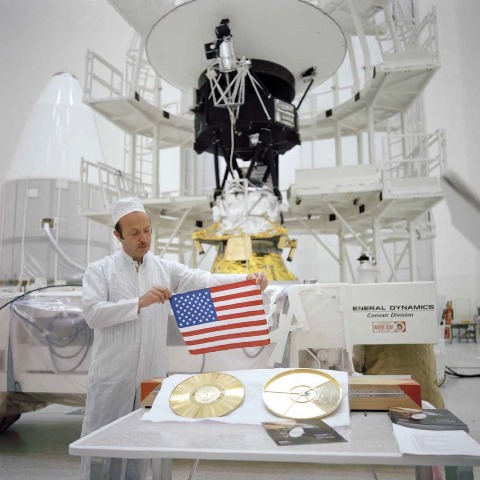
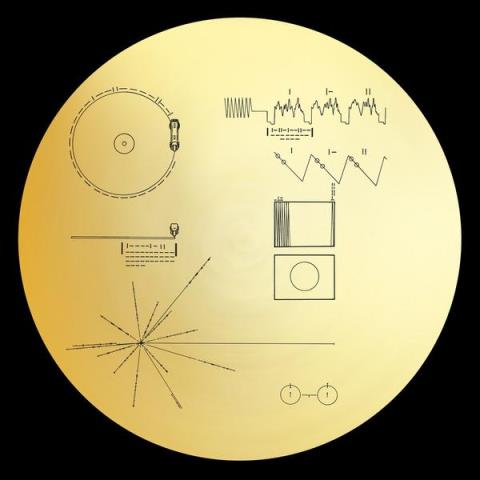 Voyager Golden Record is a reissue of what was, again in the producers’ words, “mounted to each of these [two] spacecraft…a stunning golden phonograph record, an interstellar message to introduce our civilization to extra-terrestrials who might encounter the probes, perhaps billions of years from now.” The music was accompanied by spoken word sections – including greetings in 55 languages – an aural collage titled “The Sounds of Earth” and a recording of whales. All of this is collected on Voyager Golden Record.
The questions raised by this singular venture resolve themselves down to whether these putative extra-terrestrials would understand or even recognise the instructions within the space probes as to what this object fixed to its wall was and, if they did play the record, whether they had the ability to identify sound and then figure out what these sounds were. Is music a universal language? We are unlikely to find out: if the records in the vessels are heard, the likelihood of finding out any reaction must be close to nil.
 In the new package’s book Timothy Ferris, who produced the original record, says “we simply don’t know enough about extra-terrestrial life to state with any confidence whether the golden records will ever find an audience.” His subsequent explanation in the text of how aliens may work out what the records are is immensely compelling.
As Ferris acknowledges, we work with what we have and take chances. And this is what Carl Sagan did in early 1977 when he began the process which led to the creation of the two records. It wasn’t just music that was sent into space. Those behind the project also included pictures, giving a version of the full story of Earth.
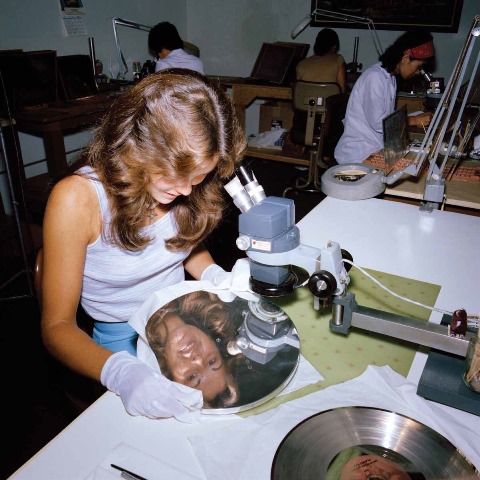
Obviously, it’s impossible to approach this package as an alien. There are two versions. Each is beautifully presented. A box with a gold image of the original discs contains three transparent gold-vinyl records and a fully illustrated softback book covering the story of the project and the related issues. The book also includes reproductions of all the photographs sent into space, each scanned from the master slides. Additionally, there are wonderful photographs taken by the cameras on the Voyager probes and images from when the discs were in production. A double-CD set is presented as an LP-sized hardback book with the same contents.
 As an aural experience for us humans, this is a great listen. Every track has been officially licenced in and remastered in pin-sharp and dynamic fidelity. The inclusion of three Bach and two Beethoven compositions feels like overkill and, in the book, Ferris ties himself in knots addressing a possible surfeit of Western composers.
But it is amazing that in 1977, before every type of music on the planet was easily available, before the codification and resultant commodification of World Music in the Eighties, music from Australia, Azerbaijan, Bulgaria, Benin, China, the Congo, India, Japan, New Guinea, Peru and the Solomon Islands was included. Overtures to include The Beatles were foolishly rejected by those handling the rights to use their music.
Above all, the Voyager Golden Record was and is a political project as it came from an America which sought to represent the best of humankind: to act as a – as the book puts it – “reminder of what we can achieve when we are at our best – and that our future really is up to all of us.” Peddlers of the divisive and negative would do well to purchase a copy and think hard about what they are pushing. Of course, though, for those committed to such dogma this is about as likely as an alien craft landing on the lawn of The White House.
- Next week: Big Time Operator – box set collecting the complete works of Zoot Money’s Big Roll Band
- Read more reissue reviews on theartsdesk