“So Ends Another Life” is strange. Very strange. The song’s dolefulness is immediately set up with a strummed guitar along the lines of the intro to The Bee Gees’ “New York Mining Disaster.” “In a world of agitation, there’s no time for compassion” are the opening lyrics.
As it continues, the song asserts that life goes on until you don’t belong. The chorus bleakly commences “so ends another life.” It takes the Gibb brothers’s most maudlin moments to the Nth degree. The arrangement’s use of brass and strings enhance the Bee Gees feel.
 Next up on the album featuring “So Ends Another Life” is “Poor Old Man.” Its first words are “he is in his room, men will be there soon, they come to smash the heaven he has known. Now he’s sure to know, that soon he must go.”
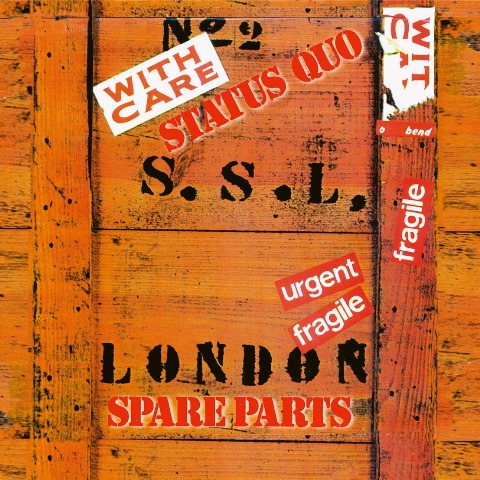
These two morbid outings featured on Spare Parts, September 1969’s second Status Quo album. As well as the melancholia, there was more evidence for Bee Gees-like elements running through the band: their first album, September 1968’s Picturesque Matchstickable Messages From The Status Quo, included a version of the Gibb’s “Spicks And Specks”; that album’s “Elizabeth Dreams” and “Sunny Cellophane Skies” were of a piece with the Beatles-styled psychedelic pop The Bee Gees showcased on their first UK album; Spare Parts’ “Antique Angelique” and the amazing, hugely overwrought “Clown” were the sort of pen-portrait songs Barry, Maurice and Robin traded in then.
The Status Quo of this period – when they were riding high after the “Pictures of Matchstick Men” hit single – can be seen as a preamble for the denim and boogie version of the band ushered in with March 1970’s “Down the Dustpipe” single. A preamble divorced from and, as it cleaved to the then prevalent tropes of psychedelic pop, therefore plastic and less noteworthy than what came later. OK, fading chart fortunes caused a rethink. But that should not diminish what they were doing before 1970.
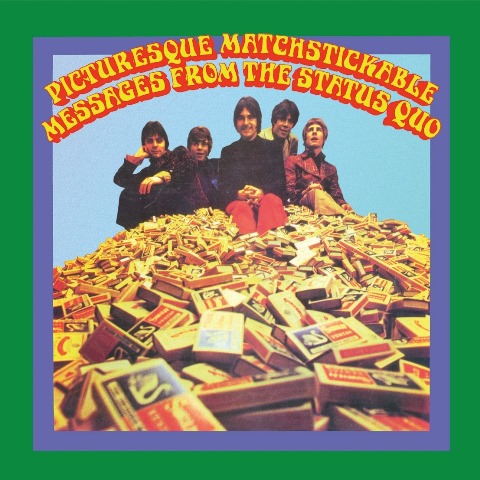 Back in 1968, in the wake of “Pictures Of Matchstick Men’s” success, there was already an awareness the band hadn’t found its identity. That February, Melody Maker noted “the group at present are a group without a concrete image” and that “any image they acquire they maintain will grow naturally from the group.” The article concluded by cautioning “The Status Quo are in the unenviable position of trying to establish themselves as an attraction with one hit record behind them. Only time will tell whether they'll succeed.” And, in the long run, their success came from embracing what emerged from that rethink.
Irrespective of the wonderfulness of much of what the psychedelic-era Quo recorded, that identity crisis was perhaps inevitable. There had been a lot of tweaking. The band first played live as The Spectres in October 1962. Around August 1967, they became Traffic Jam. In December 1967 they changed name again, to The Status Quo. Early in 1968, they were gigging as Madeline Bell’s backing band. It seemed a role as musicians for hire might be their lot as there had been three flop singles as The Spectres and one as The Traffic Jam. Yet despite missing out on the charts, their label Pye stuck with them. Then, in January 1968, “Pictures of Matchstick Men “ was released. Finally, a hit
Getting to grips with the pre-“Down the Dustpipe” Quo is, admittedly, made a little difficult by the awkward cover versions they recorded as either filler or as try-it-for-size explorations of who they might be. The first album’s “Green Tambourine” and “Sheila” are dispensable.
 As The Spectres, they recorded an anachronistic cover of “Bird Dog" for a BBC radio session (in contrast, the same broadcast's "Bloodhound" is an absolute ripper). As Traffic Jam there was an uncomfortable BBC version of “It Takes Two.” And the Traffic Jam A-side "Almost but not Quite There" was almost a cover as it rewrites "Spicks and Specks." As Status Quo, they taped an utterly awful, why-oh-why January 1968 BBC session cover of “Judy in Disguise.”
But set these distractions alongside their frequently fantastic, albeit often Bee Gees-esque, original songs. In this bag, Rick Parfitt's "When my Mind is Not Live” is prime British psychedelic pop. “Ice in the Sun,” co-written by Marty Wilde, is similarly great. The dense, heavyweight interpretation of the Pye-label producer and songwriter Anthony King’s “Mr. Mind Detector” recorded for the Spare Parts album is remarkable. As The Spectres, B-side cut “Neighbour, Neighbour” is proto-psych garage punk of the highest order. Also as The Spectres, their pounding cover of The Blues Magoos’s “(We Ain’t Got) Nothing Yet” is a garage-punk paint-peeler. A Spectres track like “Say That you Need me” could appear on, say, a comp of Florida garage-punk and no eyebrows would be raised.
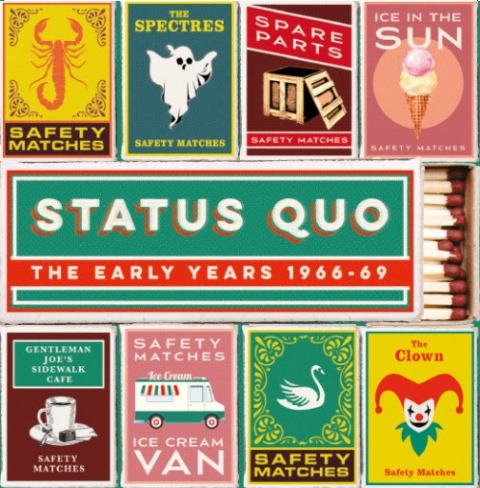
All of this and more is collected on the no-frills 5CD clamshell box set The Early Years (1966-69). Nothing is previously unissued, but by bringing together the mono and stereo versions of the period’s two albums, the non-LP tracks from singles, demos, then-unreleased alternate versions and the radio sessions, this is the last word on the 1960’s edition of Status Quo. They were frequently fantastic then, which should not be overlooked when reflecting on what came later.
- Next week: The three CDs of Patterns On The Window - The British Progressive Pop Sounds of 1974
- More reissue reviews on theartsdesk
- Kieron Tyler’s website