Without the necessary distance, characterising last year through its pop music is a mug’s game. A gulf of 50 years would bring some perspective. Nonetheless, in spite of that interval there are difficulties in creating a fitting soundtrack to 1968 – especially when using its singles as the emblematic markers.
The difference between pop and rock had been codified in 1968, and the album was the chosen means of expression for many musicians. Even so, regardless of the emergence of underground or album-format shows and stations, song-centric pop radio was still the means to reach a wider audience. Record labels wanted their freakiest, hairiest, jammiest bands to condense their spirit onto the two sides of a single.
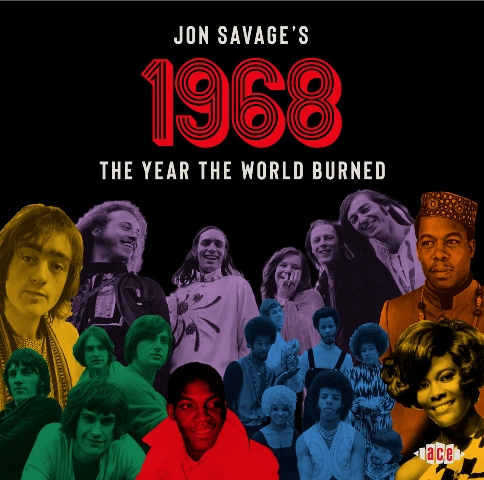 On Jon Savage’s 1968 – The Year the World Burned, this is rammed home by the inclusion of Quicksilver Messenger Service’s “Dino's Song”. A jammy band, certainly, although borderline freaky and not so facially hairy. Extracted from their first album, it works well as a melodic and rhythmic yet low-key single. But what if it had been a fluke hit? The new audience they might have attracted may have been perplexed by their half-hour on-stage extemporisations.
Then there’s proto-space rockers Lothar and the Hand People’s “Machines”, a single drawn from their debut album. The Mort Shuman song was first recorded by Manfred Mann but Lothar etc. ramped up the herky-jerkiness, added synthesisers and a Theremin, and turned it into a template for Devo. Another flop.
Of course, The Year the World Burned also seeks to typify the wider world as such but the events and upheavals of 1968 are well chronicled, and require no reiteration here. Anyway, the records say enough. Disc Two of this 48-track double set kicks off with The Crazy World of Arthur Brown’s “Fire!”, a record in-tune with the times even if it is not explicitly such. James Brown’s “Say it Loud! - I'm Black and I'm Proud (Pt. 1)” is unambiguous though.
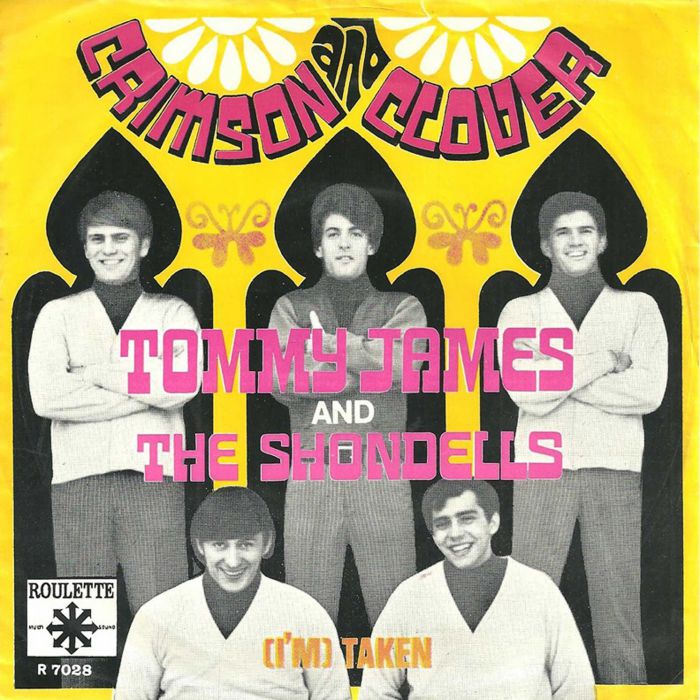
Gratifyingly, pop is well represented and integral to the flow. The 5th Dimension’s “Carpet Man” (weird masochism-alluding lyrics and all) and Tommy James and the Shondells’ majestically frazzled “Crimson and Clover” are amongst the gems. So are conscious soul-pop records such as Four Tops’ “I'm In A Different World”, Martha Reeves and the Vandellas’ “Honey Chile” and The Temptations’ “Cloud Nine”.
 Amongst the idiosyncratic inclusions are singles by bands which stretched out over albums and sought to compress this onto one side of a seven-inch (unlike QMS’s “Dino’s Song”, which was pretty straight folk-pop). The Pretty Things’ “Talkin’ About the Good Times” – successfully – crams the changes of a whole album into a few minutes. So does Love’s disturbing, fragmented non-album single “Your Mind and We Belong Together”. In contrast, the collection’s single-minded final track is an extraordinary, alternate version of The MC5’s “Kick Out the Jams” from a 500-copy promotional single given away at a New York show on 26 December 1968. Some of the audience – members of which stormed the stage and trashed the band’s equipment – threw the record at the band.
The Year the World Burned follows on from Jon Savage’s similarly packaged compilations dedicated to 1965, 1966 and 1967, all springing off from his book 1966 – The Year the Decade Exploded. Unless he tracks back to 1964, it is unlikely that the series can continue as the usefulness of singles as a cultural barometer had decreased as the Sixties came to a close. When they were issued in mono on single, all tracks on The Year the World Burned rightly appear thus and the well-designed Savage-annotated booklet is a joy. With the exception of Desmond Dekker and the Aces’ “Israelites”, the focus is limited to America and Britain. The Beatles and The Rolling Stones do not appear as their tracks are not licensable.
A spin-off implication of this release derives from its arrival on CD. It would be impossible to programme and sequence anything similar on vinyl. A six-or eight-sided album set would be terrifically expensive, unwieldy and lack any flow. Those wedded to the idea of the CD as a dead medium should look here and ponder their position.
- Next week: Music is the Most Beautiful Language in the World – a salute to the Jewish music of London’s East End
- Read more reissue reviews on theartsdesk