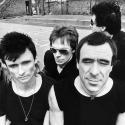
Hauschka is a musician and composer from Düsseldorf, performing in what has been dubbed a "post-classical" vein, although he also has many fans in the electronica scene. His new album Abandoned City, written and performed almost entirely on a treated piano, was inspired by the idea of cities that are no longer, or never were, inhabited. It is full of approriately elegiac beauty. Here he introduces the different cities with a paragraph about each.
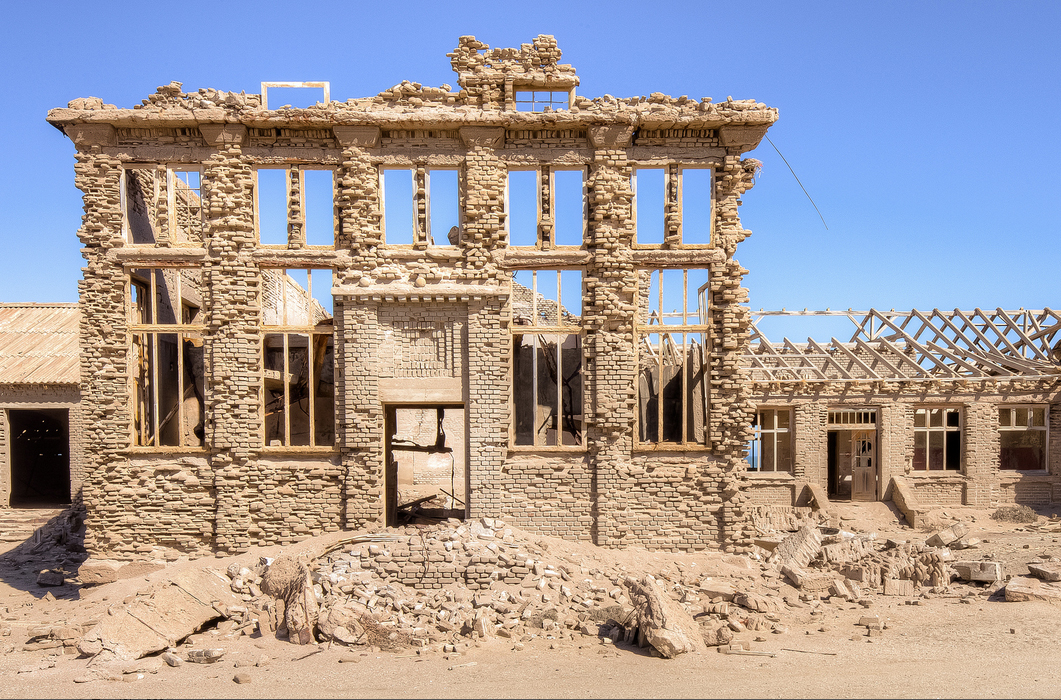
Elizabeth Bay
A mining town in southern Namibia. It was formerly considered a ghost town. Elizabeth Bay in on the coast of Namibia, 25 km south of Lüderitz.Diamonds were first discovered in the region around 1908; however, it wasn't until 1989 that the government of Namibia spent $53 million on the exploration and creation of a new diamond mine on the site.The mine stopped being operational sometime around 1998. By 2000, the town was considered a ghost town. Photograph by Douglas Discover
Pripyat
An abandoned city in northern Ukraine, near the border with Belarus. Named for the nearby Pripyat River, Pripyat was founded on 4 February 1970, the ninth nuclear city in the Soviet Union, for the Chernobyl Nuclear Power Plant. It was officially proclaimed a city in 1979, and had grown to a population of 49,360 before being evacuated a few days after the 1986 Chernobyl disaster. Photograph by Ben Fairless
Thames Town
The English name for a new town in Songjiang District, about 18 miles from central Shanghai, China. It is named after the River Thames in London. Thames Town was completed in 2006, occupying an area of one square kilometre and designed for a population of 10,000. It cost 5 billion yuan to construct. Photograph by Timothy Vanhonacker

Agdam
Also, Ağdam and Aghdam .A ghost town in the southwestern part of Azerbaijan. In July 1993, after heavy fighting, Agdam was captured by the forces of the Nagorno Karabakh Republic during its summer offensives. As the town fell, its entire population were forced to flee eastwards. Photograph by Marco Fieber

Sanzhi Pod City
A set of abandoned pod-shaped buildings in Sanzhi District, New Taipei City, Taiwan. The buildings resembled Futuro houses, some examples of which can be found elsewhere in Taiwan. The site where the buildings were located was owned by Hung Kuo Group. Photograph by Cypherone

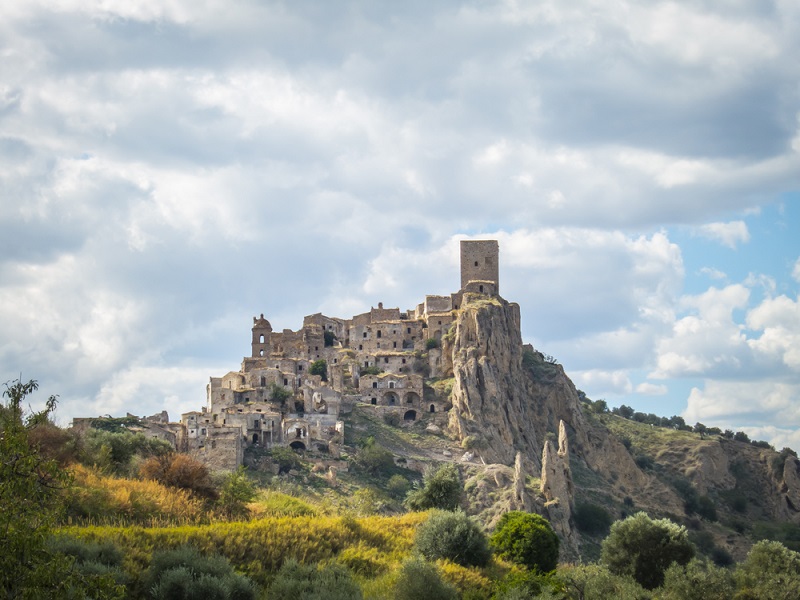
Craco
An abandoned commune and medieval village located in the region of Basilicata and the Province of Matera in Italy. About 25 milesinland from the Gulf of Taranto at the instep of the “boot” of Italy. It is typical of the hill towns of the region with mildly undulating shapes. The lands surrounding it are sown with wheat. It was abandoned in 1963 due to recurring earthquakes.
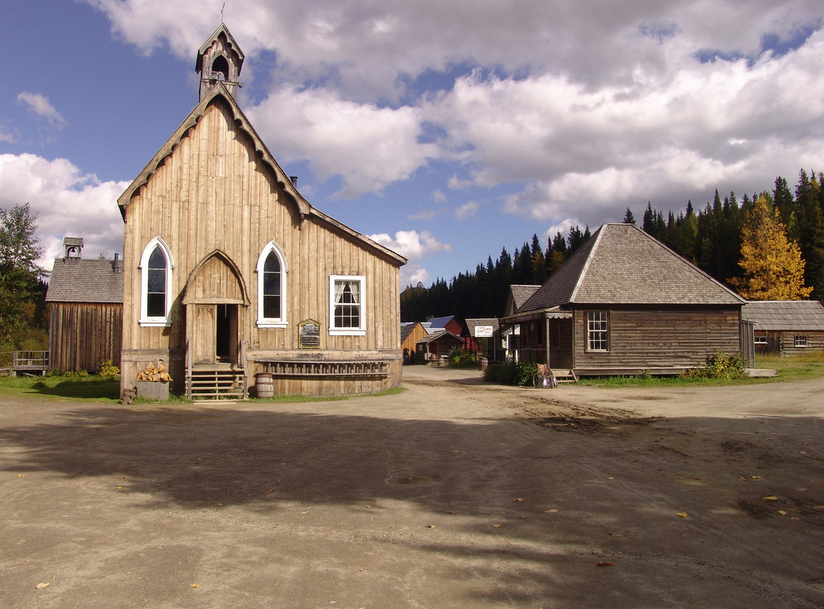
Barkerville
The main town of the Cariboo Gold Rush in British Columbia, Canada. Preserved as a historic town, it is located on the north slope of the Cariboo Plateau near the Cariboo Mountains 50 miles east of Quesnel along BC Highway 26, which follows the route of the original access to Barkerville, the Cariboo Wagon Road. Photograph by Paul Brett
Stromness
A former whaling station on the northern coast of South Georgia Island in the South Atlantic. It was the destination of Ernest Shackleton's rescue journey in 1916. It is the central of three harbours in the west side of Stromness Bay. The name "Fridtjof Nansen" or Nansen appeared for this harbour on some early charts, but since about 1920 the name Stromness has been consistently used. The name comes from the town of that name in Orkney, UK.

- Hauschka is on tour in the UK from 10 to 16 May. He appears at the Brighton Festival on 13 May and has a special show at the Union Chapel in London in September.
- Listen to Abandoned City
Overleaf: Hauschka introduces the project on video