Hungarian composer Bela Bartók’s analytical rigour and folk-inspired voice have established his position as one of the most original voices of the twentieth century, but he still represented a bold choice for the opening event of the 2013 Kings Place Festival. Aurora Orchestra principals Thomas Gould (violin), Timothy Orpen (clarinet) and John Reid (piano) performed his Contrasts trio for violin, clarinet and piano with lyrical intelligence in the beautifully balanced acoustic of Hall One.
Contrasts was commissioned in 1938 by jazz and swing clarinettist Benny Goodman, and the clarinet part chatters with a jazz-infused jauntiness to balance the violin’s more vulnerable and straight-laced intensity. The piece immediately established the festival’s commitment to exploring, and sometimes bridging, cultural and generic contrasts (principally, but not solely, between classical and jazz) and boundaries. Inter-genre musical conversation was the defining feature of a festival that aspired to - and for the most part scaled - the twin peaks of any big arts event, excellence and popularity.
Anyone curious about folk (but embarrassed to show a public interest?) could visit a private boothThe reappearance of Gould leading his Thirties swing band Man Overboard - a combination of roles unthinkable a generation ago - summed up the event’s catholic relaxation about genre. In period outfits that couldn’t decide if they were channelling Al Capone or Bertie Wooster, the quintet wore their virtuosity lightly, revelling before a packed Hall Two in their repertoire of irresistible syncopated melody.
Another performer embracing genre-fusion was Dave Stapleton, founder of jazz label Edition Records, who has launched a classical offshoot, Edition Classics. He showed off one of the new label’s first signings, cello octet Cellophony, in arrangements of his own album Flight. While Cellophony’s straight classical repertoire will always be a little limited by their forces - the Prelude to Wagner’s Tristan und Isolde really needs soaring violins, for example - when combined with jazzers Neil Yates on trumpet and Daniel Herskedal on tuba, a deliciously layered, autumnal tenor sound emerged, almost as if Stapleton intends to re-invent the jazz suite.
There was still, of course, plenty for audiences who prefer their genres unadulterated. In addition to the opening concert, fans of contemporary classical music had the excellent London Sinfonietta’s performance of Berg, Britten, Matthews and Finnis, while fans of experimental jazz enjoyed some breathtakingly adventurous electronic improvisation from Iain Ballamy and and Thomas Strønen.
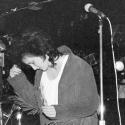
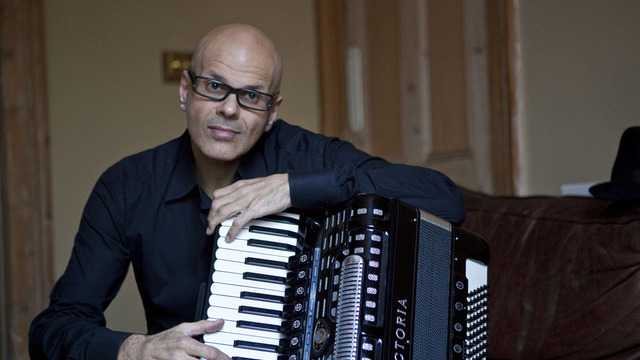 A comprehensive programme of free foyer gigs created a festive atmosphere between ticketed events. Some foyer performers, like winsome Italian accordionist Maurizio Minardi (pictured right) who filled the building with feel-good folk-jazz, captured an audience larger than any of the ticketed events. Young festival-goers were inspired by a wide range of art and music workshops, while their maturer chaperones could escape into a wine or beer tasting. Meanwhile, anyone curious about folk (but embarrassed to show a public interest?) could visit the folk-in-a-box, a private booth - Tardis-cum-confessional - offering one-to-one folk performance.
Kings Place has reported 75 percent ticket sales across the whole event, up 25 percent from last year. A universal £4.50 ticket price and hour-long programme made the festival both easy to navigate and good value. Necessarily with ambitious programming, there were a few sparsely attended events, so that figure reflects a lot of nearly full venues.
The most exciting city arts festivals - those with a family audience in mind, at least - have been learning from their country cousins that mixed audiences require a diversity of entertainment. The programme easily matched a summer greenfield festival’s in quality, while being much more affordable, and mud-free. For serious culture the whole family could enjoy, it was unbeatable.