Four of Humanhood’s 13 tracks are short, impressionistic mood pieces. Between 48 seconds and just-over a minute-and-a-half long, they mostly lack singing. Instrumentation is jazzy, leaning on piano and wind instruments. Drones and white noise evoke ocean spray or wind. In one case, a wordless vocal edges towards articulating recognisable syllables.
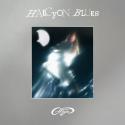
While these harmonise with the whole of Humanhood so are not discrete musical sketches, they point to the feelings of disassociation and fragmentation informing Tamara Lindeman’s seventh album as The Weather Station (the multiple selves seen in the cover image presumably reflect this). The shorter pieces are integral to the complete picture.
The album’s first traditional song is “Neon Sign,” its second track. The opening words are “I’ve gotten used to feeling like I’m crazy, or just lazy.” The lyrics go on to scrutinise the disorienting effect of a “world without trust,” one in which Lindeman can’t “think straight anymore.” The disorderly is drawn into a structured milieu, where it can be interpreted within the context of a composition. Shape is brought to the confused and disordered. As the album moves on, it’s increasingly clear the Toronto-resident singer-songwriter and some-time actor is indeed documenting and making-sense of a period of crisis.
Musically, the style cleaved to is recognisable from the last few Weather Station albums: Joni Mitchell were she absorbed into late-Seventies to mid-Eighties Fleetwood Mac with a rhythmic underpinning nodding to the chugging side of new wave. All filtered through a grounding in folk music. However, this now has a setting which is foregrounded more than ever before. Humanhood is identifiably jazzy, with non-linear instrumental contributions seemingly following the player’s own inclinations rather than the paths of the songs themselves. Take the title track's – where Lindeman’s voice hints at Patti Smith – fluttering sax which charts its own course, yet is entirely complementary to the overall arrangement.
This is not an immediate album. It is about its ebb and flow and, as such, does not instantly make its case. Simultaneously though, Humanhood exerts power, a consequence of Tamara Lindeman taking-back control.