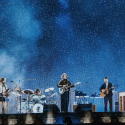
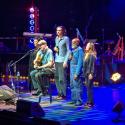
The first set of Spell Songs, The Lost Words, was inspired by nature writer Robert Macfarlane and artist Jackie Morris’s spell-spinning mission to bring back those ‘lost words’ from the natural world that had been excised from children’s dictionaries, set to the rich and varied music of kora player Seckou Keita, singer-songwriters Karine Polwart, Julie Fowlis and Kris Drever, harpist Rachel Newton, cellist Beth Porter, composer Kerry Andrew and multi-instrumentalist Jim Molyneux.
Acclaimed on record and a triumph on stage, with the players spinning musical silver and gold as Morris created new artworks right there as the concerts unfolded, a second volume was almost inevitable, and Let the Light In was composed in Coleridge’s old Lake District haunt of Greta Hall in Keswick, where the musicians, sans Kerry Andrew, reconvened to create new songs in the poet’s old library last spring, before recording them later in the summer at Real World Studios.
“Let the light in” is, in part, a reference to Leonard Cohen’s famous line, ‘there’s a crack in the world that lets the light in’. Crucially, it’s a title and a set of songs that focuses less on what has been lost than what inspires.
For these are praise songs of nature, opening with Karine Polwart’s delicately ominous “Bramble”, with its lyrical presaging of the first lockdown in opening line “the streets are choked with briars...”. It’s paired with Julie Fowlis’s beautiful rendering of “St Kilda Wren”, drawn from a traditional song collected on St Kilda early in the 20th century, and that fine opening set confidently launches these Spell Songs into flight and full bloom, with spell-songs for oaks and gorse and silver birch, for swifts and swallows and curlews.
Among them, Drever’s “Oak” features some fine finger-picking and a bouncy backbeat, with a rousing lyrical coda from Seckou Keita before uniting in a swingalong group chorus, while Fowlis’s hauntingly set “Bird of the Blizzard”, Seckou Keita’s ethereal “Barn Owl” and his partnering with Beth Porter on “Curlew” ensures the range of tones and approaches varies as much as any landscape or weatherfront.
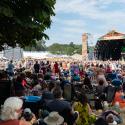
There’s live dates scheduled for later this month, at Glasgow’s Celtic Connections, with Perth, Gateshead, Birmingham and London’s Cadogan Hall to follow. On the strength of Spell Songs II, they’re not to be missed.