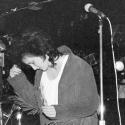
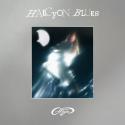
Girl-wonder Phoebe Bridgers is one of the brightest stars to come out of the ever-renewing pool of creative talent that bubbles away in Southern California. Her new album, following the release last year of the brillant Better Oblivion Community Center (a collaboration with Conor Oberst), is one of those collections of individually crafted jewels that have instant appeal, and yet grow in richness every time you’re drawn, compulsively, to hear them again.
The qualities that distinguish Bridgers have to do with her being totally herself and knowing how to write about it with the gift of poetry. This is unusual for a 25-year-old. Her rare talent allows her to play on the knife-edge between intense vulnerability and humour, mixing the seduction of pop hooks into a sound universe rich in textures and surprises,where melancholy is mixed with joy. Beguiling innocence is contrasted with an uncanny knowingness. Perhaps most striking of all is a way with words that’s allusive and poetic as well as being crystal-clear in its simplicity.
Her mostly autobiographical songs are often about relationships, with men and women as she’s bisexual: the drama of attraction, self-revelation, discovery, intimacy, rejection, break-up. “I wanted to see the world through your eyes”, she sings to one lover on “Kyoto”, "until it happened and I changed my mind”. This is a life in which the inebriation of falling in love is always shadowed by the threat of impermanence. She “wishes hard on a Chinese satellite”, as if the romantic stars of old no longer had currency. She’s also ruthlessly self-aware: “I don’t know what I want until I fuck it up”, she sings on “ICU”, and owns up to being a “rebel without a clue” on the song that follows, “Graceland”.
As if the lyrics weren’t enough to draw us in, the soundscapes she has created with the help of producers Tony Berg and Ethan Gruska, who produced Bridgers’s stunning first album Stranger In the Alps (2017), provide an ideal context for the essentially emotional nature of her material. The mystery-laden guitar sounds are slightly muffled, as if heard through a cloud of smoke. At other times there are symphonic wall-of-sound arrangements with majestic horns, reminiscent of Sufjan Stevens. Almost every single moment on this album is exquisitely thrilling: the perfect medicine at a time of doubt and fear.